(🇬🇧🇦🇷🇩🇪) We pay for the sins of our parents - A GLADIATOR II review

Courtesy of EW - Photo: Aidan Monaghan/Paramount
! Spoilers ahead !
Is it in our nature to immediately reject what we inherit? Can we filter through the dirt and find kernels of truth and wisdom? Is it even worth it?
Gladiator II acts as a mirror to its predecessor, which doesn’t mean it is a carbon replica, but just like a child’s existence in itself means its parents will meet themselves in them, and thus either run and hide, or choose to embrace them, the film deals with its legacy in the same vein.
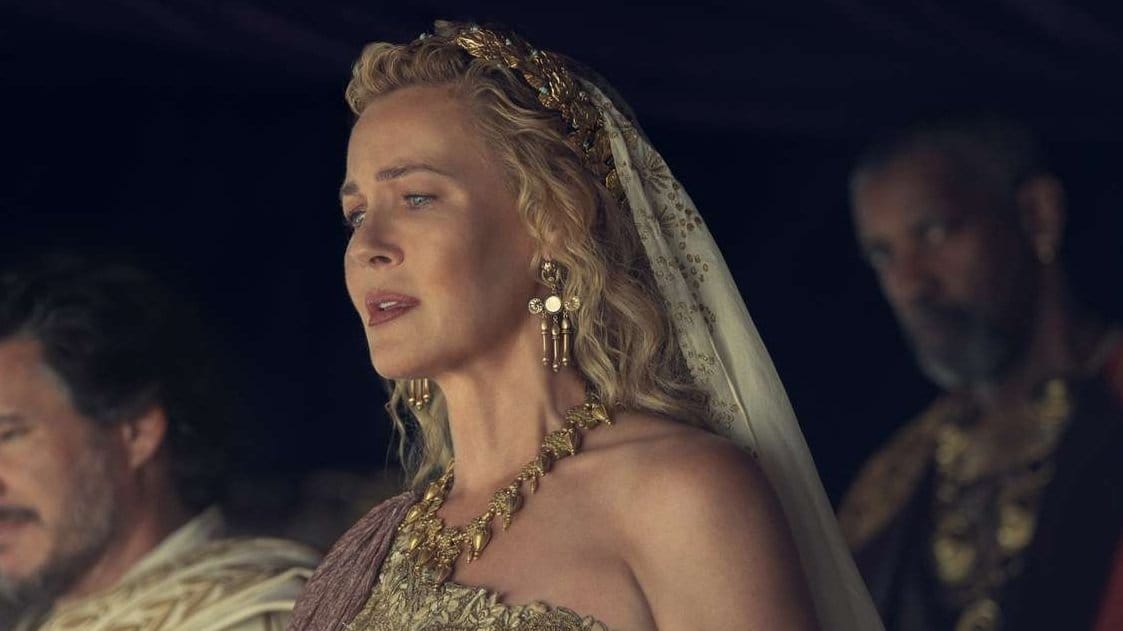
So which one is it? Embrace or abandonment? Well. It’s both. Connie Nielsen’s ‘Lucilla’ - one of the pillars carrying the narrative into its sequel - paid the price for her father’s wrongdoings, committed her own against her own son, yet decided to be better. Flawed, but better.
Just like Maximus said in the first instalment: “What we do in life, echoes in eternity.” It seems that statement was taken to heart. In between the gore, senseless violence, rage and despair perpetrated by emperors Geta and Caracalla (Quinn and Hechinger respectively), there is also a search for justice, peace and idealism through the characters of Lucius, Marcus Acacius (whose name literally translates to ‘not evil’) and Lucilla. Denzel Washington’s Macrinus stands between the two sides. He isn’t evil, but he isn’t innocent. Through it all he proves to be the missing piece through which all other characters become less virtuous - making the audience question their ambitions - but thus more interesting. Washington weaves an intricate web of complexity in his performance over the entire film that is rivalled by none. A true master of his craft.
Despite that, another performance is worth mentioning here. Pedro Pascal’s in fact. As a general, he has the mentality of a soldier: To strictly follow orders, fulfill his duty. In other hands this role would have been a portrayal as smooth as glass, yet here the glass is slightly cracked, rough and has texture, which translates to multilayered expressions on Pascal’s face, enriching his performance tenfold.
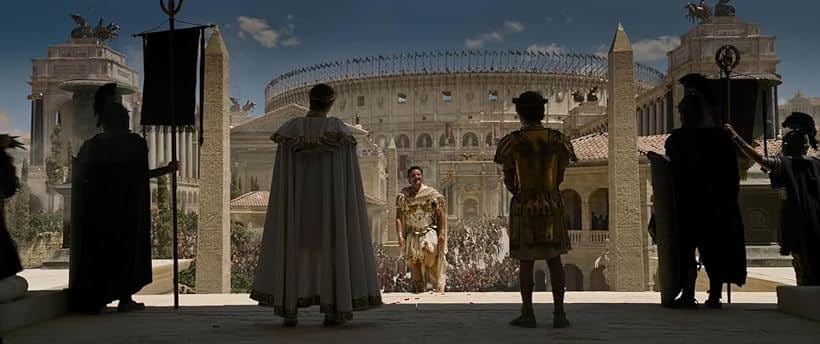
Violent imagery is present throughout the film. Even red rose petals welcoming the general after yet another ‘victory’ for ‘the glory of Rome’ seem menacing and unsettling, reminding the audience of trails of blood. This is just one of many ways in which the film’s cinematography proves itself to be of the highest calibre. This together with the set design leaves you in awe and reminds you that they truly don’t make films like these anymore. A line which describes the political state in which the film finds itself as well as a comment on the grandiosity of the set goes as follows: “The greatest temple Rome has built, is the Colosseum.” It is the catalyst for its narrative.
Another aspect I want to touch upon is the treatment of female characters. Although there aren’t many involved in the sequel, those that are, can be seen in warriors during the first fight scene right at the beginning (albeit with armour that isn’t equal to their male counterparts sadly). The thing that pleasantly surprised me the most in the original film, was the fact that there was room available for Lucilla to be a character with layers, her own personal history and ambitions. In the sequel it is Lucilla who is at the heart of the revolution, trying to drive forward change and laying the groundwork.
It is also refreshing to see female characters having aged but still be held in the same esteem, not only that but be shown as loved, desired and cherished. In fact, the loving marriage that unites Lucilla and Marcus Acacius deserved more screen time. It would have given both character arcs more depth, in my humble opinion. Made them even more human and tangible.
Gladiator II is an impressive feat of cinema, we haven’t seen this scale in a long time and who knows when we will again. Its visuals were nothing short of stunning. As is the nature of the theme, the film includes a lot of fighting sequences, whose sound mix was truly impressive, as head of OBSCURAE, Umnia has already explained. If you have the chance do try and see it in IMAX, as it allows you to be transported right into that temple of violence and vision.
- CRITICA EN ESPAÑOL - ALERTA DE SPOILER! -
¿Está en nuestra naturaleza rechazar inmediatamente lo que heredamos? ¿Podemos filtrar entre la mugre y encontrar granos de verdad y sabiduría? ¿Vale la pena siquiera? Gladiador II actúa como un espejo de su predecesor, lo cual no significa que sea una réplica exacta sino que, al igual que la existencia de un hijo en sí misma significa que sus padres se encontrarán a sí mismos en él y huirán de ello para esconderse o elegirán aceptarlo, la película trata su legado de la misma manera.
Entonces, ¿cuál es? ¿Abrazo o abandono? Bueno. Los dos. La figura de 'Lucilla' interpretada por Connie Nielsen - uno de los pilares que carga con la narrativa rumbo a su secuela - pagó el precio por las fechorías de su padre y cometió las suyas propias contra su propio hijo, pero decidió ser mejor. Con defectos, pero mejor.
Como dijo Máximo en la primera entrega: "Lo que hacemos en la vida, resuena en la eternidad". Y pareciera que esta declaración fue tomada en serio. Entre la sangre, la violencia sin sentido, la rabia y la desesperación perpetradas por los emperadores Geta y Caracalla (Quinn y Hechinger respectivamente), también hay una búsqueda de justicia, paz e idealismo a través de los personajes de Lucio, Marco Acacio (cuyo nombre literalmente significa 'sin maldad') y Lucilla. Macrino, interpretado por Denzel Washington, se encuentra entre los dos bandos. No es el villano, pero tampoco es inocente. A lo largo de toda la película, demuestra ser la pieza faltante por la cual todos los demás personajes se vuelven menos virtuosos - logrando que el público cuestione sus ambiciones - pero más interesantes. Washington teje una intrincada red de complejidad con su interpretación que no es rivalizada por ninguna otra. Un verdadero maestro de su oficio.
A pesar de eso, vale la pena mencionar otra actuación aquí. Nada menos que Pedro Pascal. Como el general Marco Acacio, tiene la mentalidad de un soldado: seguir estrictamente las órdenes, cumplir con su deber. En otras manos, este papel habría sido una interpretación tan lisa como una pieza de vidrio; sin embargo, aquí el vidrio está ligeramente agrietado, áspero y tiene textura, lo que se traduce en expresiones de múltiples capas en el rostro de Pascal, enriqueciendo su actuación mil veces más.
Las imágenes violentas están presentes a lo largo de la película. Incluso los pétalos de rosa roja que dan la bienvenida al general después de otra 'victoria' para 'la gloria de Roma' parecen amenazantes e inquietantes, evocando rastros de sangre en la mente del público. Ésta es sólo una de las muchas formas en que la cinematografía de la película demuestra ser del más alto calibre. Junto al diseño de escenografía, te deja asombrado y recuerda que realmente ya no hacen obras como éstas. Una línea que describe el estado político en el que se encuentra la película y, a su vez, es un comentario sobre la grandiosidad del escenario, dice lo siguiente: "El templo más grande que Roma ha construido es el Coliseo". Éste es el catalizador de su narrativa.
Otro aspecto del que quiero hablar es el tratamiento de los personajes femeninos. Aunque no hay muchos involucrados en la secuela, los que están, se pueden ver como guerreras durante la primera escena de pelea justo al principio (aunque con una armadura que lamentablemente no es igual a la de sus contrapartes masculinas). Lo que más me sorprendió y alegró ver en la película original, fue el hecho de que había espacio disponible para que Lucilla fuera un personaje con capas, su propia historia personal y ambiciones. En la secuela, es ella quien representa el corazón de la revolución, tratando de impulsar el cambio y sentando las bases.
También es refrescante ver personajes femeninos que han envejecido pero que aún son tenidos en la misma estima y no sólo eso, también se muestran amados, deseados y apreciados. De hecho, el matrimonio amoroso que une a Lucilla y Marco Acacio merecía más tiempo en la pantalla. Eso hubiese dado más profundidad a los arcos de ambos personajes, en mi humilde opinión. Los habría hecho aún más humanos y tangibles.
Gladiador II es una hazaña impresionante del cine, no hemos visto esta escala en mucho tiempo y quién sabe cuándo la volveremos a ver. Sus imágenes fueron nada menos que impresionantes. Como es la naturaleza del tema, la película incluye muchas secuencias de lucha, cuya mezcla de sonido fue realmente impresionante, como ya explicó Umnia, jefa de OBSCURAE. Si tenés la oportunidad, intentá verla en IMAX, ya que te permite ser transportado directamente al templo de violencia y visión.
- FILMREZENSION - VORSICHT SPOILER ! -
Liegt es in unserer Natur, das Geerbte abzulehnen? Können wir uns von der Apathie lösen, durch verkalkte Weltanschauungen hindurch filtern und Körner der Wahrheit und Weisheit finden? Lohnt es sich überhaupt?
Gladiator II fungiert als Spiegel seines Vorgängers, was nicht bedeutet, dass es eine 1:1 Kopie ist, sondern, wie die Existenz eines Kindes an sich bedeutet, dass seine Eltern sich in ihm wiederfinden und somit entweder hiervon weglaufen und sich verstecken oder es annehmen, geht der Film in gleicher Weise mit seinem Erbe um.
Also, was ist es nun? Akzeptanz oder Ablehnung? Nun, es ist beides zugleich. Connie Nielsens 'Lucilla' - eine der tragenden Säulen der Fortsetzung - zahlte den Preis für die Missetaten ihres Vaters, beging ihre eigenen gegen ihren Sohn; entschied sich aber dafür, den Teufelskreis zu brechen. Eine Figur voller Fehler, jedoch eine die nach besserem strebt.
Wie Maximus im ersten Teil sagte: "Was wir im Leben tun, hallt in der Ewigkeit wider." Es scheint, diese Aussage wurde zu Herzen genommen. Zwischen dem Gemetzel, der sinnlosen Gewalt, der Wut und der Verzweiflung, die von den Kaisern Geta und Caracalla (Quinn bzw. Hechinger) verübt werden, gibt es auch eine Suche nach Gerechtigkeit, Frieden und Idealismus durch die Charaktere von Lucius, Marcus Acacius (dessen Name wörtlich übersetzt 'nicht böse' bedeutet) und Lucilla. Denzel Washingtons Macrinus befindet sich zwischen beiden Seiten. Er ist nicht der Bösewicht in dieser Erzählung, allerdings auch nicht unschuldig. Durch den Film hindurch erweist er sich als das fehlende Puzzleteil, durch das alle anderen Charaktere weniger tugendhaft werden - was das Publikum ihre Ambitionen hinterfragen lässt - aber dadurch auch interessanter. Washington webt ein komplexes Netz mit seiner Darstellung eines ehemaligen Sklaven der nun an der Macht ist. Und wie zu erwarten, kann diese schauspielerische Leistung von niemanden übertroffen werden. Ein wahrer Meister seines Faches.
Trotzdem ist hier eine weitere Darstellung erwähnenswert. Die von Pedro Pascal nämlich. Als General hat er die Mentalität eines Soldaten: Strikt Befehle befolgen und seine Pflicht erfüllen. In anderen Händen wäre diese Rolle so eindimensional glatt wie ein Stück Glas gewesen, doch hier ist das Glas leicht gesprungen, rau und hat Textur, was sich wiederum in komplexen Ausdrücken auf Pascals Gesicht niederschlägt und seine Performance um ein Vielfaches bereichert.
Gewalttätige Bilder sind im gesamten Film präsent. Selbst rote Rosenblätter, die den General nach einem weiteren 'Sieg' für 'den Ruhm Roms' willkommen heißen, wirken bedrohlich und beunruhigend und erinnern das Publikum an Blutspuren. Dies ist nur eins von vielen Beispielen, welches bestätigt dass die Kinematographie des Films dem höchsten Kaliber entspricht. Dies zusammen mit dem Bühnenbild flößt einem Ehrfurcht ein und erinnert daran, dass heutzutage Filme dieser Dimension nicht mehr gedreht werden.
Eine Zeile, die sowohl den politischen Zustand beschreibt, in welcher sich die Handlung befindet, als auch ein Kommentar zur Grandiosität des Bühnenbildes abgibt, lautet: "Der größte Tempel, den Rom gebaut hat, ist das Kolosseum." Es ist der Impulsgeber für den Film.
Einen weiteren Aspekt, den ich ansprechen möchte, ist der Umgang mit den weiblichen Charakteren. Obwohl in der Fortsetzung nicht viele beteiligt sind, sind in der ersten Kampfszene gleich zu Beginn einige als Kriegerinnen zu sehen (wenn auch nicht mit einer Rüstung, die genauso effektiv ist wie die ihrer männlichen Mitkrieger). Was mich im Originalfilm positiv überrascht hatte, war die Tatsache, dass Raum für Lucilla als ein vielschichtiger Charakter mit eigener Vorgeschichte und Ambitionen möglich war. In der Fortsetzung steht Lucilla im Zentrum der Revolution, sie versucht Veränderungen voranzutreiben und legt den Grundstein hierfür.
Es ist auch überraschend zu sehen, dass weibliche Charaktere die gealtert sind, immer noch in gleichem Maße geschätzt werden, und nicht nur das, sondern auch geliebt, begehrt und geschätzt werden. Tatsächlich hätte die liebevolle Ehe, die Lucilla und Marcus Acacius verbindet, mehr Bildschirmzeit verdient. Es hätte meiner Meinung nach beiden Charakterentwicklungen mehr Tiefe verliehen. Hätte sie noch menschlicher und greifbarer gemacht.
Gladiator II ist eine beeindruckende Leistung des Kinos, wir haben Filme in dieser Größenordnung lange nicht mehr gesehen und wer weiß, wann wir so etwas wieder sehen werden. Die visuellen Effekte waren atemberaubend. Wie es der Natur der Filmthematik entspricht, enthält der Film viele Kampfsequenzen, deren Tonmischung wirklich beeindruckend ist. So hat es Umnia, Leitung von OBSCURAE, bereits in einem Artikel erklärt. Wenn die Möglichkeit besteht, versucht den Film in IMAX zu sehen, da man so direkt in den Tempel der Gewalt und Vision transportiert wird.