Bearcave | BFI Flare 2026
What if a cave told you to kiss your best friend? What if you were Greek and gay and pregnant?

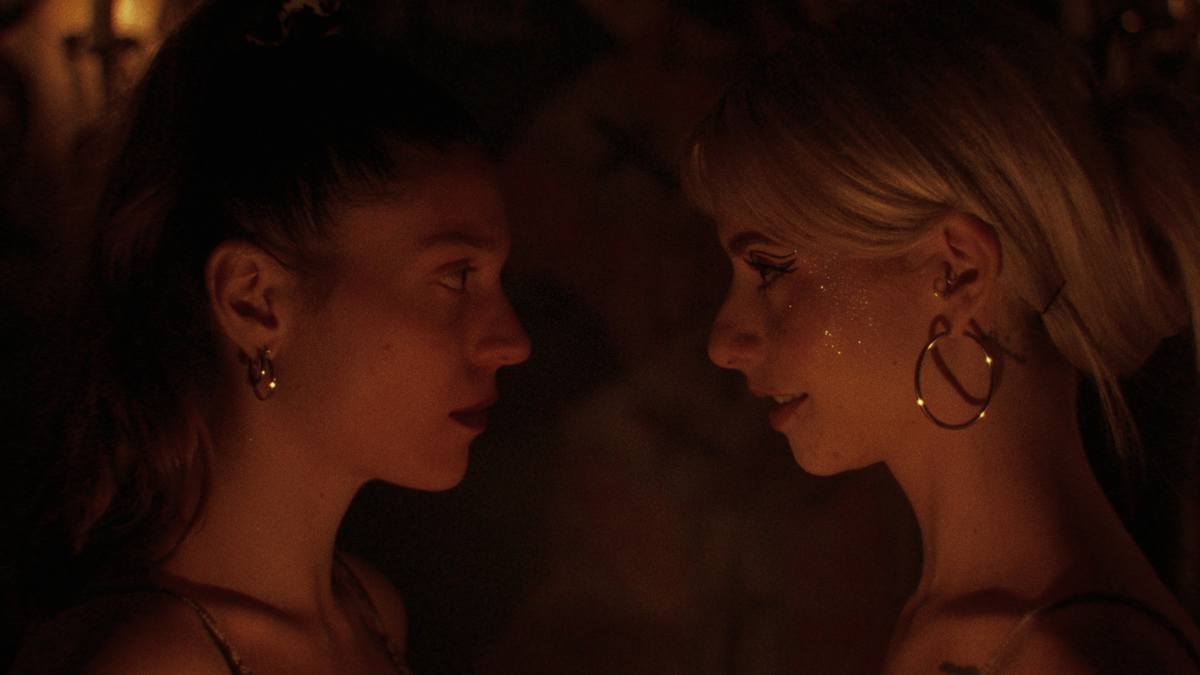
During the Q&A after the world premiere of Bearcave, the BFI’s host called it "a beautiful onion of a film", and I couldn't agree more – not least because it made me cry. She was, of course, referring to the structure and the way that Argyro and Anneta's stories unfold; at the core of Bearcave is a simple, familiar heartbreak story – but it's told exceptionally well.
Sometimes, this ‘onion-like’ style of forensic, layered storytelling can be a little annoying – Weapons and A House of Dynamite recently did the same thing, where the same events are revisited multiple times. But I think that part of the reason that structure works for Bearcave is that while the first chapter was originally intended as a short, the filmmakers quickly discovered that they had an additional two chapters in them. Expanding a short isn’t always a good idea, but in this case, it felt very natural.
Bearcave feels at home in its setting, most especially in the hills, where the colour grading really sings. Some of the images that will really last in my memory are those of characters sitting high above and sometimes high on something else. The world of the film feels so palpable – so warm and full of tensely-held emotion. And it feels unmistakably Greek, too; as I heard someone else put it, the film has an "ethnographic character" – it seems to capture not just a story, but a whole world.
Occasionally, there’s a subtle but astonishing stylistic choice: the unnerving sequence of Argyro looking into the titular cave, the gorgeous Ferris wheel oner, and occasional flashes of memories on crackling film. Other moments are punctuated by great music choices and shots that linger just long enough to satisfy.
I really enjoyed this one. It stings but satisfies: a tasty slice of tsouknidopita that will probably mean a lot to certain people.