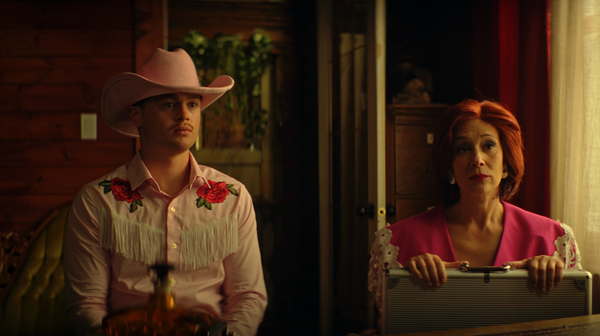
California Schemin': Lying, scamming, and assorted trickery of the self.
James McAvoy's Directorial debut doesn't bother being self-serious -- it's too busy being honest about deceit.

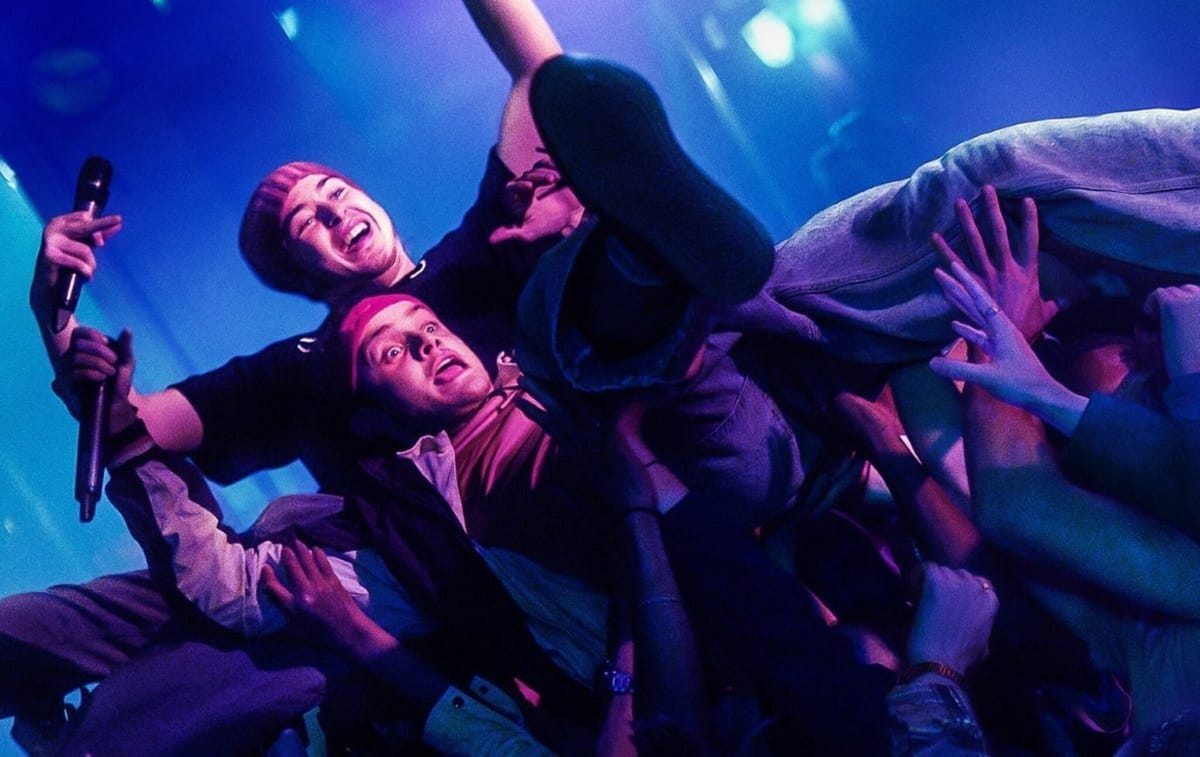
It may be hard to remember, what with all the Kneecap and the K-Pop, but there was a time when having an "accent" that wasn't UK Received Pronunciation or General American would cause a headache. To this day, I adore when Scottish content creators come up on my FYP (sue me, I'm young), but I have to brace myself every time for tossers in the comments making no attempt to understand them through their accent.
It is also a truth universally acknowledged that Hip Hop, which started in working-class Black communities in America, has found its way into every working-class, impoverished community around the globe. Dundee was no exception.
After a harrowingly Scottish-ist experience with some label execs, two working-class Dundee boys decide to pretend to be Californian to get signed. It works – because everyone knows that, if it's 2003, as long as you're an American White, you can steal Black Music and aesthetics to your heart's content.
The film reckons with this head-on, by the way. McAvoy does not flinch here – oh yeah, least interesting part of this, James McAvoy directed it, we'll get to that later – we face the racial aspect of this head on. It's established early that these boys have a genuine and skilled appreciation of the craft, but are hitting a similar, if lowered, hurdle that black artists were hitting at the time. All of the execs, with the money, are white – and they don't understand this shit at all. They just wanted the next Eminem.
In the process, these two boys royally screw over a black woman, Tess, the woman who discovered them and was too busy trying to get ahead herself to notice she was getting played – and she thoroughly gets her moment of vindication at the end. I don't believe you'll walk out pissed off at these boys. What seemed to temper my anger at this total mess of a ploy is that this was kind of reminiscent of Hip Hop stories of yore (the 90's) – two working-class boys ran a scam to get the recognition and resources they were deprived of. The issue was that it was a lie, and not a harmless one at that – and they cosplayed as white Americans pretending to be black boys to do it. The film is very lucid about this – and about the toll it takes on both of them.
This country is racist, yes – and then, alongside, perhaps even superimposed, is some kind of pseudo-ethnic classist patina, something that seems to feel ancient, where the further North or West you go, the more some South England idiot holds it against you. Beyond the class element, there is still all of that "respectability" politics that those not imbued with Queen's English at birth have to play to, to gain a chance at being respected. It's not comparable to Racism, but it holds many of the hallmarks.
The film, if you let it, pushes a deeper question – who are we willing to call impostors? I would have called the Californian version of them impostors in Hip Hop, but that was the version that got signed. The authentic version, though the film tries to hint at them, perhaps trying a bit harder at this, ultimately, I don't think would have been nearly as successful. There are further questions about how we trick ourselves into thinking we need to be someone else before we can achieve our dreams, but I would say that's the least interesting reading of this film, as it follows much the same story beats we're used to for films like this.
The film is a fantastic time at the cinema – I wish I'd seen it sooner at TIFF – and is a great way to spend a Friday. McAvoy is clearly an actor's director – not worried about doing anything silly or vain with the camera, fully focused on what we need to know and how we need to feel. As an Audio Engineer (it may have been where I was seated!), the music elements lacked definition in the mix (again, it could have just been where I was sitting), but they mixed that bass brilliantly, and to great effect throughout. McAvoy needs to pick up a camera way more, albeit to the sacrifice of his acting career, surely, which will be mourned – he's absolutely magnetic in this, and his role, though billed as small, is one of the highlights of the film.
Nowadays, Scottish Hip Hop would probably do numbers – wouldn't it? I'd like to think it would, but I fear what the boys learned then is still true now. The "industry" wants Black Music from white boys – just not those kinds of white boys.