Don’t Come Out | BFI Flare 2026
Don’t Come Out follows Liz (Cecile van Welie), a lesbian medical student who, following the gruesome murders of first her friend Victoria, then her secret girlfriend Wendy, decides to retreat further into the closet.

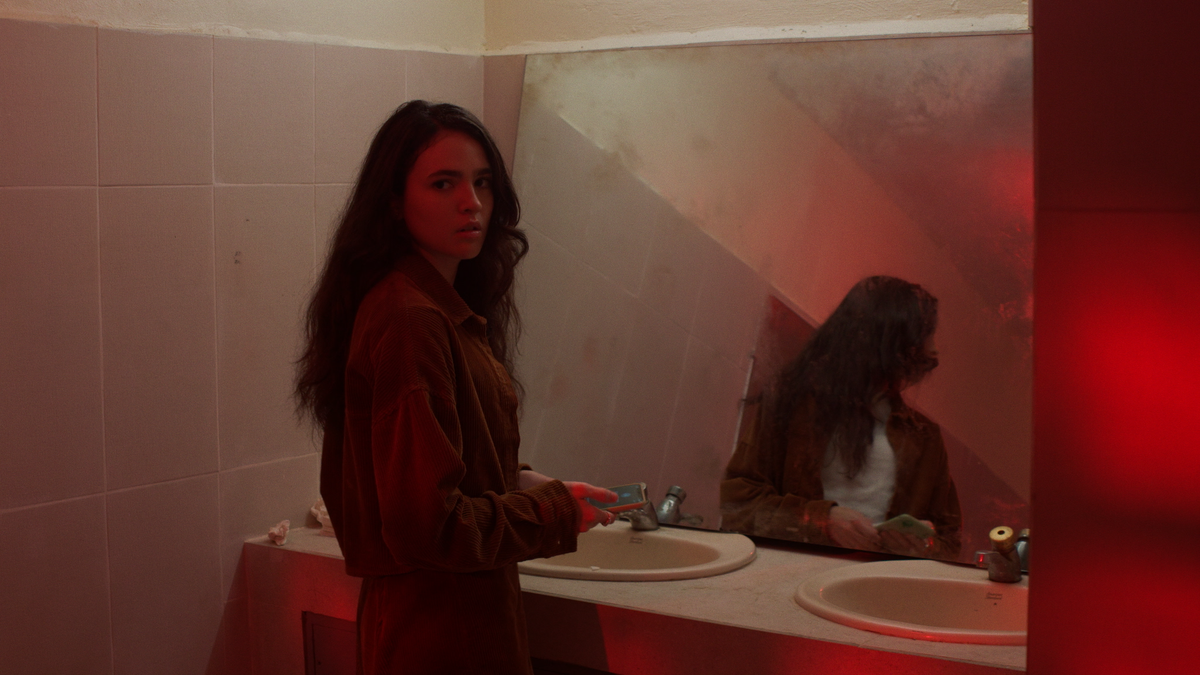
Not since Jennifer’s Body has a coming-of-age film been quite so gay and so gory. Dominican director Victoria Linares Villegas’s Don’t Come Out is crammed full of mummy issues, making out in cars, and gross-out violence. But underneath the buckets of fake blood, is writing - and performances - with real sincerity and tenderness.
Don’t Come Out follows Liz (Cecile van Welie), a lesbian medical student who, following the gruesome murders of first her friend Victoria, then her secret girlfriend Wendy, decides to retreat further into the closet. Her plan begins to unravel, and a girl's trip is sent awry, with the arrival of an unexpected guest, the enigmatic Jessie (Camila Santana). When Liz can no longer suppress her buried grief and desire, a supernatural force rips its way through her friendship group.
When introducing the film to the BFI Flare audience, Cecile van Welie shared that she experienced nightmares throughout the filming. As a self-confessed scaredy-cat, this admission made me more than a little apprehensive. Don’t Come Out has its fair share of frights: eyes rolling back into heads; tears of blood; nauseating sounds of squelching and bone-cracking. However, it also has plenty of laughs. Victoria, our first victim, is killed by her knife-wielding mother, who is relentless in her suburban-mum speed-walking pursuit. There is also Scooby-Doo style hiding behind trees, and a TikTok imploring the viewer to “get ready with me whilst I tell you how they offed my bestie.”
At the centre of this camp chaos is genuine heart. The banter between Liz and her friends is so authentic and loving, I spent the final act of the film bargaining that maybe, somehow, the bloody situation could still be resolved.
Don’t Come Out could be favourably compared to a number of horrors: the iconic slashers of the 1970s and 80s, or films like Hereditary, where violence lurks within the suburban family (Wendy is shown bludgeoned to death with a family photograph) However, it personally reminded me most of the works of queer horror writer Alison Rumfitt, where transphobia, racism, and antisemitism act like a virus, or demonic possession, transforming otherwise ordinary, loving people into hateful, rage-fuelled monsters.
Don’t Come Out identifies the claustrophobic paranoia of being closeted and externalises it as a tangible, malevolent force. When faced with so much violence and bloodshed, is pursuing self-discovery and romance worth it? Victoria Linares Villegas says yes, it is.