GFF 2026 Review: Primavera Doesn't Play for the Praise

In the age of information and marketing material proliferation, it is quite rare to go into a film completely blind, and yet this was my experience with the Italian film Primavera, which was a huge factor in how I received it.
Primavera had its world premiere at the 2025 Toronto International Film Festival in the Special Presentations category, to resounding praise and a UK-IE distribution acquisition by Curzon. The film, based on the award-winning novel Stabat Mater by Tiziano Scarpa, is often described as a fairytale, but it is far from it. It’s more like one of those articles you come across that tell you the real stories that inspired your favourite fairytales, and that’s when you realise that everything is tinged in tragedy.
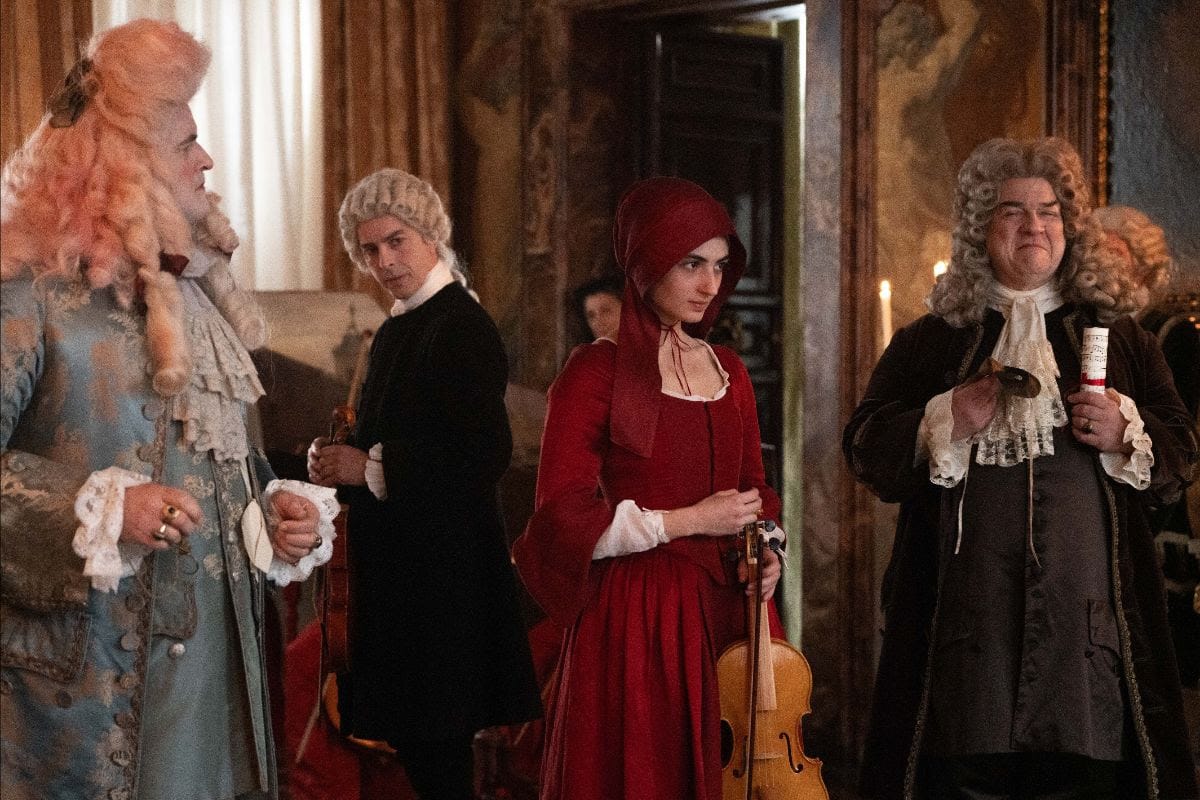
Set in 18th-century Venice, the film follows Cecilia, an orphan at the Ospedale della Pietà. She wanders the halls at night like a ghost, a talented violin player who finds no joy in anything except music. Haunted by her abandonment, she regularly writes letters to the mother she never knew, and passively awaits the end of the war so she can marry her betrothed soldier, Sanfermo. It is a future that fails to inspire her, but she doesn’t dare dream further.
At the Pietà, the girls are permitted to play music only until they marry; some choose never to wed just to keep playing, but it is a path Cecilia doesn’t consider. Their only outlet is performing behind a grille for the orphanage’s wealthy patrons. Cecilia craves freedom and answers, yet she is trapped by the limitations of her world. She says, "It’s best we don’t know there’s another way of being if we can’t live it."
This is disrupted by the arrival of the gust of Spring wind, a new composer, the meek and ill Don Antonio, who’s better known as Vivaldi. He immediately names Cecilia his head violinist. Scorned, she tries to refuse, insisting she is not the best player. Vivaldi disagrees, explaining that what sets her apart is that she does not play for the praise.
Against her better judgment, she lets him train her.
The film immediately prepares you for the cruelty of its world. It begins with a litter of kittens nursing from their mother, a moment of pure warmth, before the prioress plucks them away, stuffs them into a bag with a brick, and drowns them in the canal. It is a cruel, visceral scene, one that almost made me leave then and there. But it instantly establishes its relationship to motherhood and abandonment.
Director Damiano Michieletto wisely resists the temptation to let Vivaldi overpower the story. Instead, the composer is treated as a secondary figure; even when his instantly recognizable music finally swells, it never distracts from Cecilia. This restraint is one of the film's greatest strengths.
Though Primavera is a heavy film, a Handmaid's Tale-esque story of oppression, it is tinged with hope and redemption. It explores art as a double-edged sword, a tool that can be wielded for both oppression and freedom. As Cecilia scorns her mother, the orphanage, and the entire system, she declares, "You gave us the instruments to curse you", which is a line that could apply equally to the violin or the pen. She refuses to let the past stop her, casting off the symbols and memories that function as a ball and chain, and she soars.
Underneath it all is the brutal truth: "The entertainment of the rich is the labor of the poor." Yet for all its weight, Primavera never exploits the suffering it portrays. If you look closely, you might even see the light at the end of the tunnel.