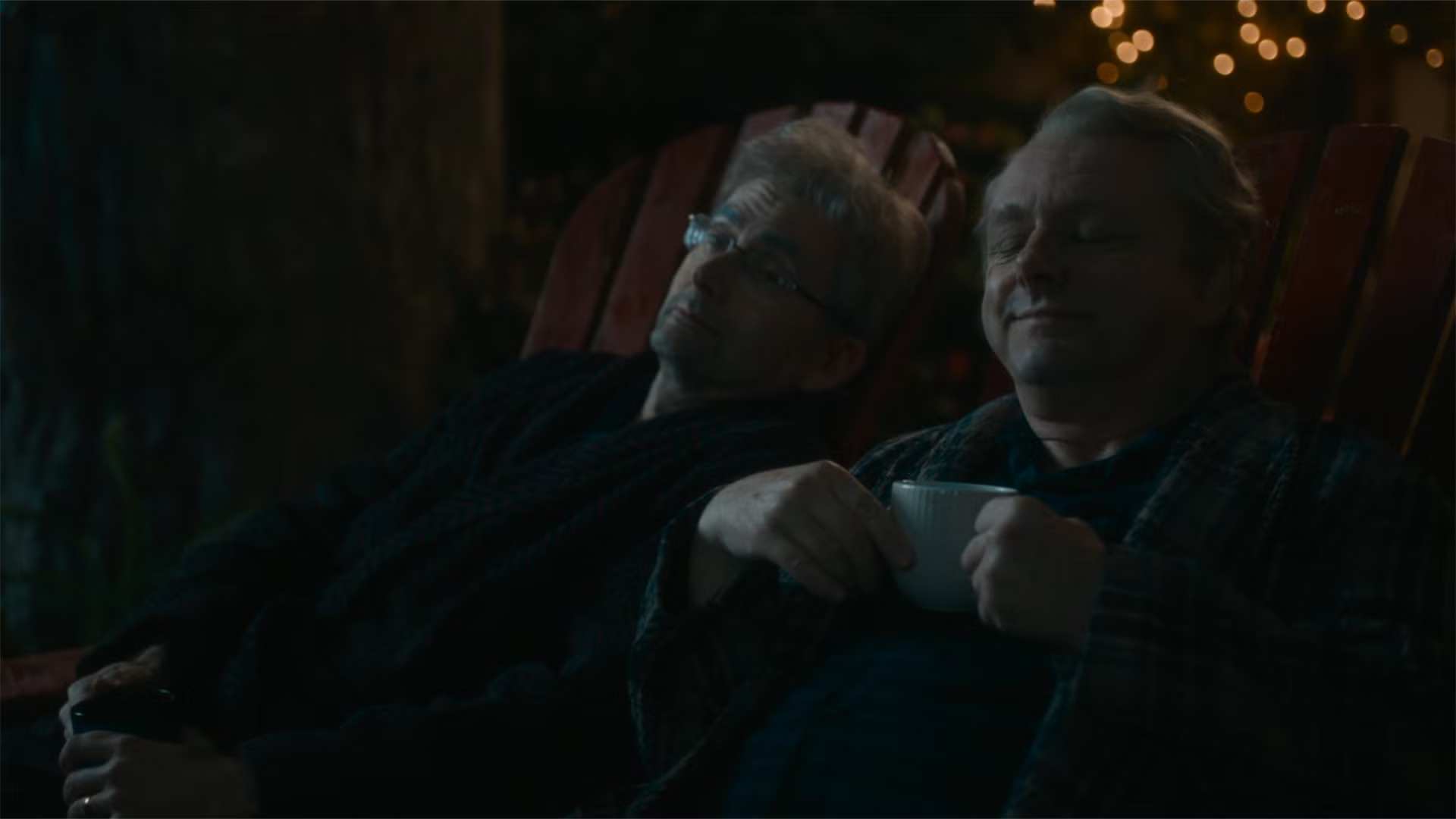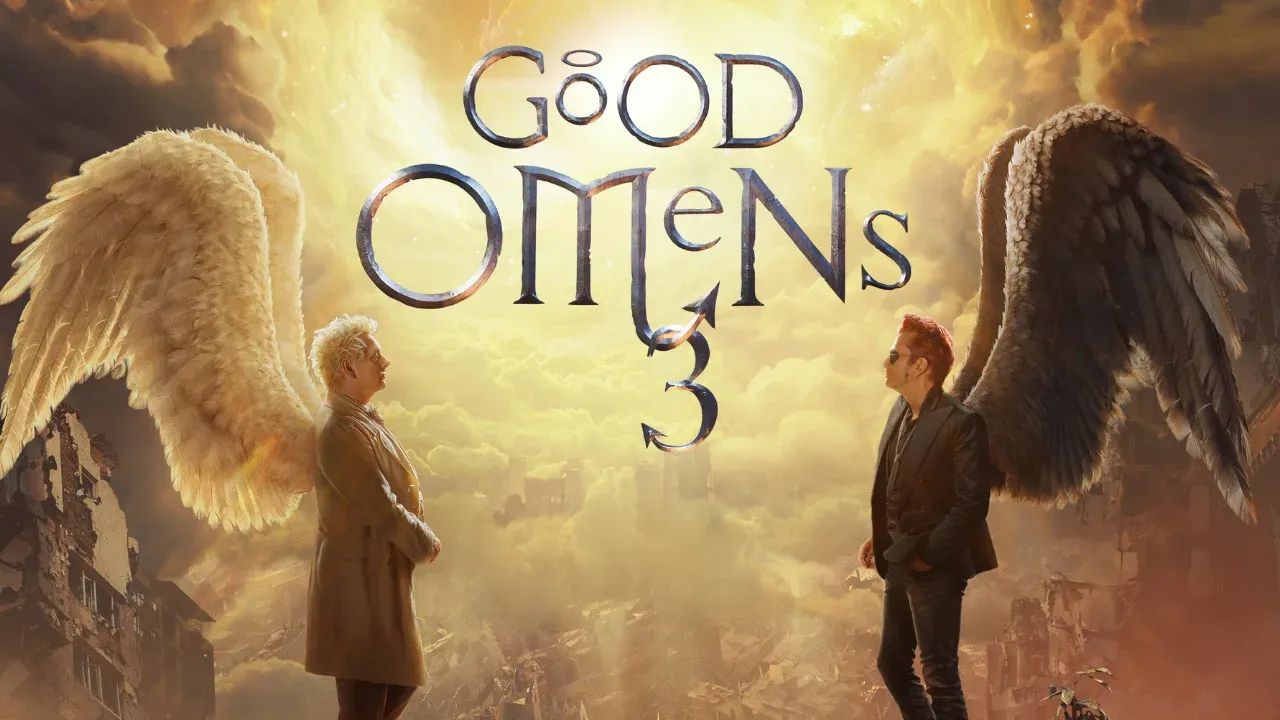
Originally a 1990 novel written by Terry Pratchett (rest in peace) and Neil Gaiman (destined to rest in pieces), Good Omens was first adapted to television format as a miniseries back in 2019. With Gaiman as showrunner, Douglas Mackinnon as director, and the talents of Michael Sheen and David Tennant playing the iconic duo of Aziraphale and Crowley, the show was an instant success.
The first season is truly one of the few cases of a show where I am close to being comfortable describing it as perfect. This is due to the careful balance between a larger plot that creates the perfect sense of urgency (Armageddon is nigh), and exceptional interpersonal conflict between a diverse cast of characters (The Antichrist who grew up thinking he was just a normal kid; a Witchfinder General who asks everyone how many nipples they have; Some Guy who’s incapable of touching a computer without it blowing up), creating a deeply rewarding experience for the viewer as they learn to look beyond the seemingly simple or absurd fantasy and comedy elements (Crowley driving his Bentley through a huge ring of fire and miraculously surviving) and appreciate the heartbreakingly beautiful subtext present in the script (religious trauma with our angel/demon duo, and all the pain it causes in their relationship with each other – and themselves).
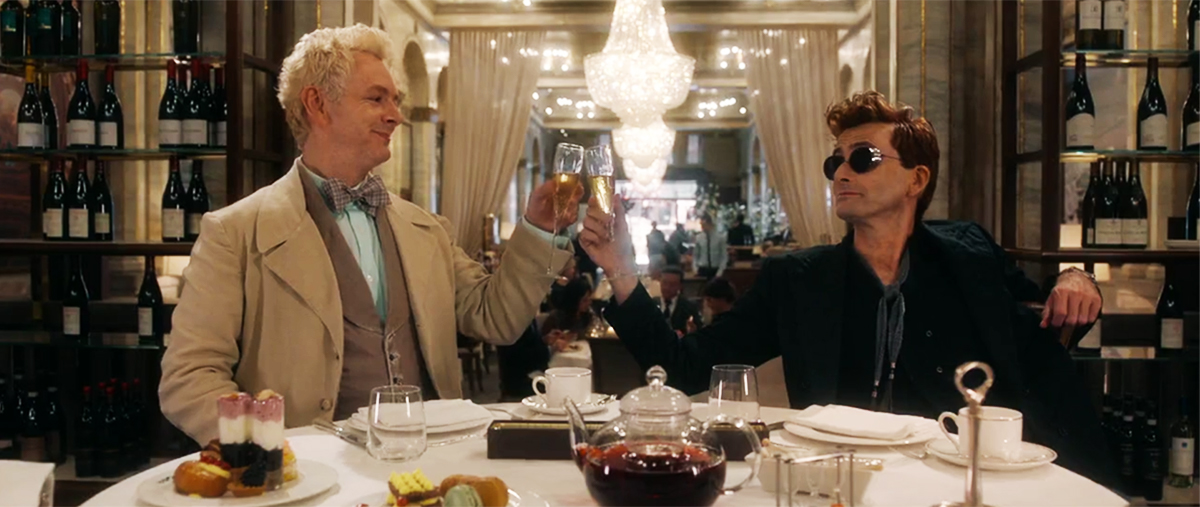
On top of all of this, as an adaptation, it is a wonderful case study in being faithful to the original source material whilst also learning to utilise the new medium for additional content that works – see the iconic Body Swap in the season finale.
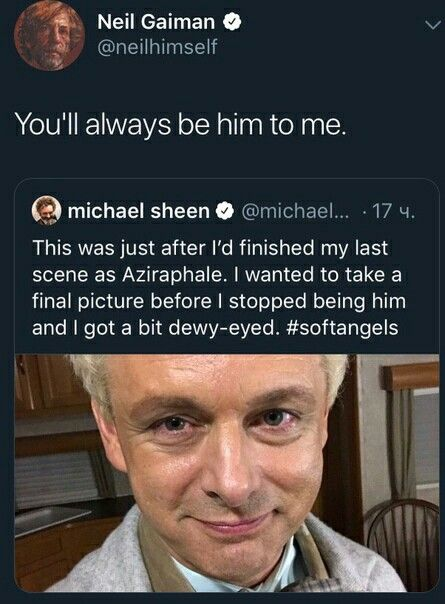
After the show’s release in 2019, fans begged for a second season. However, it seemed like most of the cast and crew had packed up what had seemingly come to an end, as evidenced by a Michael Sheen tweet where he posted a photo of himself teary-eyed after filming his ‘final scene’ as Aziraphale.
But apparently Neil Gaiman managed to defy Agnes Nutter’s prophecies, because wouldn’t you know it, not only did we get a second season, we also got a third… In which the quality didn’t so much fall, as it did “saunter vaguely downwards”, as Crowley would put it.
Season 2 of Good Omens was, quite frankly, ridiculous. And not in the fun way that Season 1 had been. Where before we had a coherent plot and character dynamics, the sequel stumbled over itself trying to recreate the magic, despite having no more of the original book to base itself off of. Gaiman claims that some of the ideas used in the second season were part of some brainstorming he had done with Pratchett back in the day when they toyed around the idea with a sequel. I find this hard to believe considering how much of this season is, quite frankly, just fanservice.
Perhaps the best example of this, in my opinion, is the resolution of the very thin semblance of a plot of this second series. After six episodes of a Memory-Wiped Archangel Gabriel strolling around Aziraphale’s bookshop under Crowley’s hateful gaze, we resolve the mystery of What Happened with a rushed reveal that, actually, Gabriel had fallen in love with Beelzebub, and this was all a plan of theirs to run away together which suffered a hiccup or two.
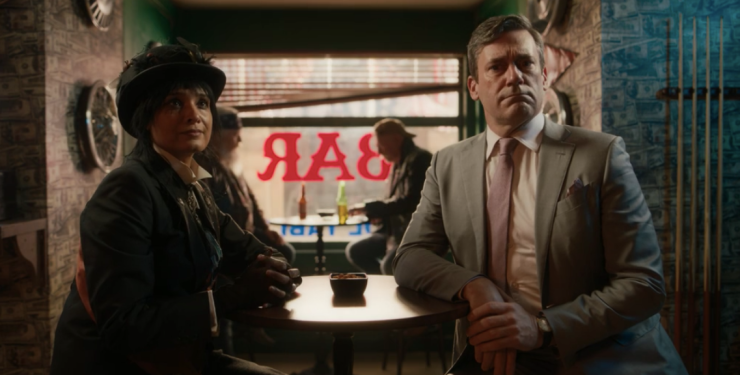
Not only is there no chemistry between the characters (I have to blame Douglas Mackinnon for that one, since I’ve seen the cast do much better in other media), but the writing and editing both failed at presenting the information necessary at the proper pacing for this reveal to be impactful. I am aware a big part of the fandom has shipped these two characters since the first season, and although I personally never saw it, far be it from me to police people’s headcanons – but if writers, producers and/or directors are starting to make ships canon just for the sake of profit, we have a problem on our hands. Among other reasons, because those who actually shipped Gabriel and Beelzebub deserved better than this flimsy resolution to their story.
The true plot/ theme of Season 2 seems to be romance – and, to my dismay, done pretty poorly. Much like Gabriel/Beelzebub, the Nina/Maggie duo of two human shop owners that Aziraphale and Crowley are desperately trying to set up together provides practically nothing as a relationship in itself, mainly because it is painfully obvious that these characters’ existence serve only to parallel Aziraphale and Crowley’s relationship.
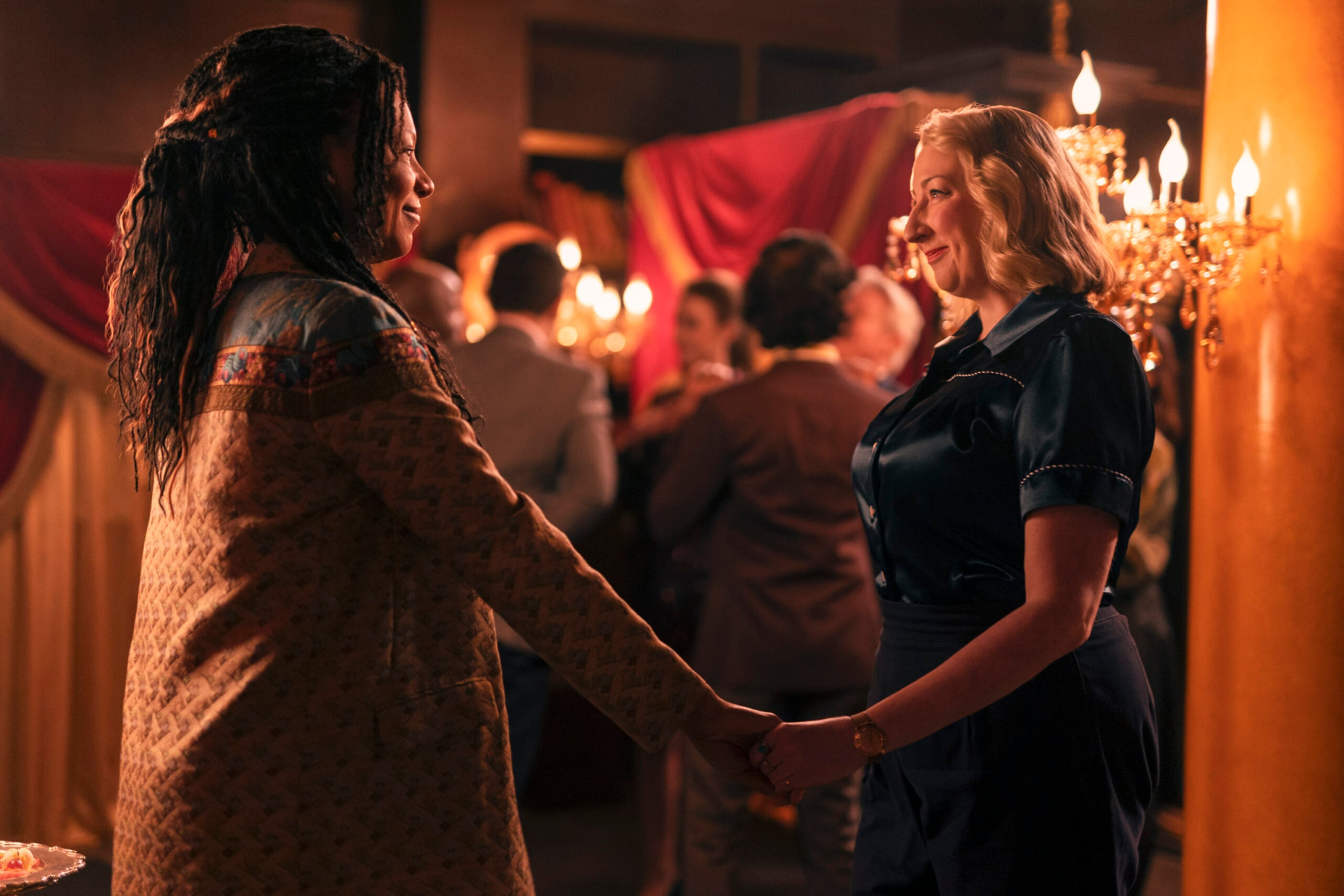
I believe this is the fundamental misunderstanding that happened in conceiving Season 2. In an attempt to recreate the charm of the first series, the creators honed in on the most iconic duo, failing to realise that although the angel/demon dynamic was a big pull, the show didn’t rest solely on them. There were many other characters and storylines, some of which barely touched Aziraphale and Crowley. And most importantly, the big connection between all of these elements was a unified concept: Humans are Ineffable. Meaning, humans are not inherently good or bad as religion – and a lot atheism – likes to believe. Instead, they are a beautiful, unpredictable mix, and that nuance is worth stopping The End of the World to save. In contrast, the theme of Season 2 seems to be How To Love Someone According to Very Binary Ideas of Romance. Which is quite a downgrade in theme, to put it lightly.
Because there is, essentially, no real plot in the second series, I at first resorted to calling it a Filler Season. My main proof of this was that a big chunk of the season consists of minisodes that take place in different moments throughout history – which try to recreate the beginning of Season 1’s third episode – that fail as they show contradictions in the characters (why is Crowley pretending to be willing to kill Job’s children when we know that not long before he had expressed his disapproval of killing innocent children to Aziraphale in Noah’s Ark?). One time, they straight up didn’t bother even trying to hide the fact that it's filler when the runtime takes up the entirety of the fourth episode.
But, setting aside the conversation of whether Good Omens should’ve been renewed for more seasons in the first place, there is one thing Season 2 managed to nail: the finale. The last ten minutes – and their heartbreaking conclusion in which Crowley rejects Aziraphale’s offer to join him in Heaven, kisses him to convince him to stay on Earth, and the angel seemingly rejects him right back in a devastating sequence of miscommunication – are in my opinion genuinely one of the best written minutes in television history, and the only moment where I felt that Special Something from the first season pop up again.
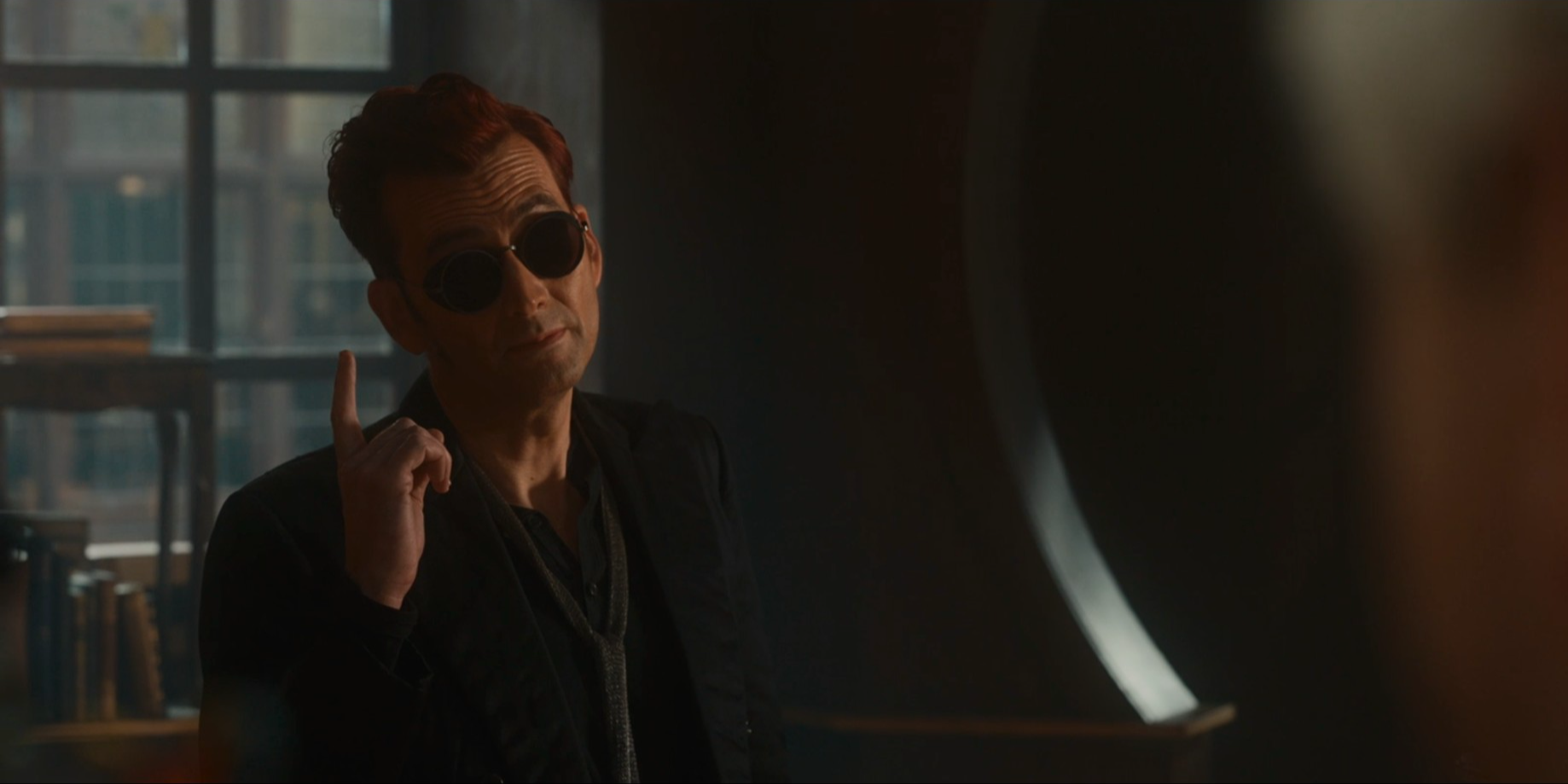
Ironically, I believe this plotline is also simultaneously one of the most controversial choices made by the show. Back when the second series first dropped, I remember being surprised at just how impacted the fandom was. As a fan of angsty media, I’m no stranger to joining the Reading Sad Fanfics at 3AM train – but the way some fans talked about the finale, and the absolute rage they seemed to be barely jokingly directing at Neil Gaiman got me thinking (this was before the allegations, by the way – more on that in a bit).
Why was the fandom so upset? Because the show had done a 180 on its tone.
Season 1 of Good Omens and the original novel are, first and foremost, a feel good comedy. Despite certain tragic scenes – Crowley crying out as the bookshop burns around him – one never ended an episode/ chapter with a pit in their stomach. The narrative always made sure that the viewer/ reader would feel warm and fuzzy inside, leaving the true deep dive into the angsty subtext of the story to the fandom’s talented artists and fanfic writers in their free time.
However, Season 2 broke this pattern by bringing the tragedy elements to the forefront, ending a generally still pretty feel good series on an absolutely dreadful note. An interesting debate could take place here about whether shows owe their audience consistency with the original premise of their story and the consequent sequels. Personally, I stand by my belief that Good Omens should’ve been left alone as a miniseries – but, once again, setting that aside, I appreciate that at least the last ten minutes of the second season were so well written, even if the tone did change. Yet the emotional turbulence left by this finale left the fandom even more impatient for the third instalment to reach them, feeling on edge as we wondered how on Earth this was going to be resolved.
Unfortunately, the wait took longer than expected. In big part because of The Allegations that came to light.
When multiple women came out with statements alleging that Neil Gaiman had sexually assaulted them, the fandom underwent the usual panic and debate so commonly found in our current cancel culture era. Was it okay to still support the show that Gaiman was not only the primary writer of, but also showrunner and executive producer? Would or should the show receive a finale at all?
Eventually, Amazon finally announced that although Neil Gaiman would be credited with the already written series finale, he would no longer be credited as showrunner or executive producer. One wonders to what extent this may have been only a technical formality Amazon could be claiming to save the show’s public image, but even if it is, it’s better than them refusing to acknowledge the allegations at all. The real sticking point was the announcement that the third and final season would, instead of the usual six episodes, consist of only one (1) 90min episode.
Chaos ensued. The fandom cried out, devastated at the presumed loss of content, wondering how on Earth the creators could resolve such a complex story in such a short amount of time. (Personally, I was – and still am – amused at the apparent lack of media literacy in people believing that a whole, complete story can’t be told in 90 minutes, which is the length of an average – albeit, for today’s standards, short – feature film.)
However, this was a valid concern to have. If Amazon really did cut a bunch of content for Season 3 because of the allegations to the show’s detriment, we’d need to dive into the debate about separating the art from the artist, whether that’s possible, and whether if Amazon really wanted to ‘punish’ Gaiman they should have just cancelled the show entirely. Personally, I’m not so sure Gaiman’s past actions coming back to bite him in the ass was the only reason Amazon made this choice. As I mentioned before, the second season of Good Omens had annoyingly consisted of a bunch of filler. Personally, if the third season was going to follow a similar route, I preferred the idea that they would reduce the runtime to an actually good story rather than stretching it out again unnecessarily. That is, assuming it would actually be good.
It was not.
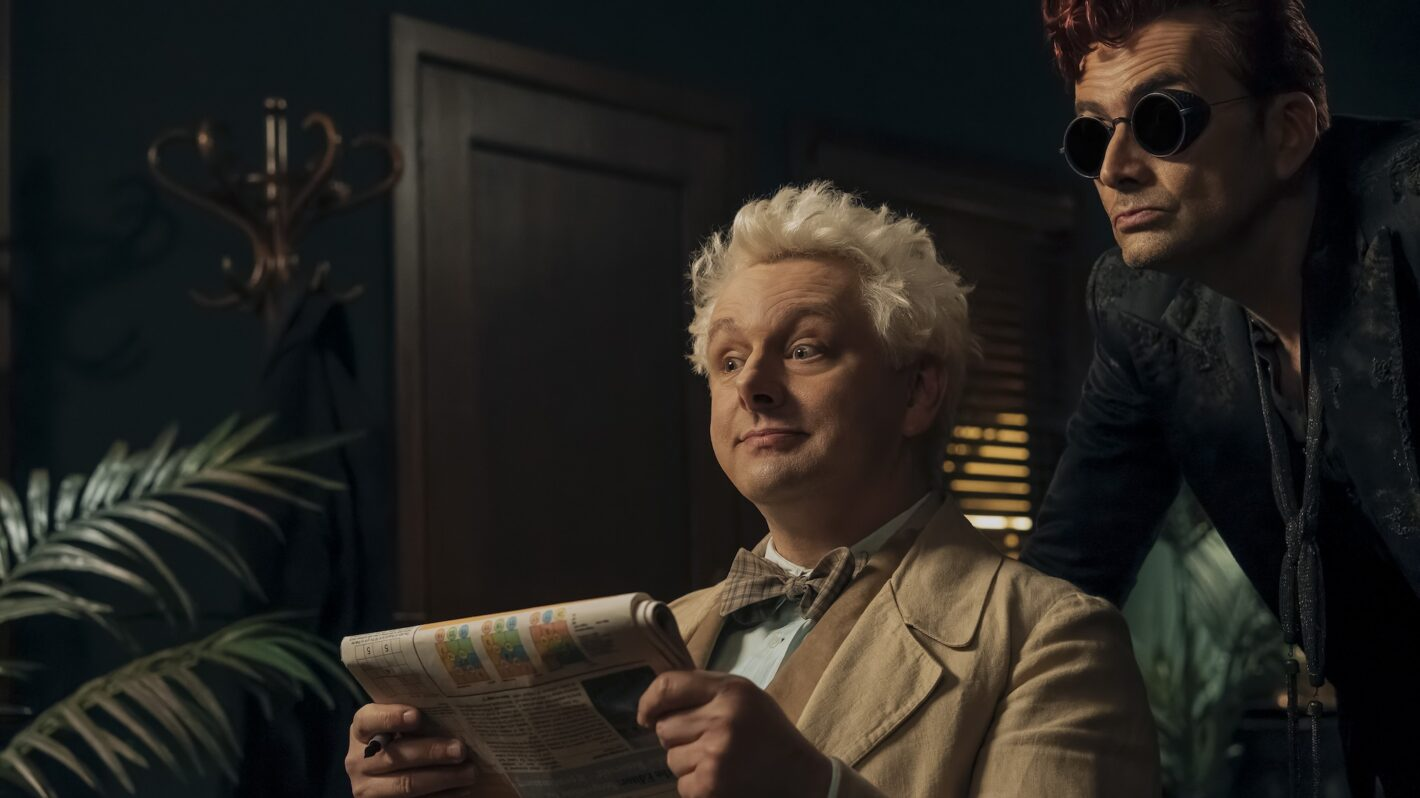
The third and final season of Good Omens was so underwhelming and dissatisfying, that my main feeling as I sat watching the end credits was simply exhausted disappointment.
Whether this is completely the writers’ (Neil Gaiman, Michael Marshall Smith and Peter Atkins) fault, or if Amazon really did cut a lot of valuable run time and scenes by making it one long episode is something I can’t be sure of. But since Neil Gaiman is credited as the main story writer, and things were already bad before the new director, Rachel Talaley, tried to steer this wrecked ship, I’m comfortable claiming it’s probably his fault.
There is so much wrong with the writing of Season 3/ The Finale. Multiple plot lines that lead nowhere/ add nothing to the larger plot (namely Jesus’s lack of anything substantial as a character or storyline), inconsistencies with the first two seasons (if Aziraphale and Crowley had already met as angel/demon at the Eternal Flame, why do they act as if it was their first time meeting in the Garden of Eden?), underwhelming execution of long awaited scenes (Aziraphale and Crowley’s first interaction in years after the disastrous breakup) and one of the most bizarre and frustrating endings for our angelic and demonic duo that I couldn’t have possibly imagined in my worst nightmares.
Because not only do Aziraphale and Crowley fail to save the World (which literally ceases to exist thanks to Michael’s incredibly bland villain arc). When they are the only beings left in existence, and God offers them a final wish (for reasons I am yet to understand, and which I fear may simply be ‘ineffable’), Aziraphale and Crowley choose to… Kill themselves. Let their world be completely destroyed. So that another parallel world can exist where angels and demons aren’t real and humans can finally have Free Will.
The show tries to save itself from my critique of Stranger Things finale’s queerbaiting by showing us a human alternative universe version of our duo, who do actually end up together and watch the stars at night while holding wedding ring adorned hands – because, of course, no need to give us an actual loving kiss. I’m sure the fandom will be satisfied with only the desperate non-consensual one we got at the end of Season 2. (We’re not).
Ladies, gents, genderless and all of those who are more or less: it seems we’re going to have to start taking the rise of queerbaiting in 2026 into our own hands.
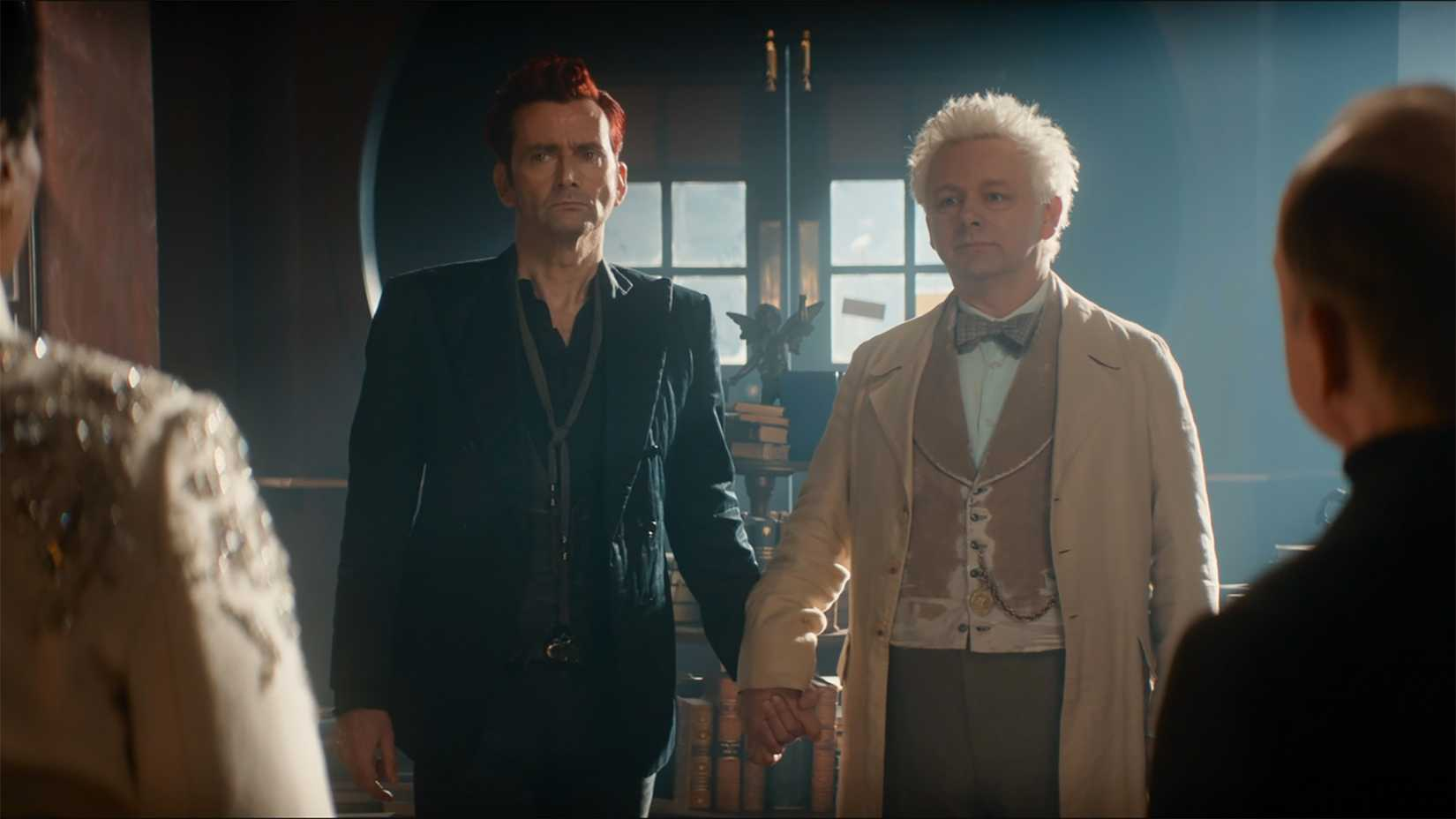
Now, if we accept (although I personally don’t) the narrative choice of making the entire Universe literally no longer exist when the Book of Life is burned in the finale, I do somewhat agree with the concept of Crowley asking for a world where Heaven and Hell don’t exist. Because if my 6000 year long situationship who broke up with me to join the organization that is our enemy only finally chose me when there was literally nothing else left to choose, I too would rather disintegrate than spend the rest of Eternity being reminded that I’m just sloppy seconds.
But the potential emotional catharsis of this finale doesn’t happen, because it simply does not make sense for the show. As previously discussed, the first season of Good Omens knew exactly what it wanted to be and executed its themes flawlessly. Meanwhile, the second and third instalments try desperately throwing fanservice fanfic tropes at the screen with the hope that at least one of them would stick, which instead caused the entire screen to topple over and shatter from brute force impact.
When the show ceased to be about what it means to be human, and instead turned into a romantic comedy/ drama, it was doomed to not be able to return to its roots. And no amount of genuine faith I had for a miracle to save it was enough. As a story about the meaning of life and being human, it fails. As a slow burn romance, it drenches itself in ice cold water instead. Only as an example of why certain shows should be left to rest when their original story is already complete is it a useful case study.
I do not have the time nor energy to fret any longer over this show, and much less its main screenwriter. Since we’re already playing with parallel universes, I will simply resort to interpreting that Season 1 is one part of the multiverse, and Seasons 2 & 3 are another.
And for an actually satisfactory exploration of the concepts with wasted potential, I await the talented fanfic writers to share their art with the world. God bless AO3.