"Who owns our days?" - La Grazia (Review)
Filled with pondering silences and complex relationships, 'La Grazia' seamlessly blends its political setting with deeply personal questions and moral dilemmas, making it a very touching watch and making you reflect on your own life and autonomy.

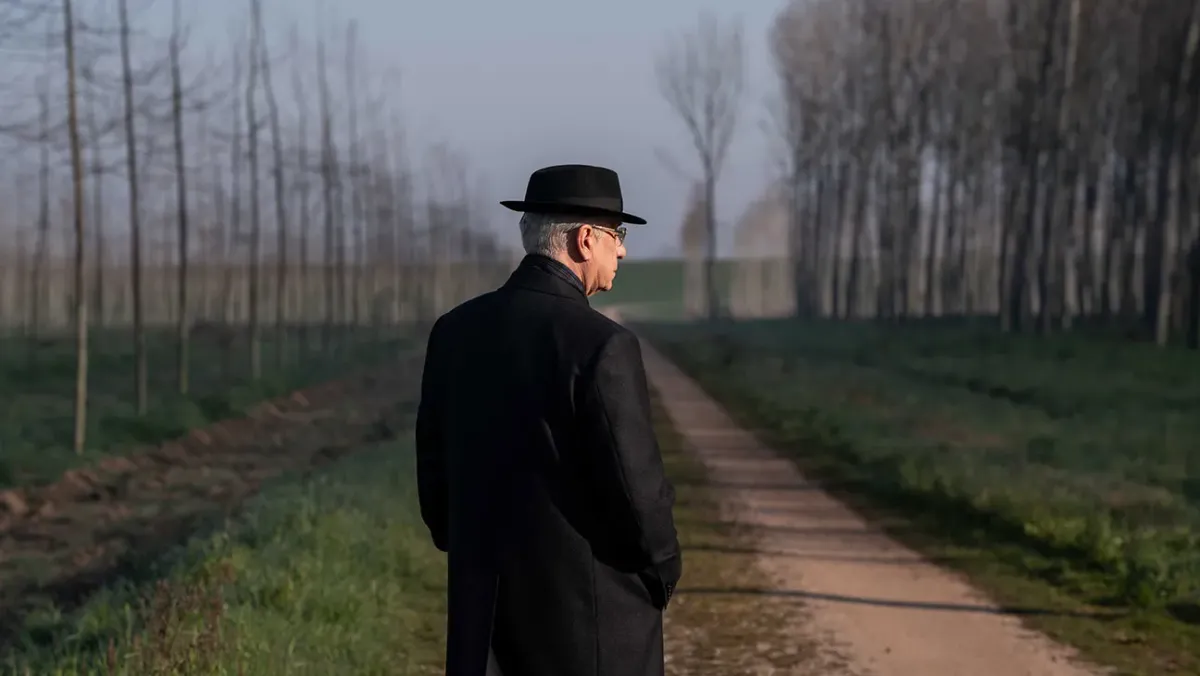

La Grazia is in UK cinemas this Friday, 20th March.
Who does our time on earth truly belong to? Who gets to have a say in our actions and decisions? These are some of the questions that lie at the heart of Paolo Sorrentino's new film La Grazia.
It tells the story of the Italian president, Mariano De Santis, during his last weeks in office as he faces a moral crisis: whether to legalise euthanasia and pardon two criminals in prison for murder. His daughter, Dorotea, urges him to sign the bill, but grows increasingly exhausted at his inability to make a decision. The film flows slowly as the president ponders the moral dilemma, visiting the criminals in prison and seeking advice from the pope, but nothing weighs heavier on his mind than the identity of his late wife's lover, which distracts him and plagues his every thought.
Toni Servillo embodies this unrest perfectly in his portrayal of the president, for which he received the Best Actor award at the Venice Film Festival. He looks out onto the roofs of Rome as he smokes, even though he promised his daughter he would stop, and reminisces about his wife; these memories are filled with both love and silent resentment. But the stand-out performance is Anna Ferzetti as Dorotea. She admires and respects her father, even working closely with him, but the weight of his responsibilities has led to a disconnect between the two. In an emotional moment, she confesses to him that he never really knew her or her brother as a person. When they both embrace, her vulnerability is deeply touching, and the scene resonates largely due to Ferzetti's performance capturing Dorotea's conflicted feelings towards Mariano. He may be the president, but at the end of the day, he is still her father.
Shot on location in Rome, Turin, and Milan, La Grazia feels a lot like Conclave, with its still shots and beautiful architecture. But unlike Conclave, its score is in complete opposition to its visuals, filled with electronic synth music and Italian rap. This tonal juxtaposition works very well not just to reflect the characters' internal turmoil but also to breathe more energy into an otherwise slow film. Though this slowness is a double-edged sword. On one hand, it won't be a surprise to people familiar with Sorrentino's past works and may even be what draws audiences in, but on the other hand, there is a large audience that will be turned away by it.
La Grazia isn't the first Italian film to give audiences a lot of time to think about its themes; La Chimera is another that comes to mind, and it definitely won't be the last, as this is, in a way, a staple of Italian cinema. But even in the film's slow moments, engaging with themes of forgiveness, memory, and love, while asking yourself how you would act in the president's shoes, is what gets you invested and keeps it interesting. The film's name itself is an extension of its theme, as it can be translated not only as 'The Grace' but also as 'The Pardon' – forgiving people in interpersonal relationships.
So who really owns our days? I won't try to answer that question for you, but maybe La Grazia will. Even if it doesn't, there are enough pondering silences for you to figure it out for yourself.
If you want to go a step further and support the work we do, you can become a paid subscriber for £5 a month - it keeps OBSCURAE independent, ad-free, and digging deeper into the culture you care about.