Leviticus: It Looked Like Me | SXSW 2026
Leviticus is easily my favorite watch of the festival, creepy, cold, masterful in giving stigma a physical form and keeping you on your toes doing it. Anything could be a danger, at any time, when the line between wanton wet dream and certain death is thin as hell and hellishly dashed all over.

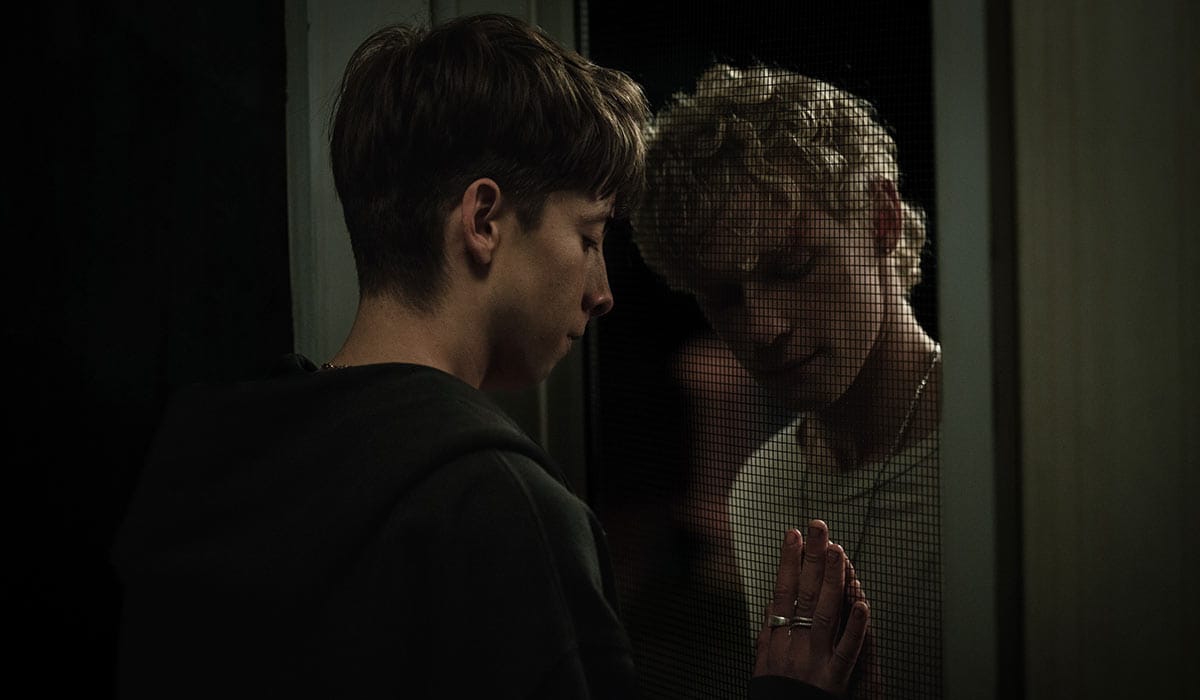
Horror is a very versatile genre. Maybe the most, simply because we’re always coming up with new things to be afraid of, these new permutations on inherited phobias. Religious trauma is an old standard—The Omen, The Vvitch, The Exorcist, and that's just naming the ones that start with The—but I don't think it’s ever been shaped as viciously as in Leviticus, Adrian Chiarella’s spine-chilling masterpiece that sharpens the knife on a notion that every queer kid has been made to feel in their life: that being your truest self could kill you, literalized to the extreme.
Naim (Joe Bird) has just relocated to a small town with his religious mother (a truly evil Mia Wasikowska), where he gets into a secret relationship with jock boy Ryan (Stacy Clausen). But discovery rears its ugly head, and their parents and community call on a healer to set them straight, inadvertently summoning a terrifying creature that stalks them relentlessly in the skin of the person that they’re most attracted to: each other. Leviticus is easily my favorite watch of the festival, creepy, cold, masterful in giving stigma a physical form and keeping you on your toes doing it. Where anything could be a danger, at any time, when the line between a wanton wet dream and certain death is thin as hell and hellishly dashed all over.
It Follows but gay is an easy comp to make—its wide, visually arresting compositions pulling space, in the somber tone, in its shapeshifting monster that’s sight unseen, can go anywhere, be anyone—but Chiarella comes at his premise with painful specificity that wrenches your heart in a twist, its biggest scares not in the violence but the passive sting of internalized homophobia. Your town alienating you. Your boy crush hating you. Your heart’s deepest desire betraying you. This is a film that is deftly told, really taking to task the idea that the closet is easy now in this day and age of social justice and Heartstopper and Heated Rivalry dominating the culture, but it’s never stopped being a nightmare. Coming out is the monster here, literally in the irony that the only person you can trust may or may not be an imposter plying your sexual tension to gut you like a fish, but atmospherically too. Naim and Ryan’s lives shift dramatically after being outed, from lust to distrust, in the distance that weighs on the former’s dynamic with his emotionally stunted mother, even the film’s visual language takes on a much darker hue: no more sunny days, just clouds, smog, the ozone, and, as the curse gains power when its targets are isolated, less scenes of crowds, less people, which only enhances the fear.
Bird and Clausen are an electric pair tasked with doing a lot with very little, and they succeed exponentially. For much of the film, they're their only scene partner, or alone, buoyed by abyssal frames of negative space that heighten the overwhelming dread they emanate. Clausen plays Ryan with an armored shell of machismo that doesn't last long, but provides a great framework for understanding the character’s tortured helplessness and the defensive mechanisms he uses to protect himself. It also takes on new meaning as the entity, whose disguise is primarily played by Clausen, where sex and death merge and mingle as similarly attractive. This, in turn, forces Bird into the more sensitive role in Naim, damseled, damaged, nevertheless pulling rank, however, with more devastating shows of petty anger that turns to terrified wanting. The boys are so good, so rounded by Chiarella with flaws, that they often come across as the only living people in their eerie little world; in any other film, a disservice, though here it elevates the authenticity of the experience, the nameless faceless threat of a world quietly killing you. It's beautiful, then, Leviticus is able to find a bittersweet hope in the madness; honesty can and will hurt you, no doubt, but it’s worth chancing when you have love to hold on to.