Here comes “The Bride!” (Light Spoilers!)
Feminine rage takes new form in Maggie Gyllenhaal’s latest film.

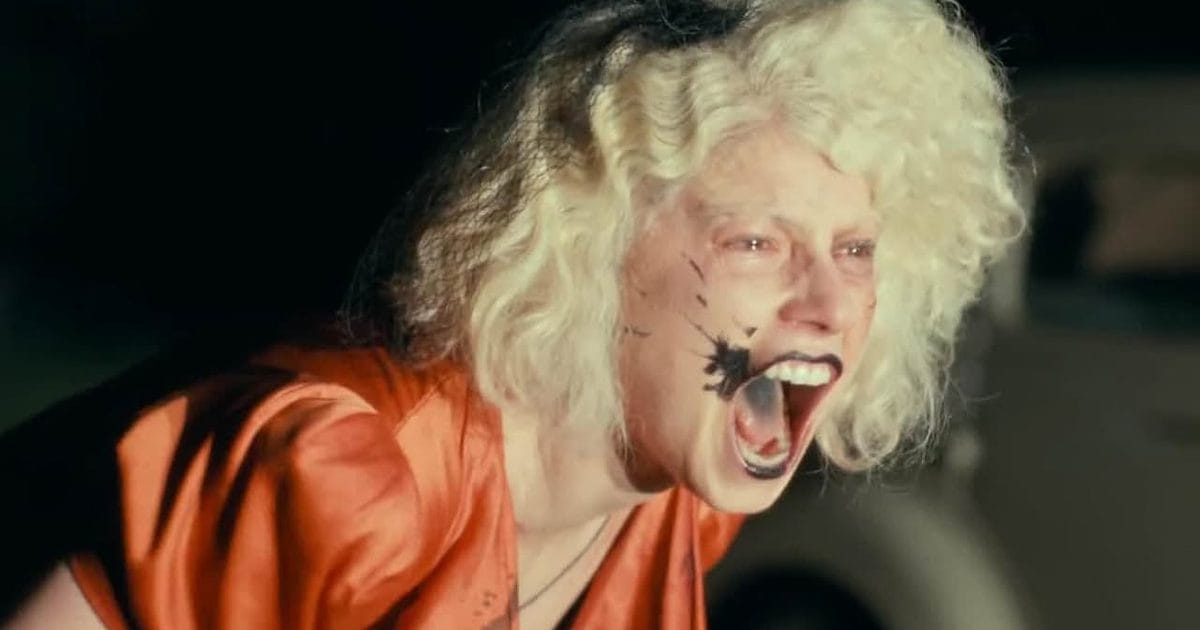
“I mean, what is a feminist film?” Maggie Gyllenhaal responded to a question in a recent (and fantastic) interview with Lulu Garcia-Navarro for “The Daily.” Neither the host nor Gyllenhaal settled on a satisfying answer to this complex question. And truthfully, after watching “The Bride!” I don’t necessarily have one either.
Feminist film scholars are often pointed towards Laura Mulvey and Peter Wollen’s 1977 film Riddles of the Sphinx as the first “truly feminist film.” This of course centres white filmmakers as a marker of what a feminist film is/should/can be and erases a vast body of feminist filmmaking by women of colour.
Unfortunately, “The Bride!” falls into the same pitfalls of these oft cited formative feminist texts: although it tackles feminine rage (my god does it lean so beautifully into true feminine rage so rarely seen on screen!) it speaks to a very specific white feminist form of filmmaking that ultimately falls short of the intersectional possibilities feminist cinema requires.
“The Bride!” struggles with the same issues that many overpraised “feminist” films do (think Barbie [2023]): it centres white femininity at its core and doesn’t dare ask what feminine rage or feminist futures look like outside of the white, thin, heterosexual, female body. Penélope Cruz’ character for example — although she faces similar issues of gender inequity as Jessie Buckley's characters — doesn’t get to express feminine rage in the way that Buckley’s “the Bride” is allowed to.
While wrestling with the value of an imperfect feminist film, I couldn’t help but be reminded of Roxane Gay’s 2014 book Bad Feminist in which she encourages feminist scholars to dare to create our own knowledges, which I believe we can extend to narrative cinema, if we don’t see them already being made. Gay explains that the more we write, the more we “put [ourselves] into the world.” And perhaps Gyllenhaal’s “The Bride!” does just that: it anchors the kind of feminine rage she has wanted to see more of in film, rooted in her own lived experience.
Pitfalls aside, akin to del Toro’s Frankenstein (2025), what I adore about “The Bride!” is that it asks us to look at the monstrous within ourselves and question if what is culturally seen as monstrous (ugliness, scars, disability, non-normative patterns of speech, etc.) really is as dangerous and scary as dominant culture prescribes it to be. And, to give Gyllenhaal some credit where it's due, “The Bride!” has some fascinating crip, mad, and trans readings vis-a-vis certain imagery and characters — monstrous and not — throughout its story that I am excited to explore more upon a second viewing (for those who want to dive deeper on trans readings of Mary Shelley’s Frankenstein, I highly recommend Susan Stryker’s 1993 performance titled “My Words to Victor Frankenstein above the Village of Chamounix: Performing Transgender Rage”).

These questions about power, normativity, and monstrosity are embedded not only in the film’s characters but in its many literary allusions.
Bibliophiles and cinephiles beware, “The Bride!” will keep you on your toes from beginning to end with its seemingly endless references to literature and films of yesteryear. To point to just one, there are many symbolic references related to Orwell’s 1984: “2 + 2 = 5” is written on a wall in graffiti; a “Big Brother” stylized eye is painted over the door to a club; the same eye appears again later, taking form in the shape of a cinema screen. Perhaps Gyllenhaal’s use of symbolism points us towards the cultural subordination of women. Orwell did, after all, write in his seminal text 1984, “It was always the women, and above all the young ones, who were the most bigoted adherents of the Party, the swallowers of slogans, the amateur spies and nosers-out of unorthodoxy.”
Jessie Buckley’s many characters in “The Bride!” get to do exactly this. Buckley allows herself to go full feral in this role, her most fun and playful character since her 2023 performance in the criminally underrated Wicked Little Letters. There is a joy in watching her jump between characters, accents, and narrative perspectives, each transformation part of a larger search for an identity and name beyond the limiting and possessive title of “Frankenstein’s Bride.”
Perhaps the most generous way to approach “The Bride!” is to accept it as an imperfect offering: one filmmaker’s attempt to place her own questions about feminine rage, monstrosity, and violence against women into the world. As Roxane Gay reminds us, feminism is rarely tidy, and its cultural artifacts are almost certainly never perfect. But in its moments of feral joy and unruly feminine rage, “The Bride!” does something worthwhile: it reminds us that feminist filmmaking is an imperfect science and that there are still stories worth being told even when they fall short in being the “perfectly” intersectional, razor-sharp works we aspire to create.
At the end of the day, with only 8.1% of films directed by women (as of 2025), the call is simple: we must write our stories, pick up a camera, and make the messy, unruly films of our own.
If you want to go a step further and support the work we do, you can become a paid subscriber for £5 a month - it keeps OBSCURAE independent, ad-free, and digging deeper into the culture you care about.