The Deepest Space in Us | BFI Flare 2026
Everyone lies, even to their closest companions, in this heavy and affecting story about three lonely people drawn together by their cryptic sexualities.


The Deepest Space In Us is bleak. What's bleaker was the awkward laughter of the audience during a scene where the film's protagonist, Kaori, is overwhelmed by an otherwise mostly safe and consensual sexual encounter. After I left the screening, I went to a Pizza Express and ate alone at a four-seater table. ‘Happy’ by Pharrell Williams played on the restaurant speakers.
I'm telling you that, reader, because I don't want to lie to you. This film made me melancholy, not least because I recognised a lot of myself in it. This is the kind of film that makes you reach out for the humanity around you. It makes you aware of how humans are pulled toward each other without conscious thought.
I'll try to stop being such a downer – but it's genuinely hard to after seeing a film filled with so much white and grey concrete, where warmth and colour are a precious commodity that the characters only seem to get in fleeting experiences.
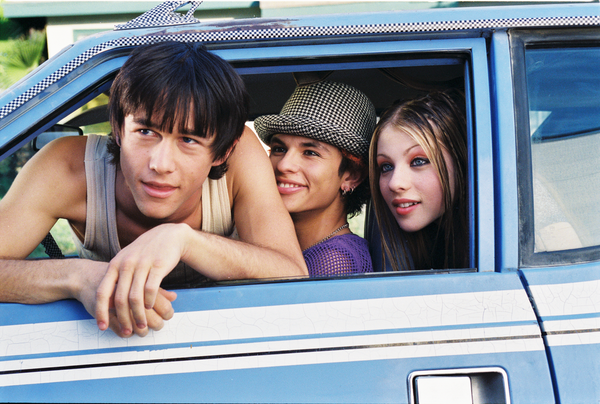
Let me tell you about the bright centre of this story: a brief, dreamlike scene full of colour that doesn't seem to be from the sole perspective of any of the film's three primary characters. Kaori, an asexual woman – whose relationship with Takeru, a repressed gay man, is the most sense any relationship has ever made – dances with her partner and his ex-lover, Nakano, who abandoned him for a woman. Together, the three of them seem more joyful than any of them has ever been.
I don't think any other film I've seen in recent memory captures the nuance of marginal queer identities like this. Everyone lies, even to the people they would otherwise find to be allies – or even companions.
Under no circumstances should you watch this film alone when you're sad, or you may find yourself on your own in a Pizza Express, smiling to your waiter more than you should. But it is a vital, beautiful piece of filmmaking.