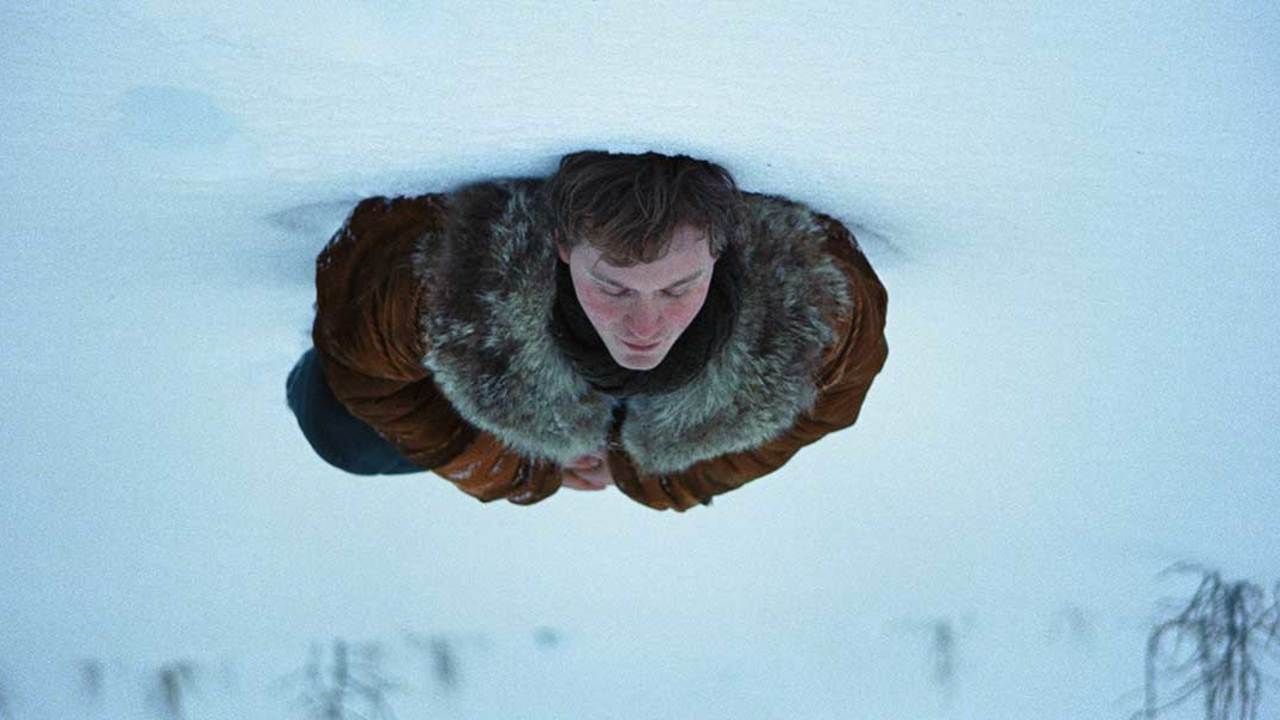
Director Andrew Haigh breaks our hearts once again, with his quiet, contemplative film, A Long Winter. The film follows a family enduring heartbreak, longing, and loss amidst the cruelty of a cold, long Winter. We are brought into the beauty and quick unforgiving nature of the wilderness, in parallel with a family fracturing under the surface.
It centres on Mike (Fred Hechinger), the eldest son, living in a rural home in the deep wilderness with his father Lester (Ebon Moss-Bachrach), mother Louise (Caitríona Balfe), and younger brother Tommy (Kit Connor). They maintain a sense of normalcy on the surface, but there are unspoken tensions underneath. After his younger brother leaves for war, the feeling notably shifts and the family is unmoored. Suddenly, Mike’s mother disappears amidst the first blizzard of Winter. From there, the story takes us on a slow, reflective journey of love, loss, and discovery.
The film is shot beautifully. Every frame is breathtaking, capturing the grand, lush wilderness - all lush greens and bright white. Natural lighting is used wonderfully, evoking simultaneous feelings of warmth and isolation as characters framed by candlelight. André Turpin’s cinematography was sweeping and evocative.
It felt clear that all these characters are haunted in some way. By what could have been, of what is, of what may be. The house becomes somewhat of a metaphorical haunted house, with some willing and others unwilling to face the ghosts of grief that surround them. Haigh explores how these characters come to terms with this metaphorical haunting. Do they face it or turn away? What do they use to cope? Do they turn to alcohol, anger, hope, flight? The film explores these ideas with a quiet curiosity.
From its initial synopsis I had expected the film to focus more on Mike’s journey with his sexuality and perhaps feature a budding romance. Especially considering the focus of some of Haigh’s earlier works (e.g. All of Us Strangers, Weekend, etc.), I had expected perhaps a romance to bloom, however the reality was more subtle than that. While Mike is in the process of discovering himself, that is not the main focus of this story. Rather, how he comes into knowing himself and the reality of his desire give him a growing self-assuredness as he processes this unfathomable grief. While I had hoped for more focus on this, I understood that this was not the totality of the tale that Haigh was telling. Mike’s journey of self-discovery is multi-faceted, including both his discovery of his sexuality, alongside his deep reckoning with grief.
At one point Mike meets Jimmy (D’Pharaoh Woon-A-Tai), who has been asked to help around the home while his mother has disappeared. Mike is curious about him and there seems to be a budding desire there. While this was key to Mike’s journey, I wish that Jimmy had been given more to do, more complexity to play with. Having an Indigenous character act merely as a conduit to a White character’s growth troubled me. The character deserved to embody complexity in his own right.
The film’s pacing is quite slow moving, so at times it was hard to sink into the film as much as I had hoped. However, its slow, reflective contemplation makes a lot of sense for subject matter. While the film wasn’t totally for me, I can appreciate the film’s approach to reckoning with grief in a considered way. The acting is powerful, Hechinger plays Mike with a quiet tenderness and definite skill. The landscapes are beautifully captured and the questions it poses are necessary. If a quiet contemplative film like this is up your alley, then it could be worth considering a watch.
Support our work
You can subscribe to the OBSCURAE newsletter for free, or become a paid Aficionado for £5/month to help fund independent coverage, contributor fees, site hosting, and admin costs.