Ah Girl (泡泡糖女孩) is Ang Geck Geck Priscilla’s feature debut that recently won the Youth Jury Award at the 55th International Film Festival Rotterdam. Ah Girl has been making the rounds at international film festivals and is one of the lesser-known films at TIFF that I wish was getting way more buzz. It is a monumental achievement in filmmaking that deserves all of its flowers, and I hope you add it to your must-watch list.
Writer and director Ang Geck Geck Priscilla encountered many challenges while trying to fund this project. The feedback she received from producers was that the story was “too basic” and the logistics of making a film starring two young children would be too challenging. Years after writing the script, Priscilla finally found a producer who believed in it, but just before production was scheduled to begin, they backed out, putting Ah Girl on hold indefinitely.
Priscilla decided she wouldn’t give up. She took those two years to do more research and speak to child psychologists to better understand the impacts of divorce on young children. Those she spoke to asked her, “Why are you a filmmaker? Have you considered a career in child counselling?” But Priscilla knew this was a story that needed to be told.
Eventually, Priscilla found producer Wendy Lie. Born in the same year as Priscilla, Lie believed in the script and saw the universality of a story set in the mid-90s, when both women were growing up. Finally, Ah Girl had its chance to come alive.
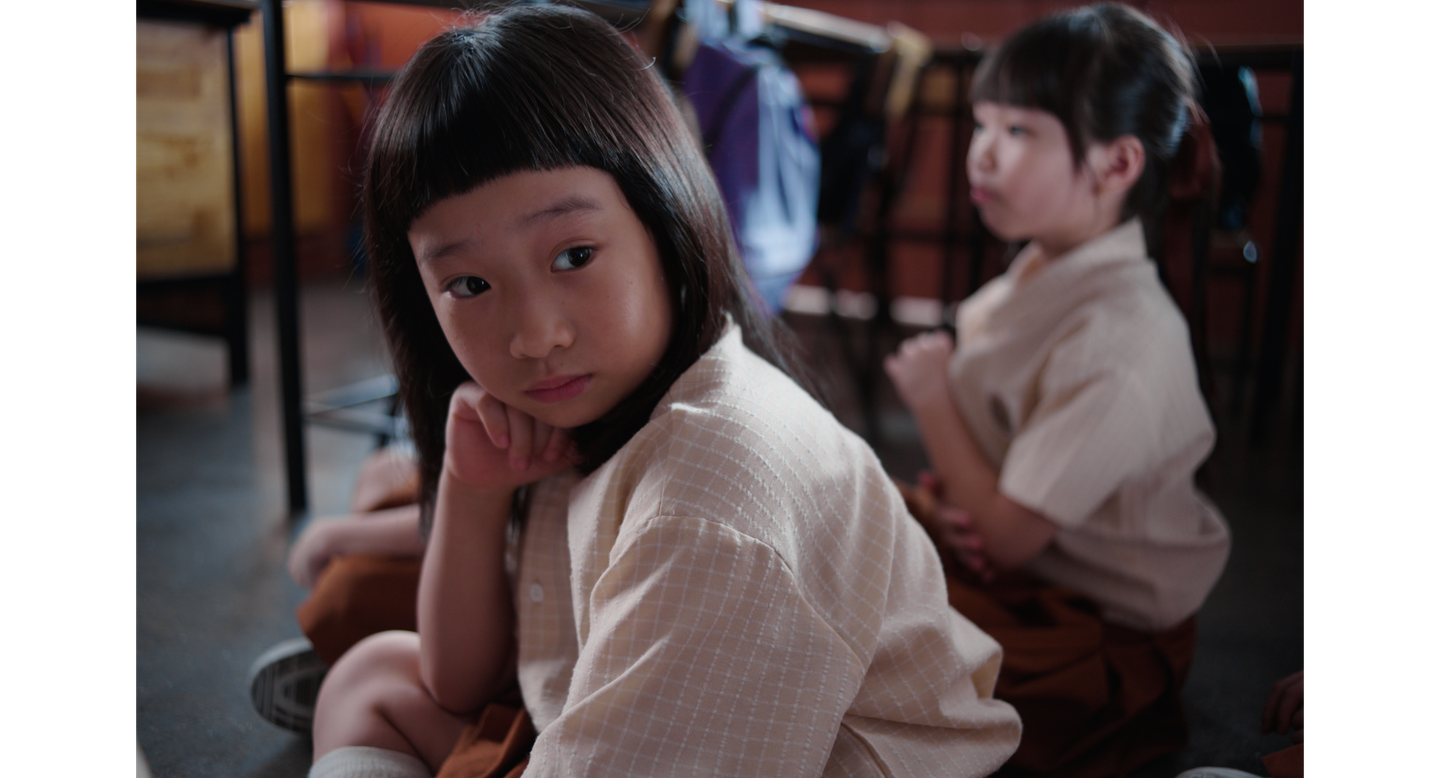
Set in Singapore in 1994, Ah Girl follows seven-year-old Swee Swee (Ong Xuan Jing) and her four-year-old sister Ah Tian (Sydney Wong), who in typical sibling fashion, play together as much as they argue. The young actors’ believability as siblings is a true testament to Priscilla’s casting process. She spent over a year working with dozens of children, allowing them to play together in natural environments to see which pairs could create a believable onscreen familial bond. After casting Jing and Wong, Priscilla took the children on activities together in settings similar to those where filming would take place, allowing trust to develop between the children, their parents, and the filmmaker.
Priscilla wanted to ensure that the children felt safe and had opportunities to play throughout the filmmaking process. In doing so, she drew out some of the most brilliant child performances in recent memory.
Swee Swee and Ah Tian treat each other with such sweetness, their eyes often filled with tears as they try to understand the decisions the adults in their lives are making around them. With recently divorced parents, the siblings split their time between two homes. The adults in their lives often lie to them, leaving the sisters confused and upset as they struggle to understand why they are not afforded autonomy or the love and comforts they witness their peers receive from their parents.
The divorce creates a series of ruptures in the children’s lives, and Priscilla brilliantly employs transitional spaces between homes– in cabs, buses, and the homes of their parents’ lovers– as settings that reflect the disorder the children feel emotionally and physically traverse.
The cinematography and direction work beautifully together as we see the world through young Swee Swee’s eyes (Swee Swee is her chosen name; her family calls her Ah Girl). The camera is almost always at her level, displaying the perspective of a tiny, young human navigating the world.
Many aspects of Ah Girl remind me of Sean Baker’s The Florida Project (2017). Both stories reckon with how underprivileged children maneuver through their worlds and try to understand the adults around them. Both weave levity into the too-adult worlds the children are forced to navigate. And both showcase some of the most brilliant child performances of the decade.
What makes Ah Girl so special is its refusal to look back on childhood from an adult perspective. Priscilla brings us directly into Swee Swee’s eyes and asks us to remember what it felt like to be small in a world where adults made decisions we didn’t understand, told us only what they thought we needed to know, and rarely considered how enormous their choices impacted us.
Ah Girl is a deeply impactful depiction of childhood. But more than that, for a couple of hours, it transports us back into our tiny selves.