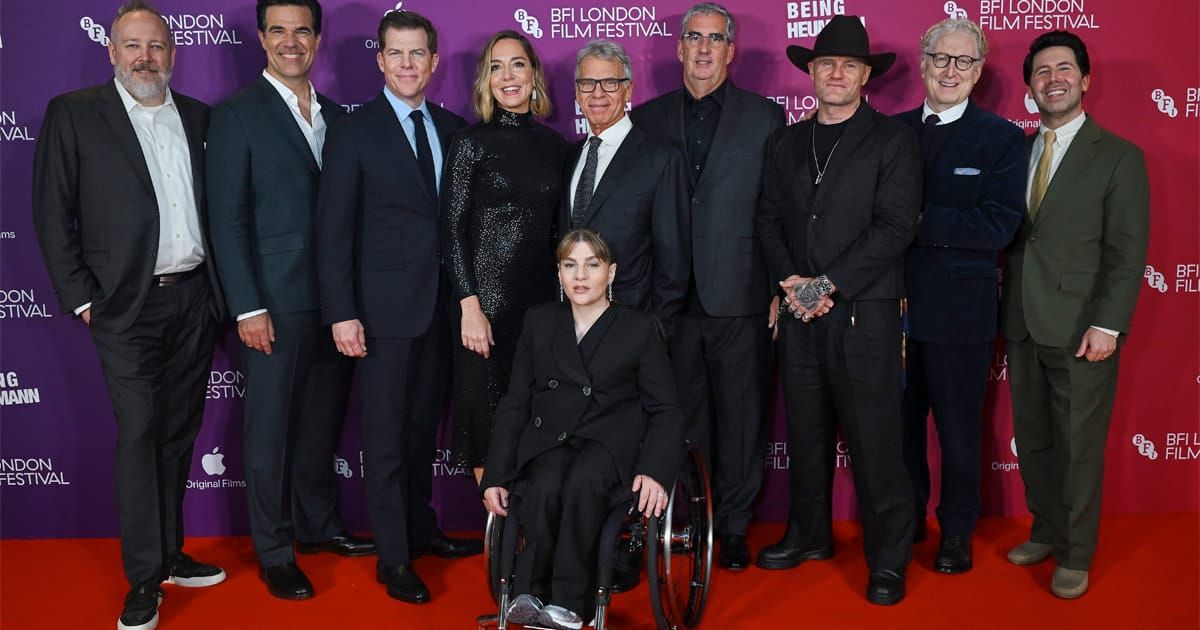
Set in 1977, Being Heumann focuses on the title character, Judith Heumann (Ruth Madeley), a wheelchair user and disability rights activist, as she assembles a coalition of other activists to advocate for accessibility laws. In order to do so, Judy with the help of Kitty (Madeline Delp), Ed (Michael Patrick Thornton), and other activists, organises what turns out to be the longest sit in occupation in the United States to put pressure on Joseph Califano (Mark Ruffalo), the secretary of health, education, and welfare, and get him to sign and enforce Section 504 at a federal level.
Ruth Madeley is wonderful as Judie as truly embodies her with an empathetic and layered performance. Madeley is never worried about portraying Judie as a likeable character, and this is key to her role as this allows her to give us a realistic and human portrayal of a woman who seems to have been a force to be reckoned with.
Being Heumann also shines a light on the incredibly important issues of accessibility rights in the United States. The film allows everyone to see how much everyday tasks can be harder for people with disability but also how disabled people might be a minority, but it is a group to which many people may one day belong to. While Judie and the group of activists that did the longest sit in protest in the United States achieved something life changing for many of them, the fight is far from over as accessibility laws are still far from perfected in the United States or any other country.
All of this is reflected behind the camera as well. While in front of the camera the audience can see all the necessary and urgent work that Judie is doing for accessibility rights, accessible needs were considered in the production of Being Heumann as well. First of all, the casting of this film deliberately looked at actors with accessibility needs, choosing to cast wheelchair users, hearing impaired people, and actors that would generally reflect the character they were portraying both in terms of ethnicity and in terms of disabilities. This may seem obvious, and it should be, but it is something that has been rarely and only recently implemented in the film industry.
Most films also don’t have a cast that includes such a high number of actors with accessibility needs. It is wonderful to see Being Heumann feature an almost entirely disabled cast, but what is even more wonderful is all the steps that have been taken in the production to ensure the wellbeing and accessibility needs of all actors on set, such as making all the trailers, and the entire set as a whole, accessible. This has rarely been done before and we can only hope that Hollywood follows suit now that this film has proven that it is not only possible, but also the bare minimum to include actors with accessibility films in productions.
While the movie focuses heavily on Judie, I do wish Being Heumann had explored some of the supporting characters in a little more details. A lot of the people around Judie, such as Kitty, Ed, or Joni, are not only pivotal to the events of the movie, but also very fascinating and interesting in their own right. As the film goes on, we learn less and less about them as the narrative tends to centre Judie and leave them behind, which is a shame because the actors who play them are also very talented and feel underutilised during this film.
Being Heumann is truly at its best in the group scenes where all the characters can shine individually but also work together, with brilliant comedic timing and excellent chemistry amongst the entire group. This gets slightly lost in the second part of the movie when the group begins to dismantle and I wish the group scenes had remained as frequent and well-constructed in the third act as well as this is part of the reason why this movie stands out.
Support our work
You can subscribe to the OBSCURAE newsletter for free, or become a paid Aficionado for £5/month to help fund independent coverage, contributor fees, site hosting, and admin costs.