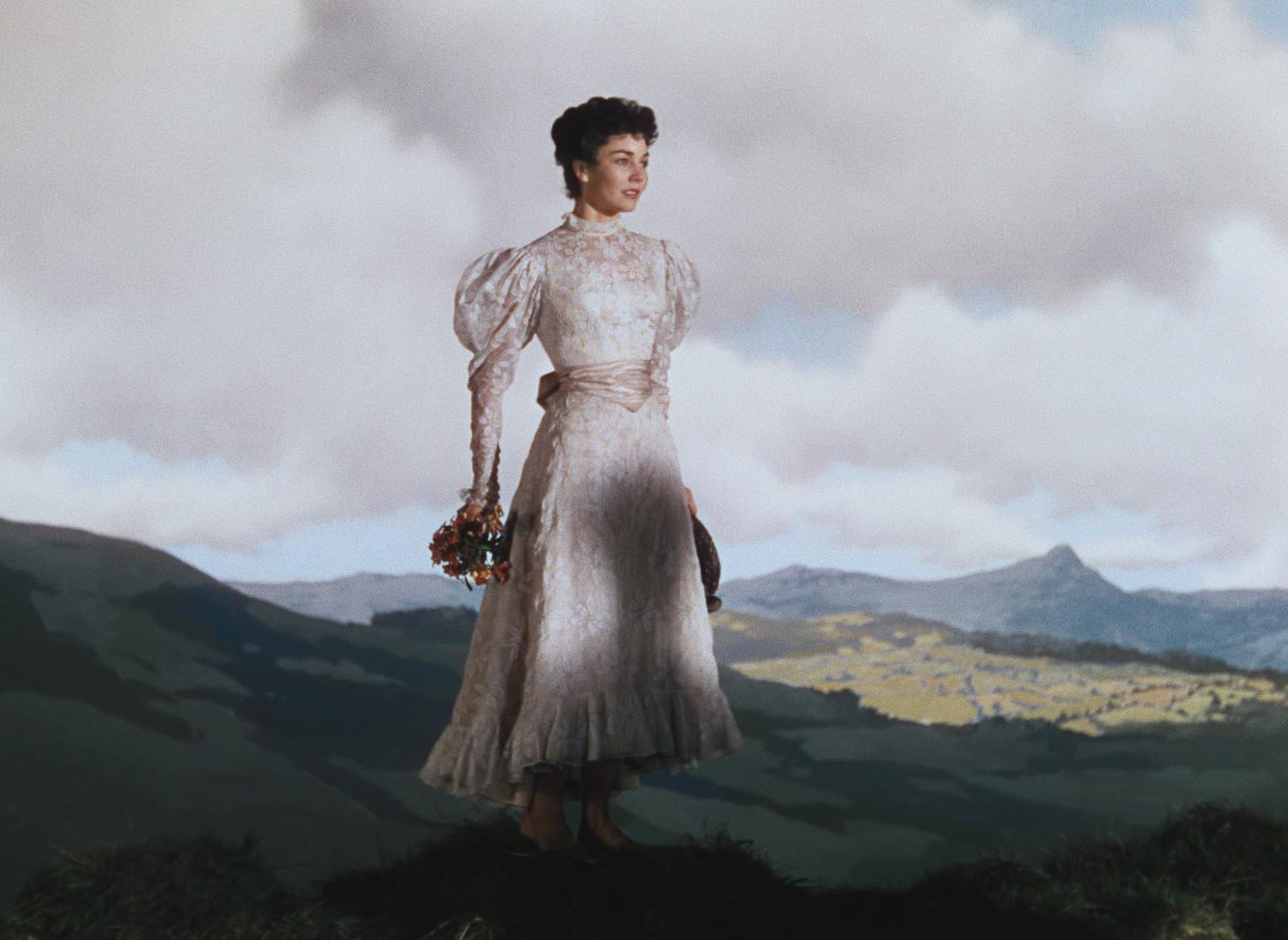
Amongst the swathes of new releases at this year's London Film Festival, a number of older gems are also returning to the big screen. Joining the likes of Ken Russell's The Devils in the programme's selection of re-releases is Gone to Earth, a beautiful technicolour period piece from Michael Powell and Emeric Pressburger.
Based on the novel of the same name by Mary Webb, Gone to Earth is a criminally under-seen chapter in the directing duo's filmography (at the time of writing, it only has 4.6k logs on Letterboxd compared to 134k for Black Narcissus, for example, or 250k for The Red Shoes). That's because renegade Hollywood producer David O. Selznick radically edited the film for its US release, making his changes directly onto Powell and Pressburger's original print, so the task of restoring the film back to the directors' cut was no small feat. The Walt Disney Company came to the rescue with this major new restoration, which was overseen by Martin Scorsese and his long-time editor (and Powell's widow) Thelma Schoonmaker.
Set in 1897, the film follows Hazel Woodus, played by Jennifer Jones. Living with her coffin-maker father and a menagerie of creatures (including Foxy, who Hazel reared from a cub after her mother was killed in a hunt) in a dilapidated cabin, she frolicks about the Shropshire hills in her bare feet, dabbles in rituals and spells, and turns heads whenever she visits the nearby village. She and her father don't see eye to eye and frequently come to blows, and, desperate to get her out of his house, he makes her swear she'll marry the first man who asks her. Thus ensues a tussle between the village's kindly minister Edward Marston (Cyril Cusack) and rogueish local squire Jack Reddin (David Farrar) – neither of whom seem particularly interested in what Hazel thinks or feels about the matter.
Powell and Pressburger are always adept at spotlighting England's thinly veiled anxieties and neuroses (most evidently in wartime satire The Life and Death of Colonel Blimp), and this film is no exception. Class and gender play a huge part in Hazel's story, gnawing away quietly at her life until suddenly the whole thing topples down and crushes everything around it. The film takes its title from a fox hunting term, when a cornered animal escapes the hounds to its burrow, and Hazel clashes with the upper class' inhumane sporting habits just as much as she rubs up against the forced niceties of lower-middle-class Marston's overbearing mother.
Jones brings something steely and real to Hazel's naivety. Throughout the film, she's framed as part of the striking Shropshire landscapes whence she came, far more at home in the natural world than at a hearth or a dining table. Christopher Challis' gorgeous cinematography paints every exterior as if it were lit by golden hour or candle light, to the point where the film's interior scenes feel anxiously oppressive.
By the time the film ends and Hazel's fate is sealed, it seems foolish to think it could have gone any other way; her destiny seems so set in stone that the film feels more like a nightmarish fairytale than anything else. Something is rotten in the state of England, and its women, more often than not, pay the price.
Support our work
You can subscribe to the OBSCURAE newsletter for free, or become a paid Aficionado for £5/month to help fund independent coverage, contributor fees, site hosting, and admin costs.