Before Bucking Fastard had even really begun, the audience was already applauding.
The film opens with a dedication to David Lynch, prompting the cinema I sat in– packed with Herzog lovers, cinephiles, filmmakers, and film press– to erupt into cheers and applause. By the time the credits rolled, the mood was decidedly more divided. Some felt the plot was too abstract; others loved the first act but struggled to engage with the rest; a few people even walked out.
And then there were those of us, myself included, who left knowing we had just seen something really strange and special. A once-in-a-lifetime kind of movie.
The dedication to Lynch was touching; Herzog and Lynch were friends and collaborators, most notably on My Son, My Son, What Have Ye Done (2009), which Herzog directed and Lynch executive produced.
As a massive fan of Lynch’s work (my comfort watch when I’m feeling down is a YouTube video of David Lynch mending a pair of his pants, which everyone should watch), I feel like Lynch would have loved Bucking Fastard. The film shares something with Lynch’s own cinematic sensibility: it’s eccentric, distinctive, funny, and exactly the right amount of twisted.
Werner Herzog is a prolific filmmaker, perhaps best known for documentaries like Lessons of Darkness (1992), Grizzly Man (2005), and Into the Inferno (2016). Beyond his extensive documentary work, however, Herzog has spent decades moving between documentary, narrative, and experimental filmmaking, with films ranging from Nosferatu the Vampyre (1979) to Family Romance, LLC (2019).
If you really want to dive into Herzog– or if you want to make a movie but are too scared to start– you simply must watch Les Blank’s 1980 short film Werner Herzog Eats His Shoe. In it, Herzog quite literally cooks and eats his own shoe after losing a bet to then-aspiring filmmaker Errol Morris. Herzog had promised to eat his shoe if Morris ever finished a film and when Morris completed Gates of Heaven (1978), Herzog made good on the bet. It’s silly but sincere and speaks to something fundamental about Herzog: his unwavering belief that filmmakers should stop waiting for permission and simply make the damn movie.
This ethos has followed Herzog throughout his career. He has long encouraged emerging filmmakers to reject conventional paths into the industry, perhaps most explicitly through his Rogue Film School. Rather than functioning like a traditional film program, the school emphasized independence, resourcefulness, and the practical realities of getting a film made. It feels fitting for a filmmaker whose career has been defined as much by his peculiar worldview as by his refusal to approach cinema conventionally.
And perhaps the greatest evidence that Herzog still believes in this philosophy is that he continues to follow it himself.
Bucking Fastard feels like the work of a filmmaker with very little interest in making cinema behave as it is supposed to. Strange, sincere, and increasingly difficult to categorize as it unfolds, the film is unmistakably Herzog. Bucking Fastard is guided by the same restless curiosity that has defined Herzog’s career.
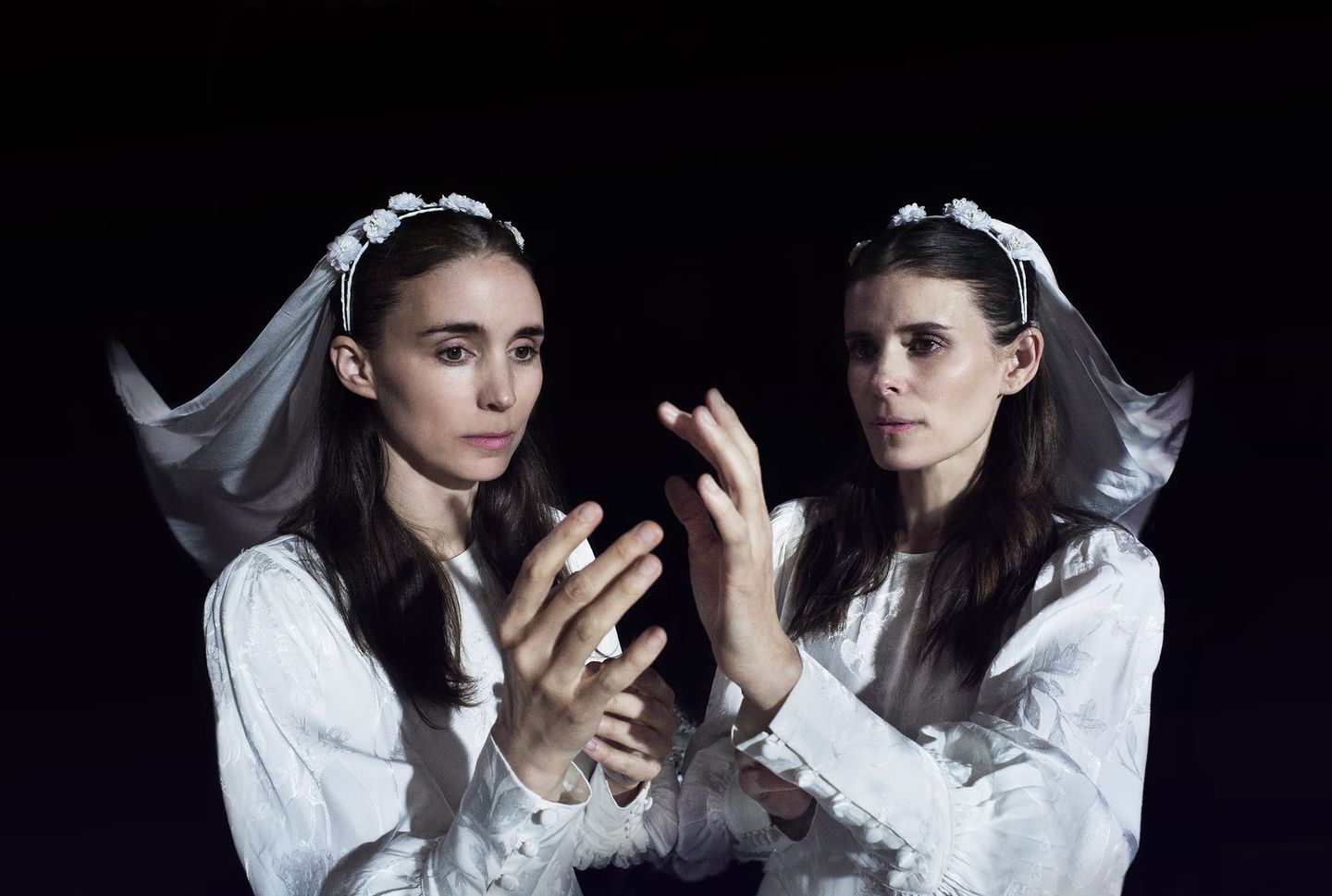
Set in Ireland, Bucking Fastard begins innocently enough as a courtroom drama, where (in real life and in this cinematic universe) sisters Joan (Rooney Mara) and Jean (Kate Mara) face a restraining order from their neighbour Gareth Mulroney (Orlando Bloom), with whom they are both in love.
The first act is especially funny as we become acquainted with the sisters’ peculiar patterns of speech and intense codependence. I fear I shouldn’t spoil much more than that because Bucking Fastard is best experienced with as little information as possible. I’d encourage you to just buy the ticket and go in having not read a synopsis.
Trust that Herzog will take you on a cinematic journey like no other. Go see Bucking Fastard on the big screen. Lean into the discomfort. Giggle and kick your feet at the absurdities. Fall into the folklore of this strange little world Herzog has built.
Bottlenecked while trying to exit the cinema, I overheard the person in front of me say to his friend, “You know what? I have no idea what we just watched.” He paused for a second before continuing, “I just have a feeling that Werner Herzog really wants all of us, no matter how weird we are, to find love.”
I think he was right.
At first, Bucking Fastard may seem compulsively obsessed with romantic love. But the more time I’ve had to sit with it, the more I see a film overflowing with love in all of its permutations: familial love, romantic love, love for animals, love for neighbours, love of self, and even love for the rituals we fall into to make sense of our lives.
Herzog doesn’t seem interested in whether these forms of love are sensible or socially conventional. Bucking Fastard builds a world where chasing love by all means necessary is all that really matters.
Maybe that’s why the film feels so at home beneath its dedication to David Lynch. Both filmmakers have spent their careers building characters and worlds where the outcasts and weirdos are afforded the tenderness, affection, and the right to love and be loved. There are worse things, after all, than being a weirdo who loves deeply.
Support our work
You can subscribe to the OBSCURAE newsletter for free, or become a paid Aficionado for £5/month to help fund independent coverage, contributor fees, site hosting, and admin costs.