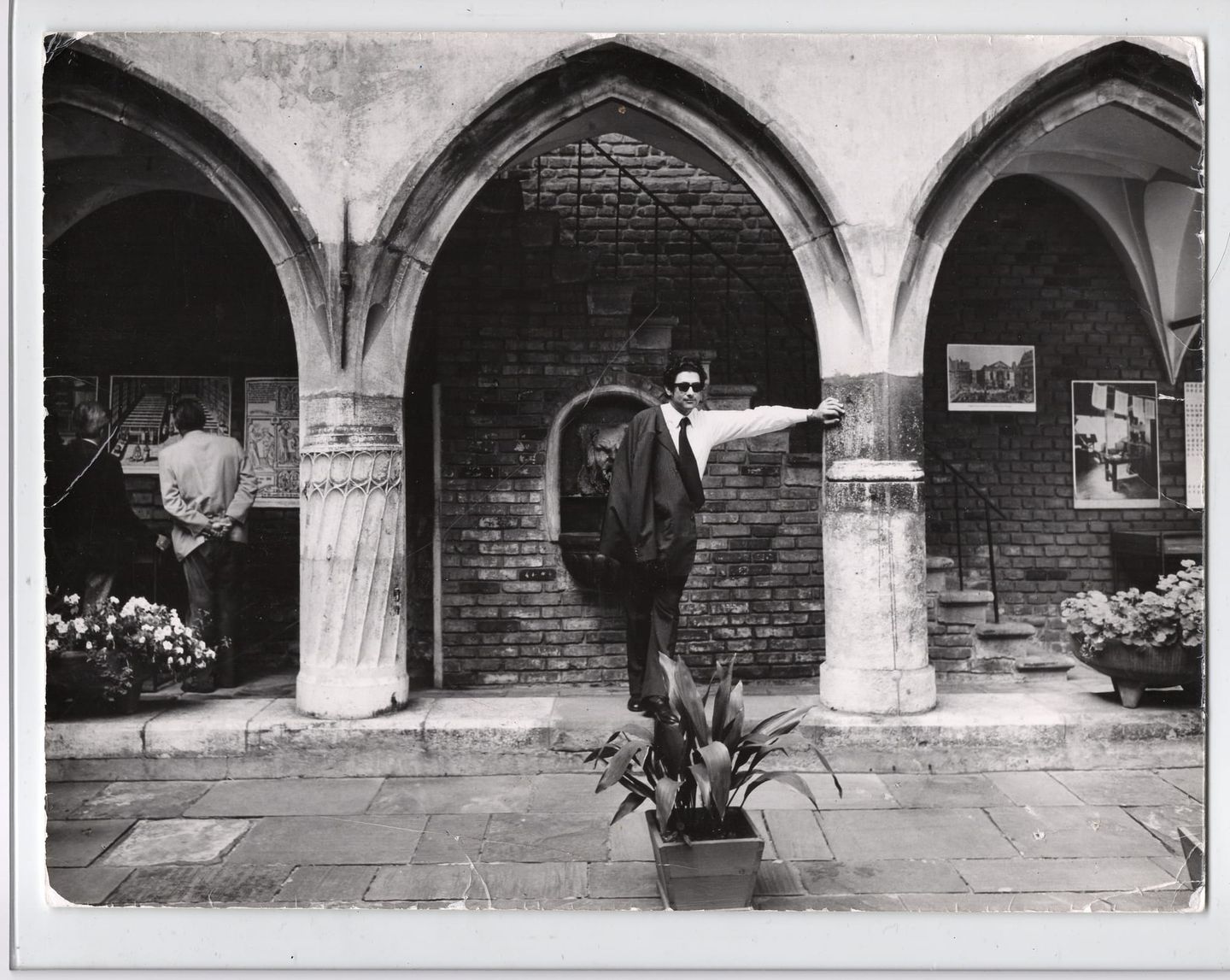
Edward Said: Between Worlds is a stunning portrait of a life and a people. We are told these stories through Edward Said’s own words as he narrates the story of his life alongside the story of the Palestinian people, through a variety of beautifully interwoven archival footage. The film was crafted with such care and love, you can tell that it was built by those that have great respect and admiration for Edward Said and his work. The film tells the story of exile, resistance, humanity and refusing to be defined by the colonial powers that be.
I have known Edward Said as a prominent scholar and academic, but I was never aware of his humour. As an audience we laughed, in awe at his sharp sense of humour in response to utterly ridiculous questions from the press. I admire his incredible wit amidst his brilliant social critique. This film gives space to Edward Said, the person; not just the famous activist and academic, but someone who was a lover of music, hilarious, wise, grieving, imperfect.
The film does not shy away from the complexity of his work and his evolving views on how to move forward as a people. It even highlights his controversial work with the West-Eastern Divan Orchestra, regarded in some anti-Zionist spaces as contributing to normalization. The film regards Said in all his multitudes as a person, his incisive political work and groundbreaking impact, alongside his imperfections. It is hard to know how his perspectives would have continued to evolve and grow, if only he had more time.
In the film, Said himself quotes the well-known Walt Whitman line “I contain multitudes”. As someone who the media continuously tried to put in a box, to distort the narrative of who he was and what he stood for, it was incredibly powerful that this documentary was told in his own words. In this sense, Said is able to speak for himself, and disrupt the narrative, imperfections and all.
It was also incredible to see some moments of Palestinians experiencing joy and levity, an intentional pivot from the horrific images of suffering and pain we’ve come to know all too well. The film represents the effects of occupation head on, both it’s gravity and its impact, but I appreciated that there was space made for these additional facets as well. As audience members we had the immense privilege of seeing never-before-seen home videos from Said’s family estate, filmed by his father of Said’s life before the Nakba. These moments provide deeper insights into Edward Said the boy, before he became the preeminent scholar we all know.
Edward Said’s works have been on my reading list for a long while. This film has inspired me to finally engage more deeply with his work, read his literature and listen to him speak. Said was incredibly enigmatic, and spoke with such a sense of profound justice, that you can’t help but listen, pulled in by his powerful words. This film is great for people who are familiar with Said, to deepen their understanding of his work, and to engage with unseen footage and untold stories. For those who are less familiar with Said, this is a fantastic introduction to the scholar, the boy, the man.
Support our work
You can subscribe to the OBSCURAE newsletter for free, or become a paid Aficionado for £5/month to help fund independent coverage, contributor fees, site hosting, and admin costs.