Giant (Spoiler Review)
Piers Brosnan and Amir El-Masry star in "The UK's answer to Rocky" - Suhalia analyses the biopic for its hits and it's misses.

Editor's Note: While working the Palestine 36 Red Carpet at TIFF last year, I made an amazing friend in Suhalia from Temple of Geek, who helped me learn the ropes and shared my burning passion for MENA Cinema and representation! She very kindly offered to review "Giant" for us, which screened at BFI LFF last year - enjoy!

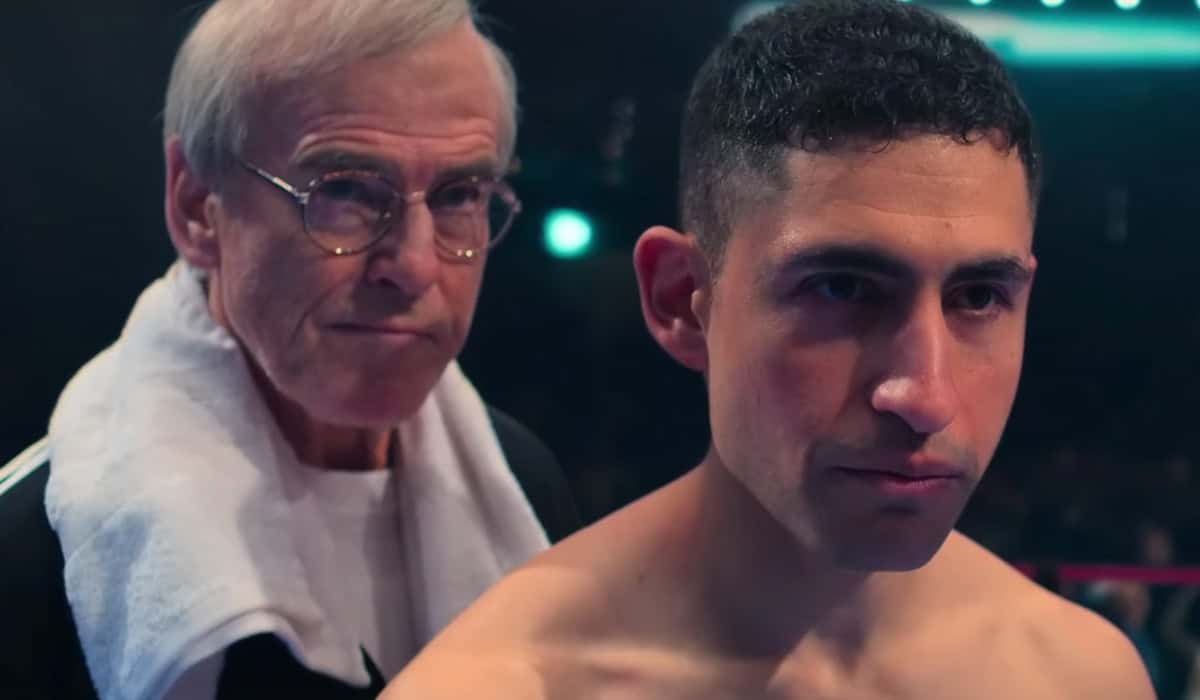
From his humble beginnings as a young British-Yemeni Muslim kid living in Sheffield, to becoming a world champion, 'Giant' brings the larger-than-life boxer Prince Naseem "Naz" Hamed to life. The film also explores his training under Brendan Ingle, an Irish boxing trainer, who played a crucial role in his success. At the heart of this film are Irish actor Pierce Brosnan as Ingle and British-Egyptian actor Amir El-Masry as Hamed. Brosnan needs no introduction, from the iconic 007 to “Mama Mia!”, he’s had a long, successful career with many accolades and awards. El-Masry is a star in his own right, bridging both Western and Egyptian cinema with roles in “Star Wars”, “The Crown”, “The Night Manager”, and winning a Scottish BAFTA for his performance in “Limbo".
El-Masry and Brosnan deliver outstanding performances, melting into their characters and embodying their mannerisms. From accents to dance moves and physical transformations. The rest of the cast delivers as well. The young actors (Ali and Ghaith Saleh), who play Hamed at different ages, nail their performances, which transition into Amir’s portrayal. There’s so much heart, sweat, and laughter throughout, and you can’t help but fall for Hamed’s charm.
Having a UK film about a Muslim, Arab icon who succeeded against all odds feels surreal. And to have Hamed portrayed by a Muslim, Arab actor is incredible. This film was also heavily promoted in the UK, with ads on local buses, and made it to the film festival circuit. “Giant” premiered at the BFI London Film Festival and opened the Red Sea Film Festival, with Hamed himself in attendance.
We’re so used to our stories being left out of the industry or being told for us by others without being included in the conversation. Arabs, Muslims, and more broadly North Africans and South West Asians (more commonly referred to as the Middle East) get portrayed as villains, oppressed characters, and quite often they’re played by actors of other ethnicities and backgrounds.
It’s rare to see a story like this, and rarer still to see this kind of representation. And it shouldn’t be.
The film doesn’t shy away from Hamed’s ethnic and religious roots, just like he doesn’t shy away from either in his life. Hamed himself doesn’t shy away from his ethnic and religious roots. In fact, it shows how strongly he holds to both and uses them as a source of strength. We see a scene of young Naseem changing the time of a boxing match so he could pray on time, with Ingle and his son supporting him. We see Hamed praise Allah for his success in interviews. We see his mother wearing a hijab. We see him correct people, telling them he’s “Arab”. And we finally see his Yemeni heritage being acknowledged as he’s announced before a match.
And we see the difficult experiences of an Arab, Muslim family living in the UK during that time. The blatant racism they faced is the reason Hamed joined Ingle’s boxing gym in the first place. His mother asks Ingle to train her sons to defend themselves. We see young Hamed being bullied, teenagers graffiting their family’s store, racism in his hometown and the boxing ring, and even the wrong slurs being thrown at him. And this didn’t stop, even as he won match after match and climbed to the top.
Seeing Hamed use that hatred as fuel and the ways he internalizes and compartmentalizes these experiences is familiar to anyone in the diaspora who grew up abroad. There’s a certain thick skin one must build up to endure these experiences and feelings of being “othered”. To let the hatred roll off so you can get on with your day. Part of that skin Hamed built up was his showmanship in the ring and cockiness. He uses it as a show, to stand out amongst his peers, disarm his opponents, and as an armour against those who doubt him.
But facing microaggressions, racism,and hatred so often, it inevitably has an effect. One of the standout scenes is the fight with Johnson. We see Naseem make his way to the ring with people in the crowd yelling at him, rooting for him to fail. Up to this point, Hamed exuded power, calm, and confidence in his fighting style, but in this fight, there was more anger, tension, and focus. The way El-Masry portrays the complex emotions, the subtle shift in his demeanor, and the changes in his fighting style are brilliant. The facial expressions, showing the internal conflict, the forced smiles that are part of his show, and the laser focus when he zeros in on his next move. This is the one time we see a crack in Hamed’s bravado, the cocky facade. The showman side drops as he focuses on his target. And the distinction when he tells Ingle, “they’re not yelling at us, they’re yelling at me".
This is when we see the distance that’s formed break apart their relationship. Ingle has been championing, supporting, and protecting Hamed, but at the end of the day, it’s not him that the hate is directed towards. At the core, this is a story about Hamed and Ingle, their relationship, and ultimately their estrangement. In a moving scene towards the end, Brosnan and El-Masry play off each other beautifully, delivering an emotional, powerful moment. It ties together the whole story and makes you reflect on life and relationships with those who matter.
However, there is still a missing element in this story: Naseem’s family and inner world. We get glimpses of what the hate and racism did to Hamed and his family, but we don’t get invited into their world. We see his mother and brother throughout the film, supporting Hamed and being involved in his boxing career, but we don’t get to see their relationships outside the world of boxing. In contrast, we see Ingle’s relationship with his wife, we spend time in his home, with his children, and his relationships with other boxers.
This omission also begs the question, why wasn’t Hamed consulted for the film? When he watched the film at the Red Sea Film Festival for the first time, he had a positive reaction. But we could have gotten more from his side, especially in the third act of the film. After the two go their separate ways, the story shifts its focus to Ingle. It even shows us Hamed’s final match (and first loss) through Brendan’s experience and reaction, but never shows us Hamed’s experience during that time. Including more of Hamed’s world outside of boxing would’ve rounded out this story.
Overall, “Giant” is a beautiful story with so much heart that’ll keep you captivated throughout, whether you’re a boxing fan or not. And with its international release and positive reception, it’ll hopefully make waves in the industry and open up opportunities for more stories like this. Stories about Muslims, Arabs, and other minorities that include those same people on screen and behind the scenes.