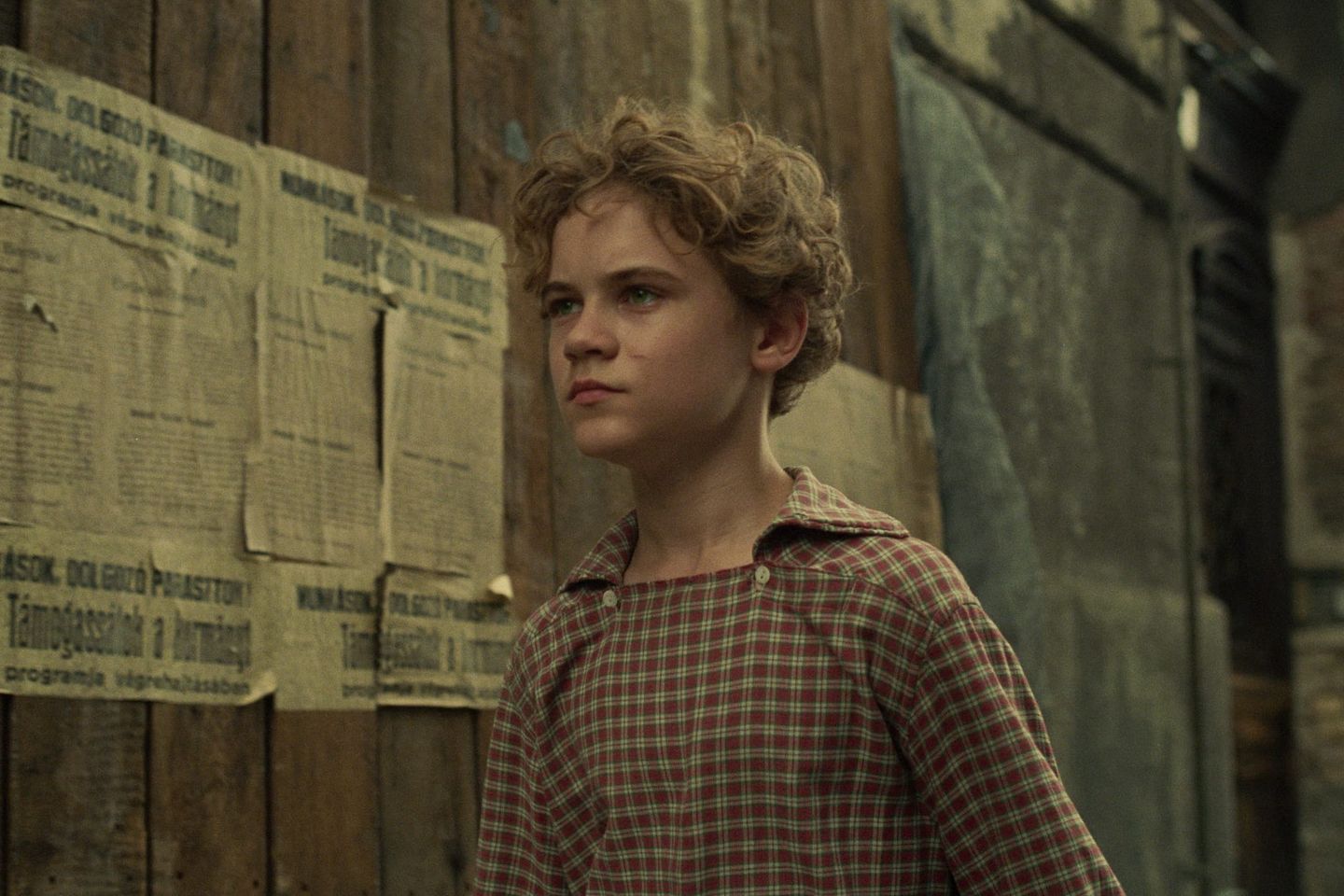

With an endless catalogue of World War II films, it can be difficult to find a war film that stands out. Luckily, Nemes, winner of the Cannes Grand Prix in 2015, can successfully add his film Orphan to the list of war films which have a bold story to tell. Following Andor Hirsch (Bojtorjan Barabas), a young Jewish boy with a broken home, Orphan brings the camera down to a level that all audiences can empathise with.
With a difficult upbringing, raised in a state orphanage for his protection during World War II, Andor is striving to find himself. With the end of the war, Andor is deemed lucky because his mother, Klara (Andrea Waskovics), is still alive and claims him as her own.
However, this drastic change leaves Andor feeling uneasy, making it hard to truly bond with his mother. Seeking the guidance of a male figure, Andor wishes to be reunited with his idolised father, Hirsch. A rebel in the fight against the Germans, Hirch was sent to the concentration camps during the war and was never heard of again. Andor's mother concludes that her husband died and will never come back to them. Stubborn as ever, Andor believes his mother is giving up on their family as she tries to put Hirsch in the past.
Living in Soviet-controlled Hungary, a single mother with a child to provide for, Klara slowly becomes dependent on an old friend, Berend Mihaly (Gregory Gadebois). A butcher and a drunk who rides an obnoxiously loud motorbike throughout the town, Berend is known for his unpleasant reputation. Klara's coworker, Elza (Hermina Fatyol), encourages her not to bring Berend back into her life because of how poorly he treated her during the war. Klara, however, feels obligated to continue a relationship with Berned because he hid her throughout the war and eventually helped her find her son. Andor completely rejects the idea of bringing a new man into their family, as he believes his father will one day come home. The fear of becoming Berend’sson and losing his father forever kick-starts Andor to go down a dark path he will not be able to turn back on.
I will not spoil the climax of the film, as you should really go in blind, but I will tell you one thing, and that is, Orphan is maddening. You witness the choices Andor and Klara make, you understand their reasoning, but all you want to do is stop them. The damage they continue to bring into their lives is difficult to watch, but you understand it is all fuelled by trauma from the war. Andor is a child who has never known his father, but will do whatever it takes to be reunited. Andor does not understand the consequences of the reckless decisions he makes and how he harms others in the process of finding his father. Klara knows Berend is a violent man, but she is left with little choice but to bring him back into her life if she wants to support herself and her son in a world that shuns her heritage. The lasting damage of World War II produces fear and longing, leading our characters to be taken advantage of by forces stronger than them.
With beautiful cinematography and blocking, the camera follows Andor through keyholes and broken windows, lingering on the child as he tries to navigate the destroyed world in front of him. Walking along crumbled buildings and 24/7 police surveillance, this is no life for any child to grow up in. Having your future dangle in front of you, not knowing if you will have stability or security. Adults talking in hushed tones and hiding family members from the A VH, the fear of the powers that be is expertly handled by Nemes.
Orphan is a rare take on how, even after war, the lingering effects can be just as explosive as any crossfire. As a history buff, I was surprised by how much I enjoyed Orphan. I am satisfied that Nemes was able to divert my expectations of a World War II film and push past the standard war piece. The performances from Barabas and Waskovics are compelling and leave you wanting more. You fear for Andor and Klara’s future, but you hope one day soon the power will finally fall into their hands. Leaving them the autonomy to make the right choices and break free from the trauma of the war.