"I'm going to fictionalise my experience in order to radicalise it," Derek Jarman says in the opening scenes of new documentary Queer Edward II. The groundbreaking artist and experimental filmmaker adapted Christopher Marlowe's 16th-century play Edward II, about the titular monarch's life and downfall, into a contemporary story of state violence against queer people in 1991. He didn't have to look far for inspiration: Section 28, which outlawed the "promotion" of homosexuality by local authorities, had come into effect three years prior, and Clause 25, which proposed higher penalties for public sex acts between gay men, was put forward that same year.
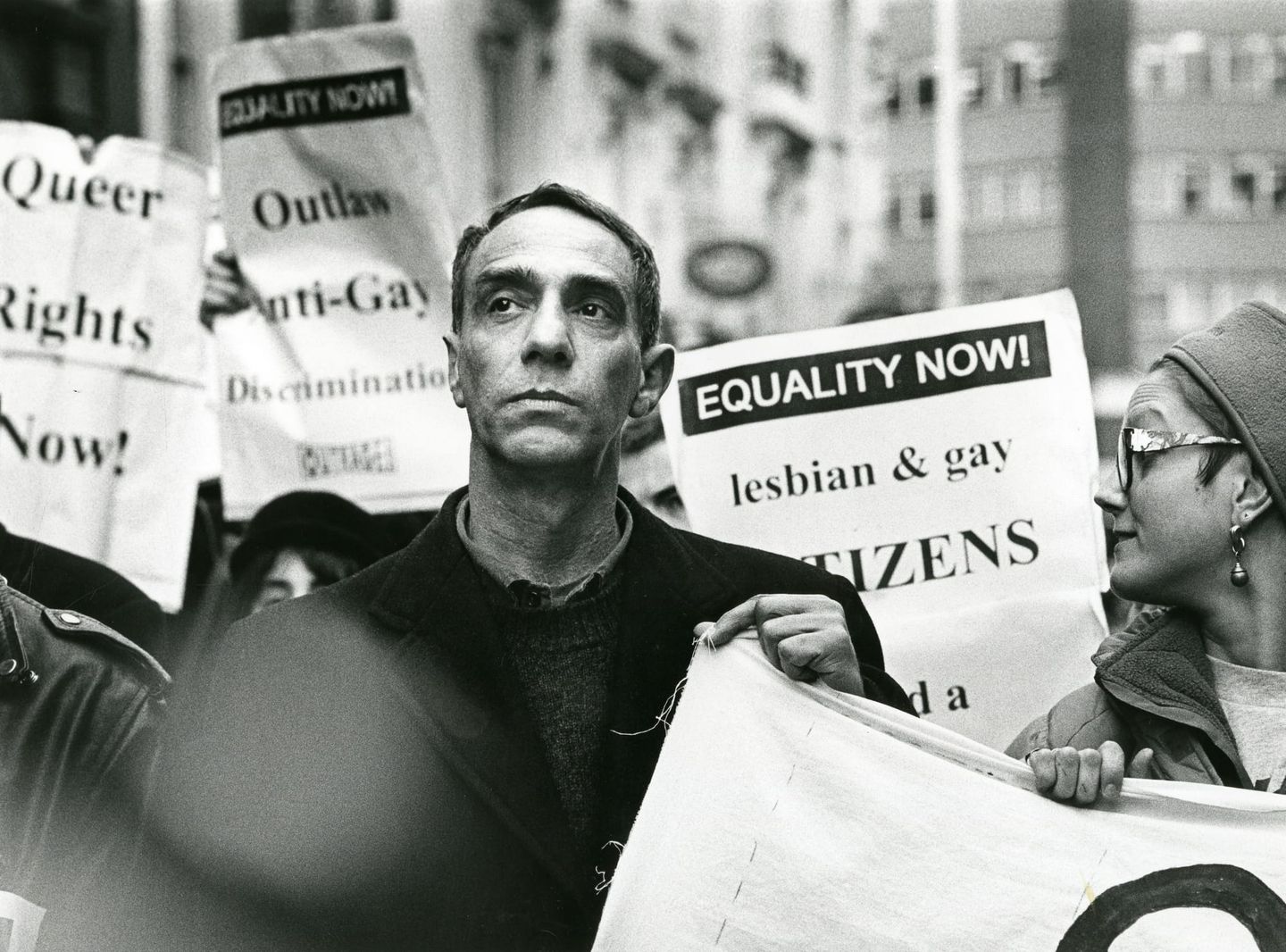
Debut director Theo Rollason intercuts behind-the-scenes footage shot by the film's cinematographer Seamus McGarvey with archival queer protest clips and televised interviews with Jarman (including one on Tonight With Jonathan Ross in which he denounces Sir Ian McKellen's decision to accept a knighthood from the British state. Who could imagine such a conversation taking place on a talk show couch today?). Together, they paint a moving picture of a filmmaker's lifelong commitment to making defiant queer art under the weight of the UK's unrelenting homophobia.
On the set of Edward II, Rollason paints Jarman as an instantly likeable figure. He's charming and witty with his crew and joins in with his cast as they make tension-relieving jokes about threesomes and M&S underpants between half-naked takes. The documentary works well in conversation with Making Marie Antoinette, another behind-the-scenes doc that screened at London Film Festival, although the two films couldn't be documenting more different sets or stories. What they have in common, though, is a tenderness in the way the lens points outwards and a determination to remember these moments exactly as they were.
And there's no shortage of gems here. Shooting took place at Berkshire's Bray Studios, west of London, and much is made of the fact that Cliff Richard is rehearsing for his upcoming tour on the same lot, including the film's sound designer performing a warbling Cliff cover for the camera. This subplot reaches a riotous conclusion when a horde of OutRage! activists, who'd been brought along as extras on Jarman's film, storm Richards' studio to present him with "the key to the closet door."
In Marlowe's play, Edward II was murdered for his decade-long affair with nobleman Piers Gaveston. Jarman explains that he "rescues" Edward from his fate" with his take on the source material: instead, Edward's executioner throws away his lethal weapon and kisses the imprisoned king. The film ends with Edward's young son, wearing lipstick, dancing atop a cage containing his father's betrayer.
Queer Edward II's final shots, meanwhile, see furious protestors descend on the Houses of Parliament, just days after Jarman died of AIDS, as the UK government voted against lowering the age of consent for gay men. The news of the vote's outcome arrives just after a minute's silence for Jarman. Many queer people in the '80s, '90s, and now haven't been rescued from their own fate, but the fight goes on. Maybe the rescuing doesn't need to happen in one big climactic scene, Rollason seems to say. Maybe it's the everyday small acts that make a fate, and those acts that can rescue it too.
Support our work
You can subscribe to the OBSCURAE newsletter for free, or become a paid Aficionado for £5/month to help fund independent coverage, contributor fees, site hosting, and admin costs.