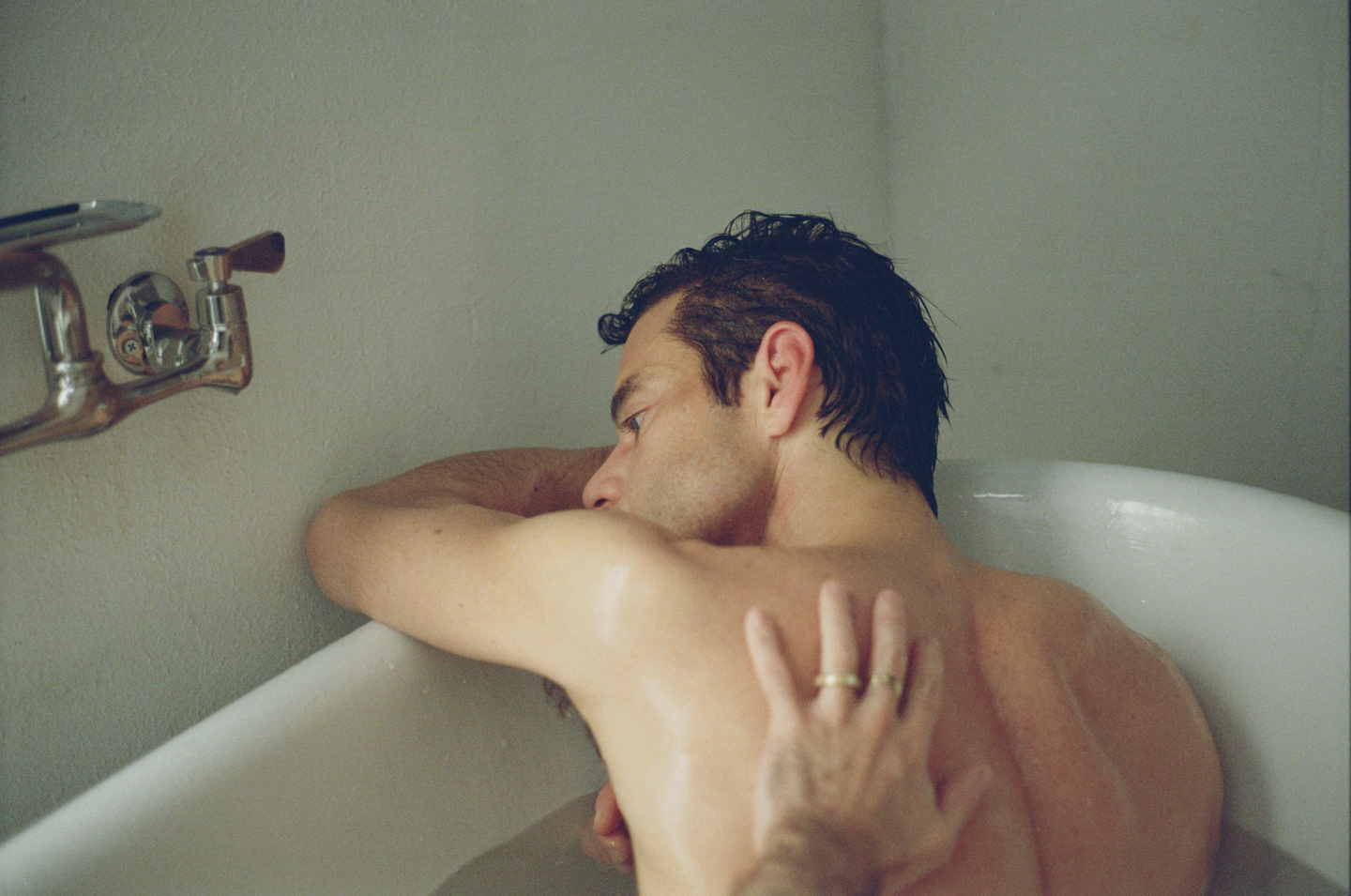
Set in 1980s New York at the height of the AIDS crisis, Ira Sachs’ latest feature The Man I Love follows New York actor Jimmy George as he prepares for his latest theatrical production while navigating living with AIDS and his relationships with his partner, lover, family, and theatre colleagues.
Sachs isn’t concerned with showing audiences a conventional narrative. Instead, the film unfolds through a series of vignettes that gradually paint a portrait of Jimmy’s life. These fragments capture the intimacy of the everyday: rehearsals, parties, disagreements, sex, illness, and the fleeting moments in between.
The music in the Man I Love is full of incredible music particularly numbers performed by Malek and Rebecca Hall who plays Jimmy’s sister Brenda. A standout number is Malek’s cover of Melanie Salfka’s "What Have They Done to My Song Ma," which she wrote to express her frustrations and heartbreak of how the music industry used her to profit from, while they taking away her artistic voice. The song laments over one’s person being altered, consumed, and taken beyond its creator’s control. The lyric, “They picked it like a chicken bone / And I think I'm half insane" takes on a different resonance here as Jimmy’s cognitive decline increasingly disrupts his work, relationships, and his sense of self.
Sachs has built a stunning visual language, which envelops the audience in warm tones and textures. Through its colour grading, set design, costuming, and Sachs’ willingness to let the camera patiently linger on performers’ faces and eyes, The Man I Love creates an extraordinary sense of intimacy with its audience.
Jimmy’s battle with AIDS is never played for spectacle. Instead, the film makes room for the uneven realities of living with AIDS alongside the ordinary rhythms of life. We are welcomed into parties Jimmy throws in his apartment, surrounded by fellow artists, queers, friends, and the people he loves. They listen to one another sing and perform. They laugh, flirt, and nestle into each others’ bodies. These scenes offer a beautiful glimpse into queer kinship and community, emphasizing not simply who was lost to the AIDS crisis, but the lives, relationships, pleasures, and worlds that existed alongside this time period.
The disease remains a spectre throughout The Man I Love, which makes the film's vignette structure embody a feeling of hauntology; moments of queer life are shadowed by our historical knowledge of the AIDS crisis. While Jimmy’s illness quietly alters the meaning of the spaces, relationships, and memories around him, the presence of AIDS haunts the film’s edges.
The Man I Love is populated not simply by people living through the AIDS crisis, but by futures that feel increasingly uncertain and by a queer world the audience knows will be– is– irrevocably changed. The film’s warmth makes that haunting all the more aching. The parties, songs, performances, and quiet domestic moments feel simultaneously alive and also like memories, allowing the spectre of loss to coexist with pleasure, love, kinship, art making, and queer life.
For fans of Sachs’ 2023 Passages, and for anyone seeking a gentle, albeit aching, queer love story, The Man I Love is not to be missed.
Support our work
You can subscribe to the OBSCURAE newsletter for free, or become a paid Aficionado for £5/month to help fund independent coverage, contributor fees, site hosting, and admin costs.