Josh O'Connor has had an incredible year with leading films like Wake Up Dead Man, The History of Sound, The Mastermind, and his role in Spielberg's newest film, Disclosure Day. A film of his, which may fly under the radar, is out in the UK right now (and was the Opening Night film for Picturehouse Create): Rebuilding.
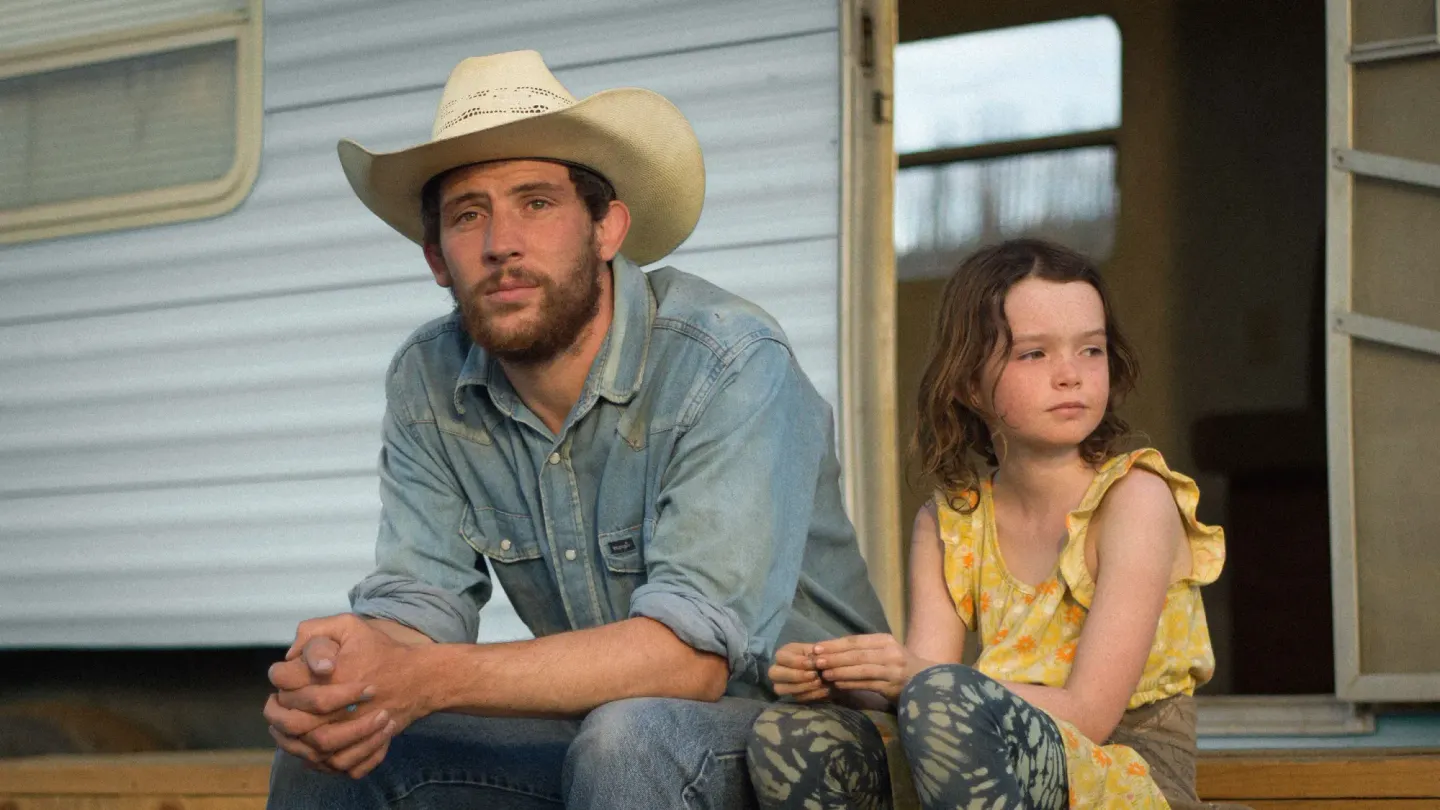
Rebuilding (dir. Max Walker-Silverman) stars O'Connor as a rancher, Dusty, who has lost his home and ranch to a wildfire. He ends up in a FEMA camp living in a community with others who have lost their land, and reunites with his ex-wife (Meghann Fahy) and daughter (Lily LaTorre), and his mother-in-law, who is played by Oscar-winning Amy Madigan.
Hopecore is a term that has entered the popular lexicon in recent years as a direct response to how tiring and depressing the world can be. It's a genre that focuses on optimism and uplifting people against the constant source of negative news we face and existential dread. It's also a term that I would use to describe Rebuilding. It's a tender, gentle, and sentimental film which had me exiting the cinema feeling content and moved. Josh O'Connor's lead performance here is a very lonely one, and one where he leads as a man without a purpose. As he looks out on the expanse of his once ranch with devastation, we see how much the land meant to him and the history of it. Contrast that to where he first enters his FEMA trailer, which is tiny and cramped, and he feels too tall for the space and fits in it awkwardly; it is evident that he is a man who has lost everything. Throughout the course of the film, he rediscovers that purpose and meaning through engaging with those living in the FEMA campsite and his daughter, ex-wife, and former mother-in-law.
Lily LaTorre's performance as Dusty's daughter, Callie Rose, is exceptional and one that is evocative of Brooklynn Prince in The Florida Project and Frankie Corio in Aftersun. O'Connor is a capable leading man, and LaTorre's performance sells this image of an absent father. There is a distance in this relationship, and one that necessitates Callie Rose remain wary of O'Connor's dreams to rebuild his ranch and the idea of rebuilding a relationship with him. My favourite parts of Rebuilding were the scenes between the two, particularly one where Callie Rose needs access to the internet for her homework, but Dusty is unable to provide it, and the pair sit in the parking lot of a small public library. Dusty is disappointed with himself, but his ex-wife later informs him how much Callie Rose loved sitting in his truck with his jacket. This scene is one that speaks to memory and perception. Dusty is already crestfallen with losing the ranch and views any mistake of his disproportionately. Callie Rose is reserved, but ultimately hopeful about their relationship. To her, this memory of doing her homework in the car park of a public library is evidence that a relationship with her father is possible.
Rebuilding is a film about human connection and resilience, and it's a touching portrayal of both. Much of the American psychological character is based upon this old-founded view that people should pull themselves up by their bootstraps. To persevere through adversity with no help. Initially, Dusty is like this. He does not seek help for his tap that does not work and refuses help from those in the campsite, distancing himself. But as the runtime progresses, he takes the help. A neighbour fixes his tap, and another provides him with a booster seat for Callie Rose. There is love and support not only from family, but neighbours who become friends. I often think about how cruel and harsh the modern world can be, but also how beautiful it is. Kind words from a stranger can make your day, and people can be helpful, no matter how small or big your problem may seem. Rebuilding is a film I embrace as someone who sees the beauty in the everyday and in people, because it affords so much tenderness and sympathy to its characters in positions well out of their control, and instead of them becoming hardened by this experience, they respond by helping each other.
I often think of songs and albums that remind me of certain films; Kyoto by Phoebe Bridgers for Lady Bird, Girl So Confusing (Remix) by Charli XCX and Lorde for The Social Network, and Chinatown by Bleachers and Bruce Springsteen for Eternal Sunshine of the Spotless Mind. Rebuilding's reverence for rural America and its landscape, which is shown in all its gorgeous hues with shots scattered throughout, reminds me of Mitski's The Land is Inhospitable and So Are We, which touches on hope, despair, and the desire for connection. Ultimately, that summarises the film perfectly. Rebuilding is a hopeful, gentle, and tender film that speaks to how beautiful human resilience and connection is, alongside being an important reminder of how valuable the land we inhabit is.