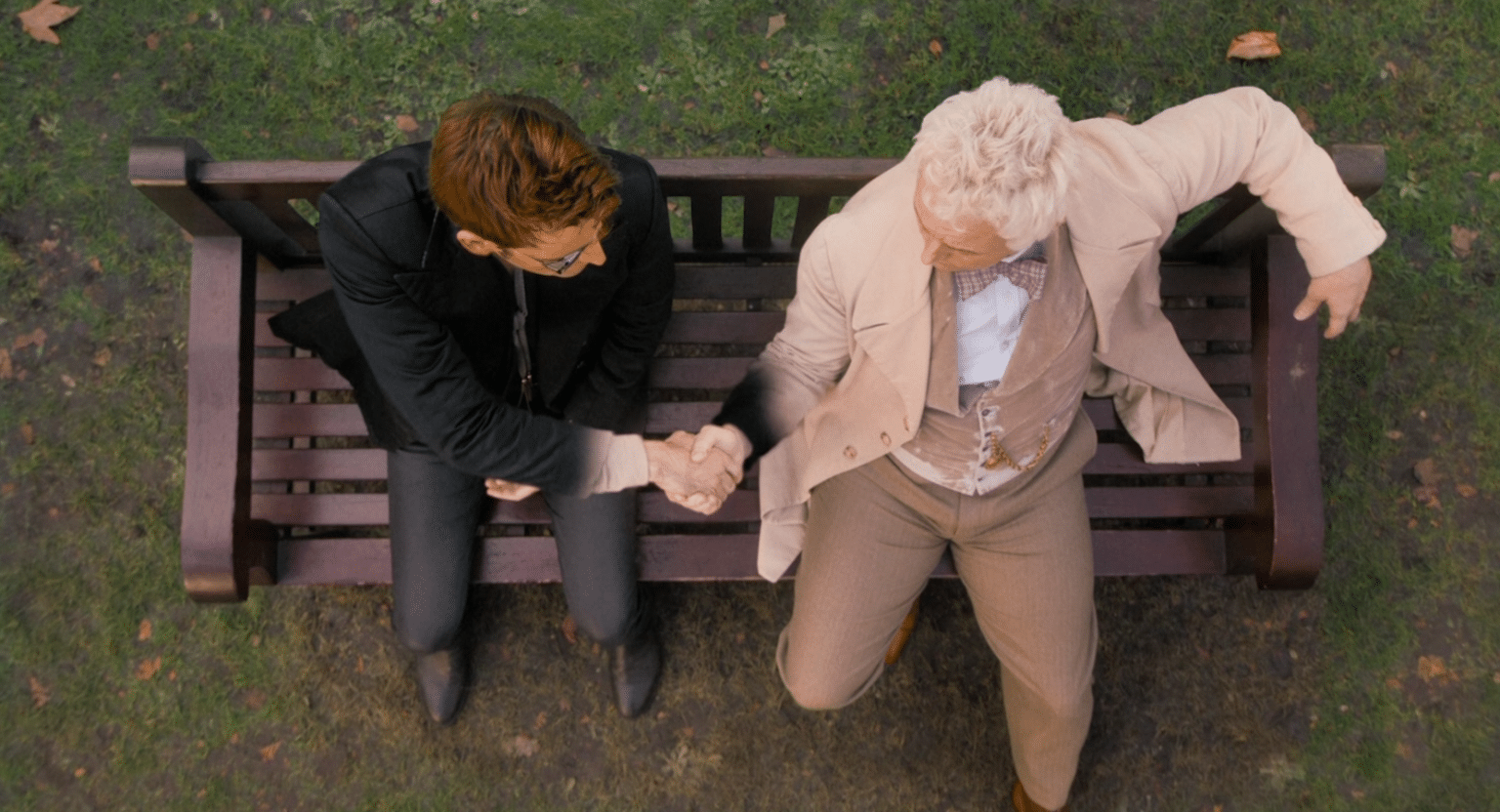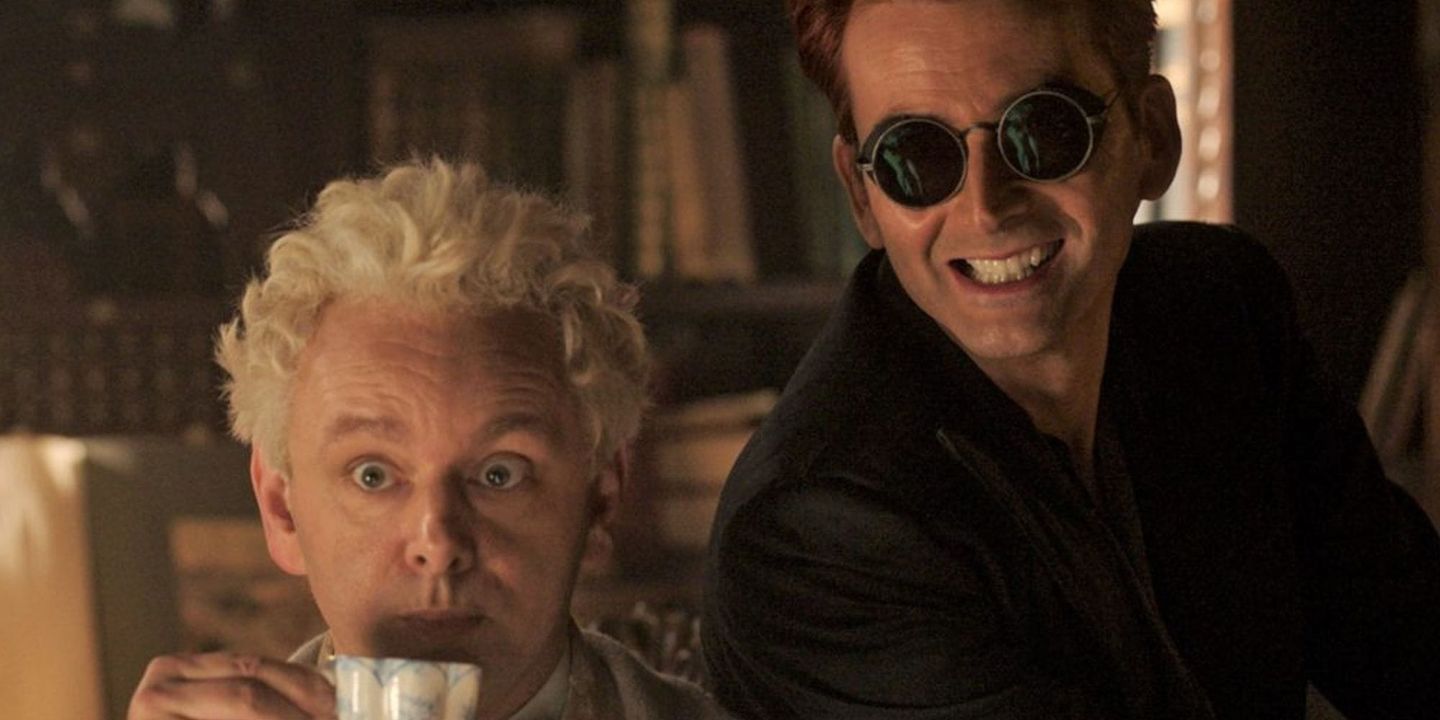
There are many reasons to critique the second and third instalments of Prime Video’s Good Omens, which essentially boil down to the fact that it was originally conceived as a miniseries, and should’ve stayed that way. Few times has a franchise been stretched out beyond its original concept and the result been truly satisfactory – and inside this spectrum of results, Good Omens’s final seasons fall on the disastrous end of it.
But there is a specific aspect of this show’s nature that was betrayed in its sequels which I’ve seen very few people talk about, probably because the community it affects is not discussed much in the first place: the erasure of aromantic and/or asexual interpretations for the show.
Good Omens, both in its original novel and first season formats, is undeniably (among other things) a story about queerness. Aziraphale and Crowley’s relationship is so inherently queer by nature – an angel and a demon, opposite forces, uniting on the neutral ground of Earth where they finally find a safe space to be themselves – that even though specific labels are never uttered by the characters themselves, it is a running gag that most of the human cast members immediately assume they are probably a gay couple.
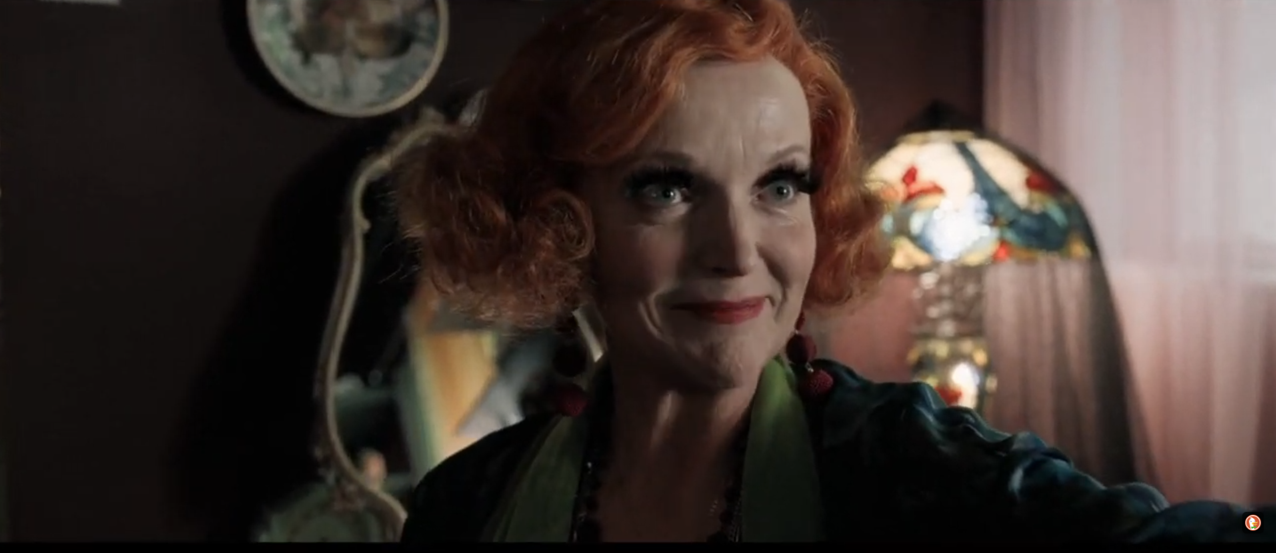
However, one could – and many have – accused Neil Gaiman of shying away from specific queer labels in what some people felt was an instance of queerbaiting, since the characters never ended up confessing to each other in the original story. Yet the filmmakers and cast members of the show have never shied away from confirming that Aziraphale and Crowley love each other. Instead, the lack of specific labels was part of the original story’s beautifully unique representation.
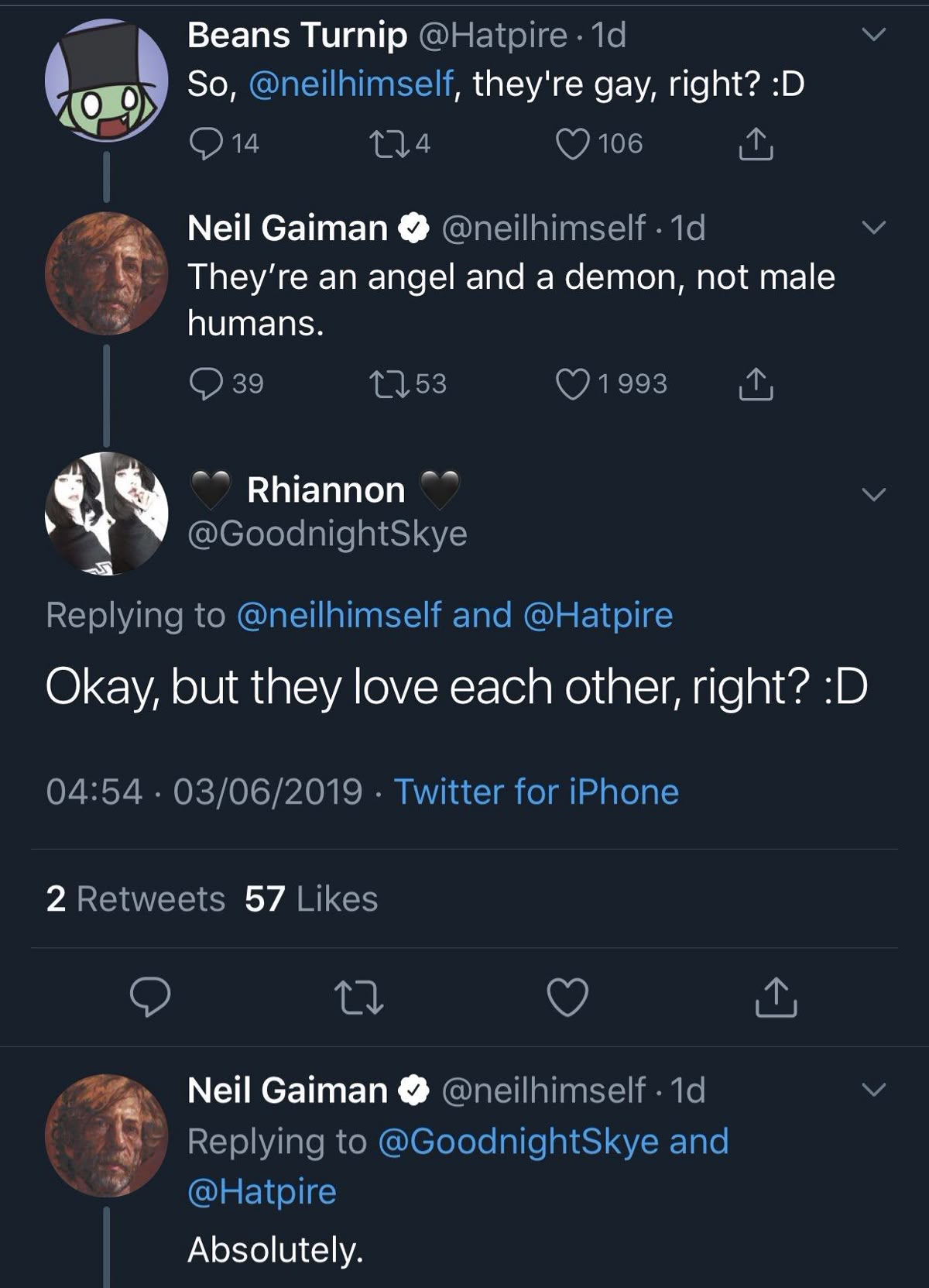
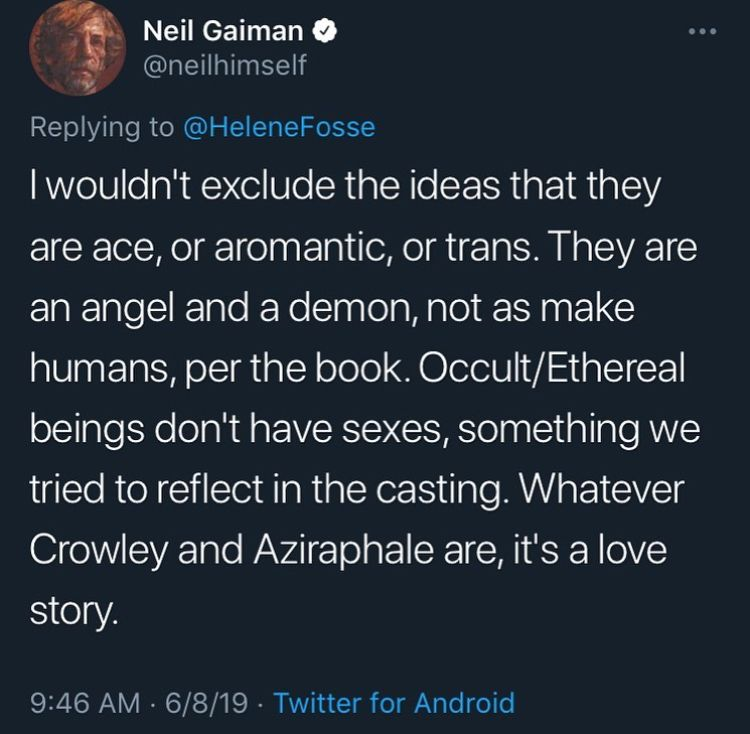
The main theme of Good Omens is perhaps best encapsulated by one of the most referenced phrases both in the show and fandom alike: “It’s ineffable”. The same way that Aziraphale and Crowley assure Adam that he is neither entirely good nor entirely evil, but more so entirely human, and therefore a mix of both, Neil Gaiman spent a lot of time reminding the audience that the angelic/demonic duo, by nature, could not be reduced to one specific label or experience.
This intent on the author’s part reinforced a big part of the fandom’s practice of interpreting Aziraphale and Crowley – and their relationship – on many different levels which were all, technically, plausibly canon and equally valid. Some saw them as an mlm gay couple; others as a sapphic one; some focused on their gender identities not fitting into the binary spectrum at all – and a select audience honed in on the concept of their love for each other breaking binaries as well. The aromantic and asexual communities flocked to these characters and their unique bond, which presented the rare opportunity of representation in a beautifully ambiguous nature that resonated deeply with the experience of those who didn’t fit in with stereotypical concepts of romance, but also don’t quite identify with the ‘just friends’ reading.
And then all of that went out the window when they made Crowley kiss Aziraphale in the Season 2 finale.
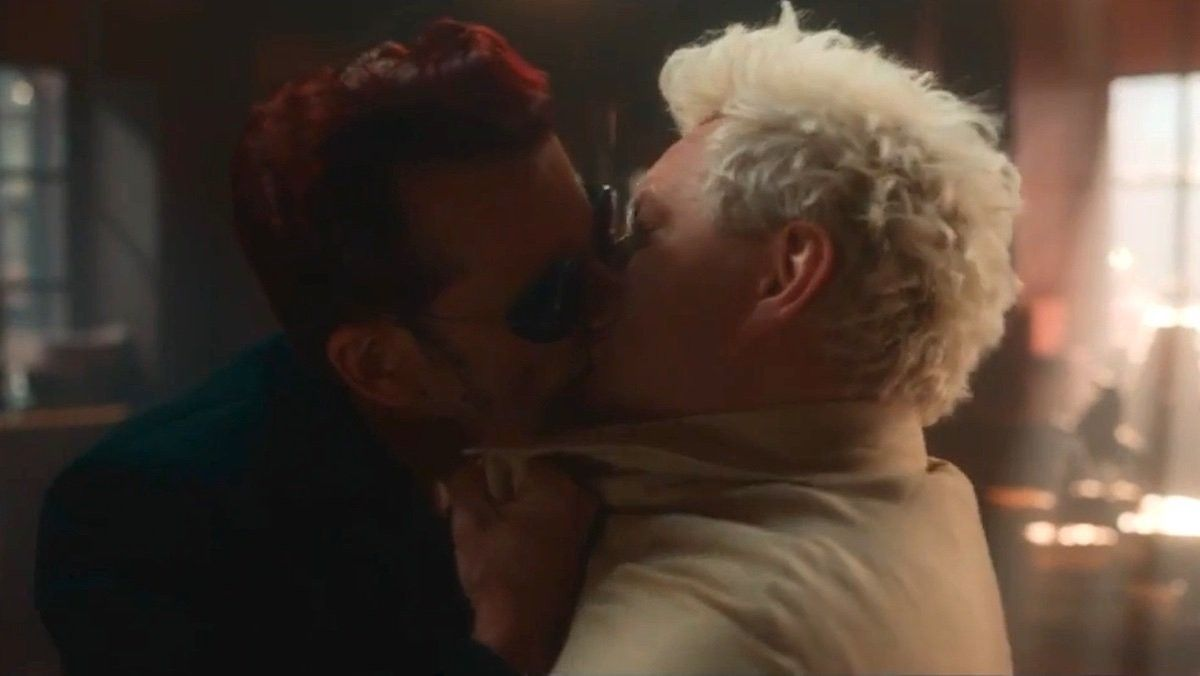
Seeming to suddenly pretend he hadn’t spent years on Twitter and Tumblr making clear that Aziraphale and Crowley can’t be reduced to a singular concept, Neil Gaiman essentially butchered one of the core themes of Good Omens – hand in hand with John Finnemore as co-writer – by writing an entire season focused on very binary ideas of romance, including a confession gone wrong with a dramatic kiss as the cherry on top.
This shook most of the fandom to its very core – among other reasons, because the abrupt shift of tone from comedy to full on drama was unnerving – but I think I can safely speak from the perspective of viewers on the aromantic and/or asexual spectrums when I say that, to us, it felt like a personal punch to the gut. Gone was the ineffable balance of queer experiences that the characters represented and allowed the fandom to resonate with, no matter what labels (or lack thereof) they projected onto them. Instead, the story took a sharp turn towards conventional romance, leaving the already severely underrepresented aro/ace communities, quite frankly, abandoned.
Neil Gaiman may not have been queerbaiting in the way most allosexual viewers are used to, but Seasons 2 & 3 aan undeniable example of aromantic and/or asexual erasure. It is a betrayal to an entire community inside the fandom that thought it had finally found a safe space, only to be thrown out as if it had never been there at all.
If I sound melodramatic, it’s because I’m genuinely devastated. Good Omens has been a story that has joined me throughout my entire queer journey, including its humble beginnings. My interpretations of Aziraphale and Crowley’s characters evolved parallel to my own, both in terms of sexuality and gender identity. It was so, so important for me to have a reference of a duo that was everything all at once, so that when the confusion of realising I hadn’t figured out things after all set in, I felt less alone. We do not talk enough about how isolating it feels to be excluded from your own community, and although I should’ve known better than to place my trust on an allo-cis-het white guy’s writing, I still find myself grieving for my lost faith.
But when life closes one closet door, it opens another. And when a script disappoints me, I’ve learned to create my own.