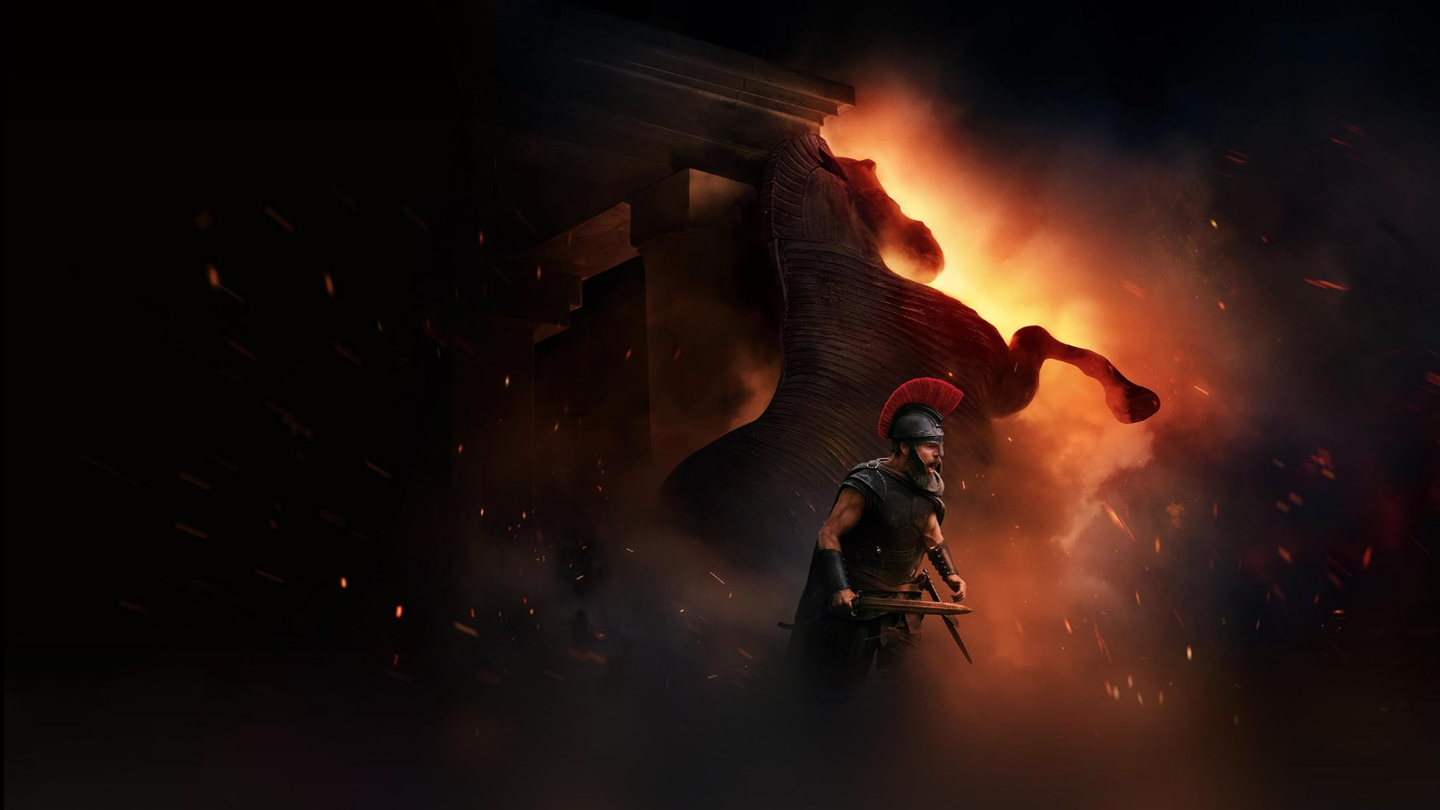
Paid Aficionado deep dive: this is one of our longer, spoiler-heavy pieces for readers who want to sit with a film a little longer. Become a paid subscriber to read the full essay and support more OBSCURAE criticism like this.
I tend to not get along with Christopher Nolan’s filmography. The way I used to explain this was that after Memento (2000), it felt like the higher budgets Nolan obtained the better his visuals became – but often at the cost of the story or message being sent. There are exceptions, of course; but after Oppenheimer (2023) I was all but ready to accept the fact that any future film Nolan made I would have to grit my teeth through watching.
It was with this prejudiced mindset that I went to watch The Odyssey (2026) – a film I was particularly wary about considering I had grown up as a Greek mythology nerd who held this particular story close to my heart. In preparation, I read Emily Wilson’s 2017 translation of the original poem shortly before my screening, fingers at the ready to type an exhaustively pedantic review about why Nolan should reconsider doing high budget filmmaking all over again.