Washed Up | BFI Flare 2026
A charming story of love and identity, full of heart, humour...and seals

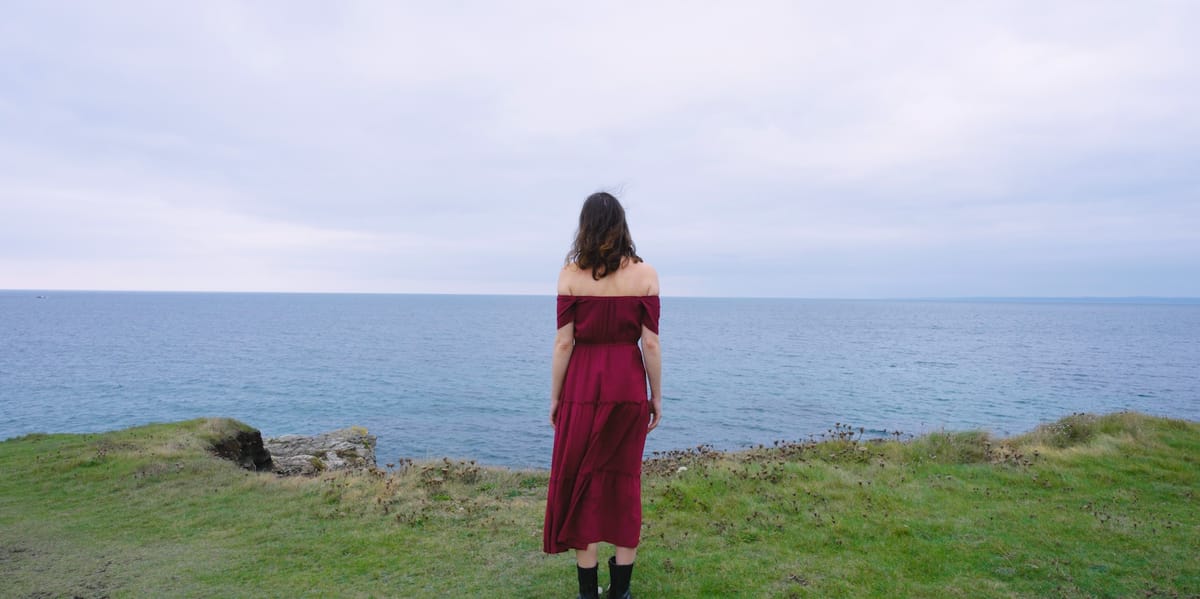
There’s something about sapphics and the sea. One of the first bits of sapphic media I consumed (and loved) was the 2005 Channel 4 series Sugar Rush, about Kim, a 15-year-old lesbian living in Brighton who is in love with her straight best friend, Maria “Sugar” Sweet. There was something about the beachy Brighton setting that made it all even more intense, the crashing waves and vastness of the sea seeming to highlight the impossibility of Kim’s dreams for her and Sugar. One of my recent favourite bits of sapphic media was the music video for Chappell Roan’s Casual, which depicts her ill-fated love affair with a bloodthirsty, man-eating siren, and now, we have Washed Up.
Morwenna - known more commonly as “Scummy”, played by Anna Ivankovic - is a struggling Cornish artist, living in her late grandfather’s house, but not able to afford to stay there, as her estate agent cousin does his best to sell it off to the highest bidder. She’s also heartbroken, still not over her recent breakup, and is crying on the beach while reminiscing over old messages from her ex when she meets Inga (Carys Glynne). Inga is intriguing, free-spirited - and just happens to be a selkie. Selkies are mythical creatures from Celtic and Norse folklore who shift between human form and that of a seal by removing or donning their seal coats. Inga and Scummy embark on a love affair, with Inga staying with Scummy during her time on land, but going away for varying periods of time to live as a seal. Although Inga is upfront about her nature and her dislike of staying in any one place for too long, Scummy struggles with their “long distance” relationship, with never knowing when Inga will be back, or how long she will stay for at any given time.
At the BFI world premiere of Washed Up, its director Isabel Daly described it as “a film for all the straight women who’ve ever said it must be so much easier to be a lesbian”, which was met with a laugh of recognition from the crowd. After seeing the film, it struck me that the aforementioned Sugar Rush, Chappell’s Casual video, and Washed Up share more than just a seaside setting; each one explores the pain that comes from loving someone who is in some way unattainable, unable to be fully yours. Inga, by her very nature, needs to be free to roam, not to put down roots anywhere, and has typically never returned to a place once she has explored it. By contrast, Scummy is desperately trying to hold on to all that she knows, still carrying the hurt from her ex leaving her in search of adventure, reluctant to be complicit in her grandfather’s house becoming a gentrified Airbnb, and attempting to connect with her roots by learning the Cornish language.
This may all sound a bit heavy, but Washed Up is anything but. There's some lovely humour throughout, and an almost cosy, comforting vibe. It felt distinctly British, and the specificity of and appreciation for its Cornwall location really comes through. This is particularly impressive when considering that director Daly and lead actor, producer, and editor Carys Glynne are from the States, with apparently no personal connection to Cornwall. However, it was British writer Issy Brett - who wrote the short story that Washed Up is based on and co-wrote the screenplay with Glynne and Daly - who has Cornish roots, and the film was even shot in her family home. Brett was also behind the film’s animated sequences, which were one of my favourite elements, really adding to the folktale feel.
At a snappy 85 minutes, Washed Up was suitably short and sweet, feeling almost like we were brought along for a peek at a chapter in Scummy’s life. I did somewhat feel that it could have gone further in exploring certain narrative aspects, but considering the film’s micro-budget, the fact that it was shot in 13 days, and that it was the filmmakers' debut project, this is a roaring success. All in all, a charming and heartfelt film, and one which everyone involved should be proud of.