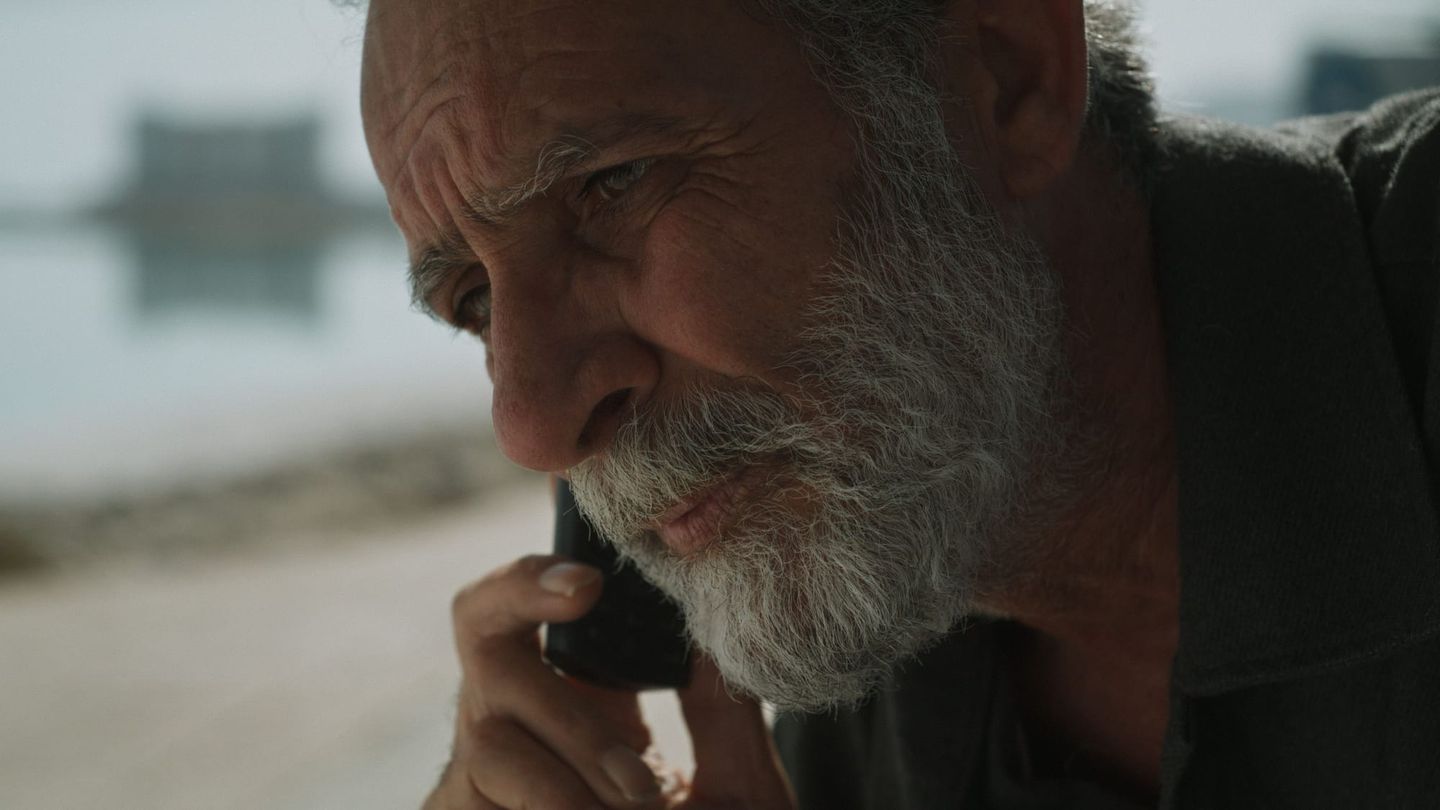
Muayad Alayan’s Conversation with the Sea is a deeply moving portrait of grief, family, displacement, and the ways in which occupation can shape every corner of an ordinary life. Led by a remarkable Kamel El Basha, the film follows an aging Palestinian man forced to confront the family he left behind as he moves through a Jerusalem where history, occupation, bureaucracy, and everyday life are inseparable. More than anything, I came away from the film thinking about how powerful it is to see Palestine represented not only through moments of extraordinary violence, but through the quieter, harsher realities of simply trying to live under occupation.
When oppressive Israeli authorities arrive at Kamal’s home regarding unpaid debts connected to his deceased son, Wael, he is pulled back into a past he has spent years trying to escape. His search for answers about what truly happened to his son takes him across Jerusalem and into contact with people from different corners of the society around him, gradually forcing him to confront the choices that fractured his family and the circumstances that shaped them.
What affected me most about Conversation with the Sea is the way it understands that occupation does not exist separately from personal life. It enters the home, it affects families, determines where people can go, shapes how they are treated, and influences what they fear and what choices they believe are available to them. Kamal’s story is deeply personal, yet the world around him constantly reminds us that his circumstances did not develop in a vacuum. His grief cannot be separated from the political reality surrounding him, because for Palestinians, that reality is woven into the fabric of everyday existence.
The film’s representation of Jerusalem is particularly striking. It takes us through crowded streets, old architecture, tourist spaces, neighbourhoods and borders, allowing the city itself to become part of Kamal’s story, almost a character of its own. There is something powerful about seeing these places through his eyes because the film refuses to treat Palestine as an abstract landscape. This is a place where people have homes, families, memories, arguments, jobs, regrets, and ordinary routines. Palestinians are not simply figures in a news cycle or statistics, they are people living full, complicated lives, and Conversation with the Sea insists on letting us see them that way. In a press statement, director Muayad Alayan called this film a "love and hate letter to my only home and my only city; nostalgia to what it used to be, and grief over what it's being forced to become". That duality of feelings for Jerusalem is palpable across the film.
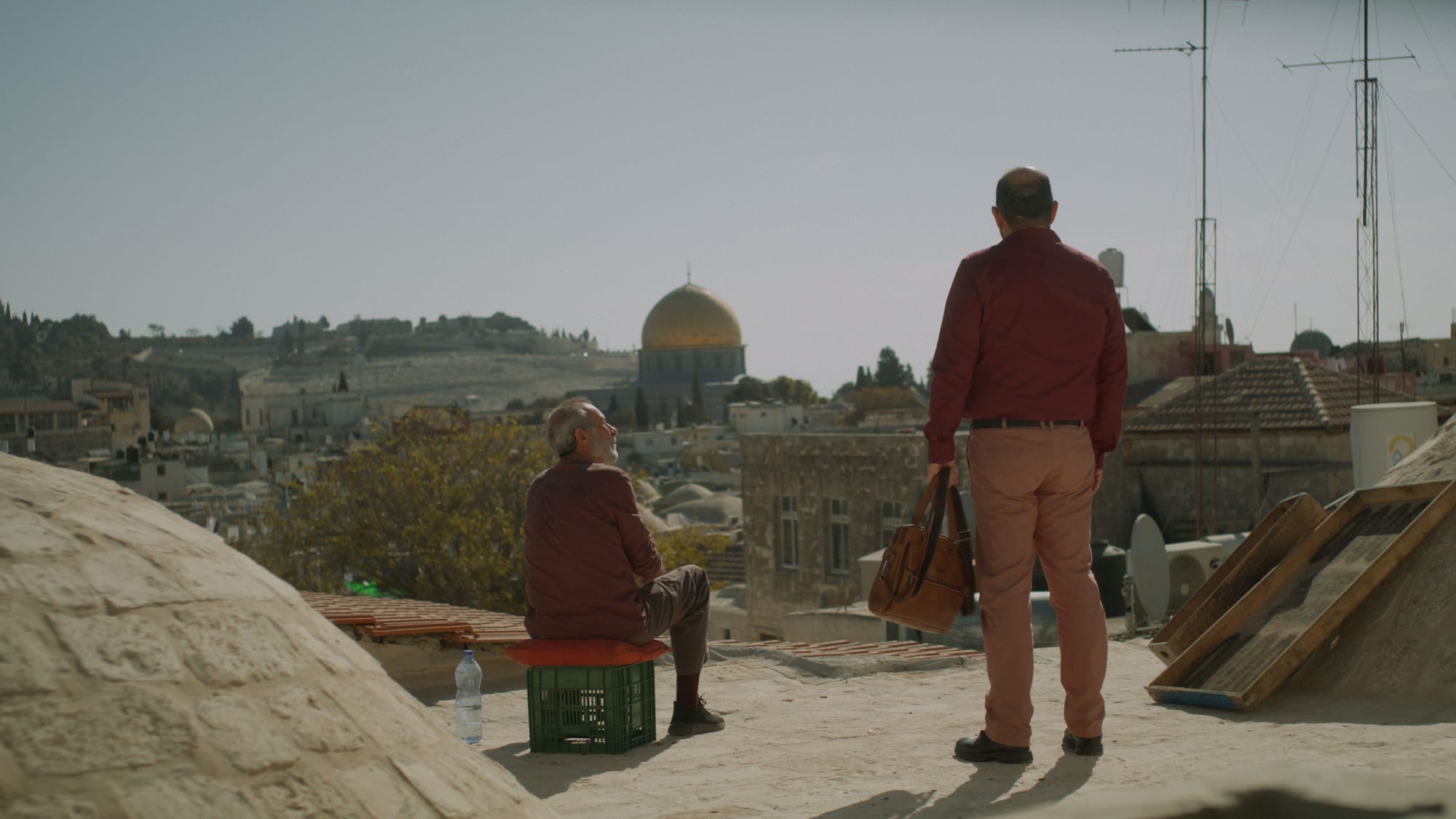
That sense of everyday life is what makes the film feel particularly important to me. There is an understandable tendency for stories about Palestine to become focused on the most devastating or headline-making aspects of its reality. Conversation with the Sea does not shy away from violence or the brutality of occupation, but it is equally interested in the quieter forms of oppression that accumulate over time. A bureaucratic demand, a humiliating encounter, the fear of being stopped in the middle of everyday mundanity. A family separated by years of resentment. The knowledge that your home can simultaneously feel familiar and profoundly hostile.
Kamal himself embodies that variance. I found myself struggling with him as a character at times, particularly because the pain he has experienced does not erase the pain he has caused others, yet that complexity is precisely what makes his story so affecting. He is not presented as someone who can neatly divide his life into right and wrong decisions. He is a man who made choices while trying to survive, only to discover years later that survival can leave its own kind of wreckage on others. His personal failures exist alongside the larger forces that have shaped his life, and the film allows both truths to exist without simplifying either. Kamel El Basha is extraordinary in the role, giving a wonderfully restrained performance that allows grief to exist in his silences and expressions rather than constantly explaining itself. There are moments when watching Kamal’s face tells us more than dialogue could. His desperation to understand what happened to his son becomes inseparable from his need to understand what happened to himself and to his exisiting relationships.
Conversation with the Sea ultimately left me with the feeling that witnessing can be its own form of understanding. The film offers an intimate window into Palestinian life, asking us to see the people living within these circumstances, not simply the overarching circumstances themselves. For me, that is where the film’s importance lies. Palestinian stories deserve to be told as stories of entire lives, not only stories of suffering. They deserve space for grief, love, anger, humour, contradiction, and ordinary existence. They deserve to be seen beyond the headlines, beyond statistics, and beyond the language that so often reduces Palestinian lives to talking points and only further dehumanizes them. They deserve to be seen as human beings trying to love their families, return home, make sense of loss, and get through another day. Palestine and its people are not an abstraction. Their lives, histories, homes, and stories matter, and there is something profoundly powerful about Palestinian filmmakers telling these stories themselves, allowing their people to be seen and heard with intimacy, dignity, nuance, and humanity.
In a world where Palestinian voices are so often spoken over, ignored, or dehumanized, films like Conversation with the Sea create space to listen. To witness Palestinian life is to acknowledge Palestinian humanity. To keep telling and listening to these stories is to keep refusing their erasure, and to keep standing with the people who call this land home.
Support our work
You can subscribe to the OBSCURAE newsletter for free, or become a paid Aficionado for £5/month to help fund independent coverage, contributor fees, site hosting, and admin costs.