There is a fun movie buried somewhere inside Girl Group, but it spends far too much of its runtime trying to find the beat. The film has all the ingredients for an energetic pop comedy: ambitious teenagers, former girl-group stars, petty friendships-turned-rivalries, elaborate choreography, and a cast packed with comedic talent and girl group icons. Unfortunately, the pieces rarely come together with the confidence or momentum they should. The result is a movie that can be enjoyable in the moment while simultaneously making you wonder why so little of it feels memorable.
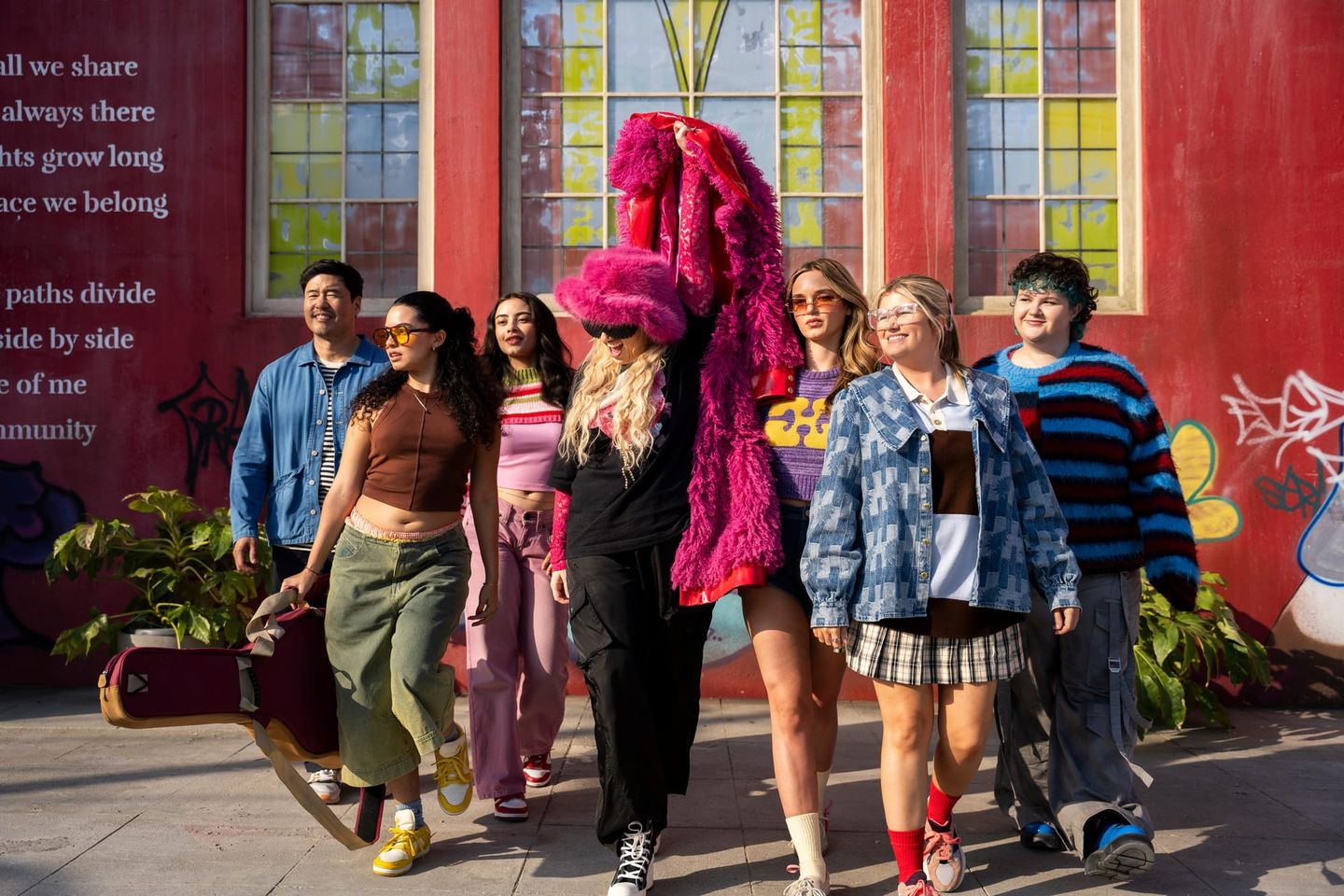
Rebel Wilson, who directs and writes, also plays Tassie Young, a former member of hit girl group “Gurlfriends” who left the band at the height of its success, convinced she could make it on her own. After that solo career crashes and burns, she finds herself replaced by Popstar (Nicole Scherzinger) when the group reunites for a comeback tour. A drunken car crash lands Tassie in community service at a youth centre, where she meets a group of aspiring singers (Chabely Ponce, Bailey Stender, Lilah Pate, Daniela Couso, Ana Yi Puig, Miracle Washington, Mia Kaplan), and takes on the task of turning them into a girl group. When she discovers a competition searching for the next big pop sensation, Tassie sees an opportunity to give her protégées (aptly called the Tassie Young Protégées, or TYPs) their big break, though her motivations are hardly selfless. She’s hoping their success will give her the career comeback she’s been waiting for.
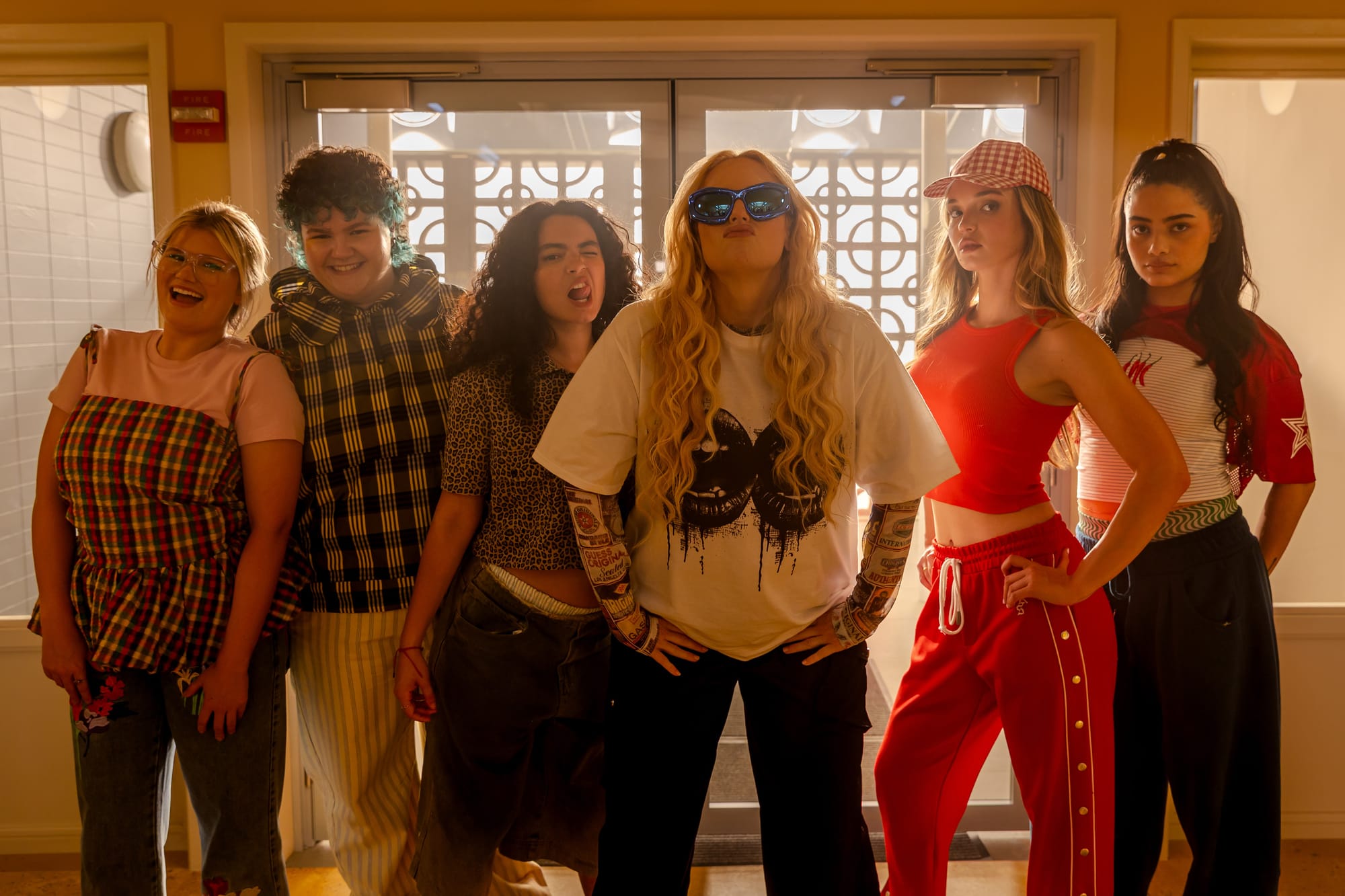
The competition scenes are easily the best thing Girl Group has going for it. The choreography is lively, the covers are consistently enjoyable, and these sequences are where the film feels exciting. There is an infectious energy to watching the groups compete, showcasing different musical and dance styles, and highlighting the array of relative diversity amongst girl groups today.
Unfortunately, that same spark is far harder to find in the film’s comedy. Girl Group has some genuinely funny moments, but plenty of jokes land with a thud, particularly when the humour reaches for overtly sexual material without much wit behind it. For a comedy starring performers like Randall Park and Jennifer Coolidge, it is particularly frustrating how underused both are. There is so much comedic talent here, yet the film too often settles for the easiest possible joke or something crude thrown in, rather than giving its cast something clever to play with.
The film also seems caught between audiences. The teenagers at the centre of Tassie’s attempt to form a girl group are given plenty of material that younger viewers could recognize and connect with, but the humour frequently veers into territory that feels written for adults. The result is an odd tonal split that makes it difficult to tell who Girl Group is actually trying to entertain. Is this a coming-of-age comedy for girls like the ones onstage, or a nostalgic pop comedy for adults? It never quite fully commits to either.
The bigger issue is that the characters themselves never get enough room to become interesting. Relationships appear to already exist without the film taking the time to establish or explain them well, characters have seemingly important interactions that lead nowhere, and certain dynamics disappear almost as quickly as they arrive. It feels like there are missing pieces scattered across the editing room floor. More time with these characters might have made their friendships, rivalries, and conflicts feel consequential rather than simply functional. That is particularly unfortunate because the film is built around the idea of bringing people together through music. There is an emotional core here that could have worked beautifully, but the pacing rarely allows it to breathe. By the time the predictable conflicts arrive, I was more curious about where the missing character development had gone than invested in the resolution itself.
It is hard to pin down what Girl Group ultimately wants to say. The obvious messages about finding your voice and embracing who you are come through clearly enough, but the film occasionally hints at something more pointed about the ugly machinery behind the girl group industry without ever fully committing to it. Tassie initially tries to market the TYPs as little more than sex appeal, sidelines the member of the group who is deemed the most unattractive according to her standards, and a brief bit involving weight-loss bars leads to a Bridesmaids-esque bout of diarrhea at the worst possible moment. These moments gesture toward the darker pressures placed on young women in the industry, but they are largely brushed aside rather than explored with any real depth, leaving the film’s would-be commentary feeling more like a passing joke than a meaningful critique.
Still, Girl Group is not without its charms. The music works. The choreography works. The cast brings enough personality to keep the film moving, even when the script doesn’t. It is difficult to completely dislike a movie that knows how to put on a good performance, even if everything surrounding those performances feels considerably less assured. The younger cast, in particular, shows plenty of promise, with the musical and acting chops to suggest there are much bigger stages ahead for them.
If you watched Pitch Perfect with your friends in theatres over a decade ago, Girl Group might be best approached as an excuse for your own girl group reunion. Get your girlfriends together, be prepared to sing along as the film pays tribute to generations of girl groups through covers you’ll most certainly recognize, and enjoy the spectacle. Girl Group may not bring anything particularly fresh or original to the table, but it can still make for a reasonably entertaining night out.
Support our work
You can subscribe to the OBSCURAE newsletter for free, or become a paid Aficionado for £5/month to help fund independent coverage, contributor fees, site hosting, and admin costs.