Here at OBSCURAE, we champion short storytelling as the hunting ground for your next favourite filmmaker – and encourage you not to skip the shorts program! Welcome back to our Short Film Review Series, Sweet and Short.
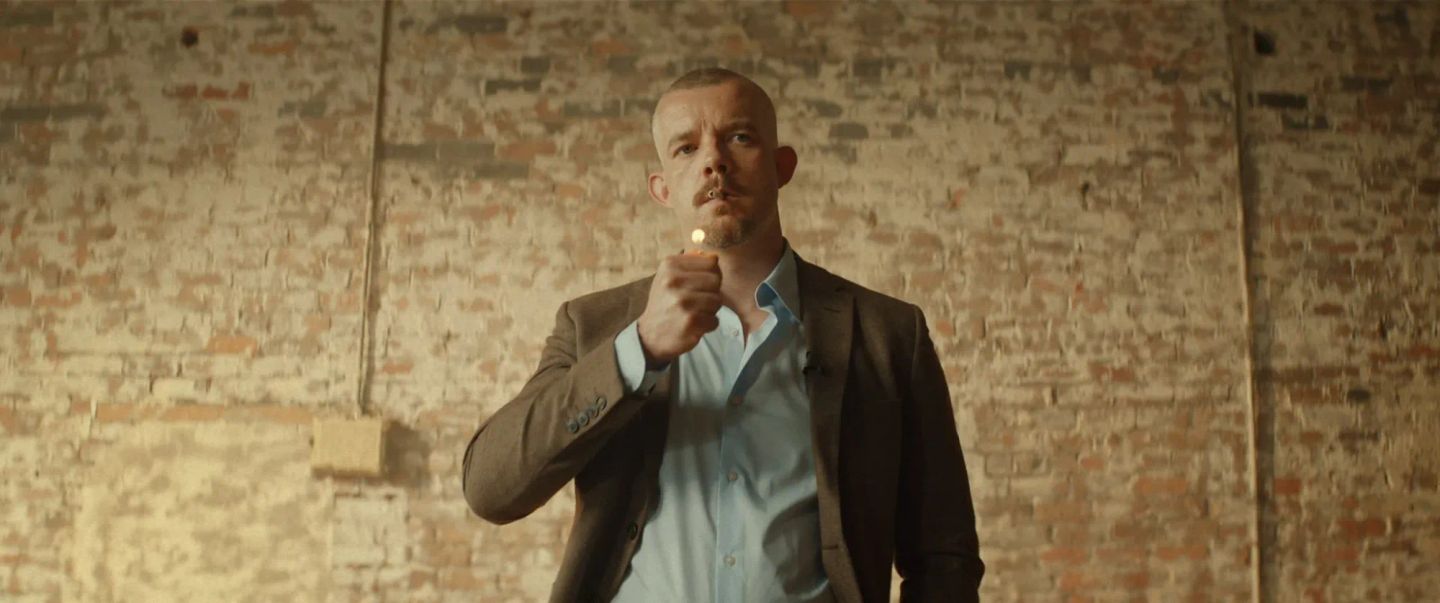
The 'Manosphere' has become a popular topic of discussion online and politically, with Adolescence, a name you will not have escaped, as it has swept numerous TV accolades, including nine Emmy Awards, and launched young star Owen Cooper to stardom, alongside becoming the most-watched streaming TV show in the UK in a single week. Louis Theroux's documentary, Inside the Manosphere, generated much discourse for its examination of "red pill" culture and ideology, including numerous sequences that expose these men for the characters they are. In a similar vein, Sai Karan Talwar's third short film, I Am The Prize, examines the toxicity of the Manosphere and interrogates the personality and characteristics of those who purport that ideology. The short film stars Russell Tovey as a self-help figure, Anthony, who is delivering a series of lectures to young men who are seeking confidence, community, and most importantly, help to date women. The identity he has constructed for himself slowly begins to unravel.
Talwar's ability to grip his audience in and make them uncomfortable is undeniable, with the first five minutes as we are subjected to Anthony delivering a five-minute-long monologue with a signature piercing stare in a 'power pose'. The monologue feels much longer than it is, and slowly but surely, we feel more tense, in part due to the incredible performance of Tovey and the camera work. Over five minutes, we get closer to Anthony gradually, and it feels as if he is in control of the film. His menacing presence makes him more akin to a cult leader than a self-help lecturer, with an audience enthralled with his pearls of wisdom. We barely see their faces, and I could only imagine they were swept up by his words. With a five-minute opening monologue, you'd assume I could point out or recall a part of his speech. But I couldn't. The words uttered are nonsense and resemble a man who believes himself to be far more emotionally intelligent than he is. They are buzzwords. Nevertheless, he holds all of the power with a captivated audience. As the film progresses, Anthony receives upsetting health news and is interviewed by a journalist who stands up to him, something we feel he seldom experiences. We slowly see the loss of power, the camera remains still ,and he is not in control anymore.
My opinions on the short film are mixed. I am in support of pieces of media like Adolescence, Into the Manosphere, and I Am The Prize, which seek to dissect the influences and men behind red-pill culture, but I have one major criticism. Where are the women in this? I feel uncomfortable dissecting this short without questioning why every piece of major media on the Manosphere has excluded the stories of women. In Adolescence, we follow Cooper's Jamie, but Katie feels like a footnote. You could argue she has a main part due to the show's focus on her murder, but we only see the implications her death has on Jamie and his family. How did the murder of Katie affect her family? What is her side of the story?
And with, I Am The Prize, I have a similar criticism. Though the journalist who questions Anthony at the end is a woman, there is no attempt to understand the real-life implications of the toxicity of Manosphere culture and the words of men who become cult-like figures, similar to Anthony, have on the day-to-day lives of women. It simply interrogates the figures behind the ideology, akin more to a character study than a film that explores the consequences of the Manosphere, of "red pill" ideology, rather than the real and present dangers they pose to women. The Manosphere does not simply lure young men in with an ideology that is dressed up to promise them control and women. An example in recent years is Jake Davison, who was angry at his mother and at his inability to find a girlfriend. He killed five people, including a three-year-old girl.
The film is, without question, well-made, and the script is well-written, but I found myself uncomfortable. I continue to feel that. It will make people think and discuss, but I can only hope they also have space for the women and girls who are victims of this ideology, hatred, and misogyny.