
Literature is one of the main sources of escapism for thousands of people around the world, and has recently gained particular popularity once again due to the growing overstimulation of social media and technology, which makes the (ideally, printed) written word a go-to activity for many people’s digital detoxing.
Once inside this artform there are many forms of escapism. On the one hand, you have non-fiction novels, which may be the furthest thing from conventional escapism you can find, but are greatly informative and help readers cope with life by helping them understand the society they live in.
Yet for the sake of generalisation, it is usually fictional literature that is the go-to for those seeking ‘pure’ escapism, and once inside this specific umbrella there are various genres to choose from: romance for those who want to daydream about a partner; horror/ thriller for those who want the thrill of a scary scenario without having to actually be in danger, experiencing it vicariously; tragedies/ dramas for a similar distant experience of what in real life are dreadful emotions.
But the genre that arguably works the best for ‘ultimate’ escapism is probably that of fantasy. Regardless of whether we’re discussing more dark, epic, high, or low subgenres, this larger umbrella is prone to transporting the reader to a world completely separate from that of their own, with fictional rules and magic systems that allow them to escape their mundane/ everyday struggles in favour of ‘epic’ ones.
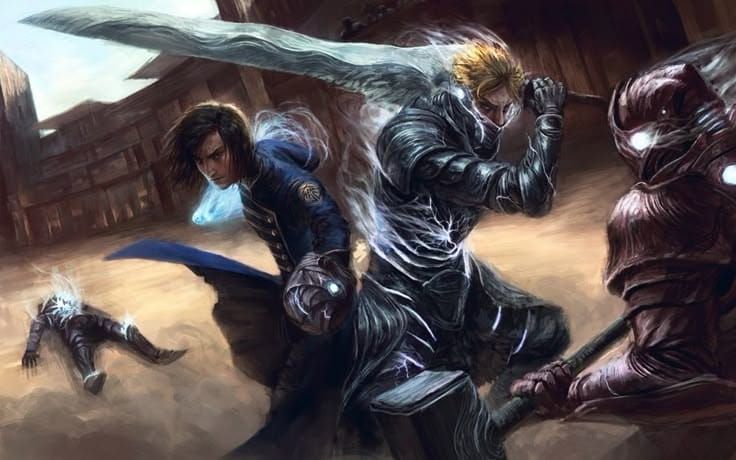
One of the most renowned contemporary authors of the fantasy genre is undoubtedly Brandon Sanderson, who has captivated readers far and wide to spend hours of their lives reading the huge volumes he publishes, which start at a minimum of 500 or 600 pages for the ‘shorter’ novels (excluding short stories).
The case of Sanderson’s The Stormlight Archive is one of the most impressive word counts I’ve seen a fandom commit to – always with a minimum of 1000 pages per volume, and usually a couple hundred added – and this loyalty is, amongst other things, proof of the author’s talent at keeping them hooked from start to finish. Just recently, with the publishing of the fifth book of the series, Wind and Truth, we have reached the end of the first arc – but already Sanderson has announced that another quintet is in the works. To the unknown reader, this may seem excessive and overindulgent, but the fandom can only jump in glee, overjoyed at what the future holds.