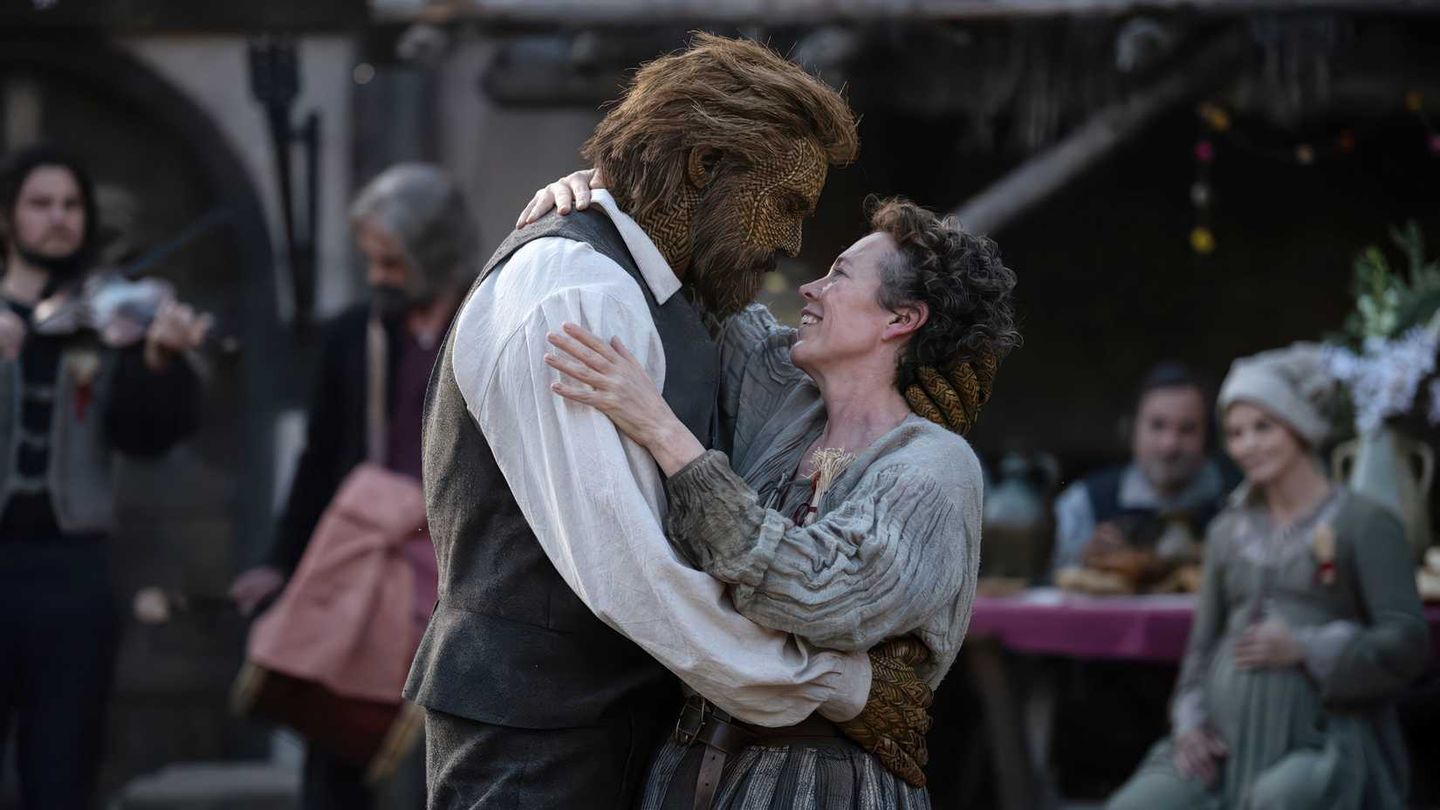
There is nothing more dangerous than a woman who knows she can ask more of life and, worst of all, of her husband. Wicker makes that case in fable form, with magical Basketmaker (Peter Dinklage) serving as both narrator and misfit who creates the title Wicker Husband at Fisherwoman's (Olivia Colman) request. Neither the place nor the time of the story are stated, but based on costume cues, it’s 17th-century England, or it could be a trad-wife utopia.
The movie opens on a doomed wedding ceremony as the groom tries to lock a heavy metallic collar around his bride’s neck, a symbol of their contract and her lifelong duty. It’s not particularly subtle as far as symbolism goes, but you immediately know this will be a movie about unequal partnerships, and that you should expect horror beneath the bawdy comedy.
Between her relationship with nature, her spinsterhood and her isolation, Colman fits the village-crone trope. She’s taken over her parents’ fishing business, the only woman in the village with her own job. When the villagers mock her for her fishy smell, it’s as much about their discomfort with her life choices as it is about her actual merchandise.
Fisherwoman overall seems content with her quiet life, but at one point the ongoing jabs over her maiden status push her to solve the issue – though she’ll do it in her own way. Good call, because while the men in the village are all grotty, rude, and dirty, her woven husband looks like Alexander Skarsgård in an always-perfect three-piece suit.
Basketmaker created him for the sole purpose of loving her – which he can do all night long, breaking the bed, but also by taking care of her and her house. None of the village husbands does any of this. There is a good joke – one of many – where the Tailor notices his wife has been gone a while because he realises he’s hungry.
Tailor’s Wife (Elisabeth Debicki) gets second billing to Colman. She’s the village Queen Bee, her character the embodiment of “white women, foot soldiers of the patriarchy”. And yet, beneath her policing of the women in the village, a stream of discontent runs. Tailor’s Wife is highly competent. She has ambitions for her husband that he doesn’t share – she wants to open a second shop on town over. She can sew a villager’s foot but gets no credit for it. Something sinister hangs over her, one Fisherwoman knows well because they grew up together.
Wicker Husband stirs feelings in the village women, in their hearts, groins and brains. When he tells Colman that he was made to be with her, one of the women overhearing them gets starry-eyed, the way you might be when you read a very good love speech in a romance. There is a darkness to this, though – yes, Fisherwoman is the only reason why he lives and breathes, but where does that leave him in terms of personal will?
When Fisherwoman starts to doubt his fidelity, it suggests she thinks he is capable of a level of self-determination he hasn’t really demonstrated so far. His love is unconditional because he was made to only love her, until someone else in the village asks Basketmaker for a babe made of willow. That’s where the story took a proper horror-y turn for me, culminating in the apparition of a wooden woman, who the men in the village are only too happy to fight over after their own wives started demanding more. It gets bloody.
Support our work
You can subscribe to the OBSCURAE newsletter for free, or become a paid Aficionado for £5/month to help fund independent coverage, contributor fees, site hosting, and admin costs.