Light spoilers for A Different World and The Last Days of Ptolemy Grey
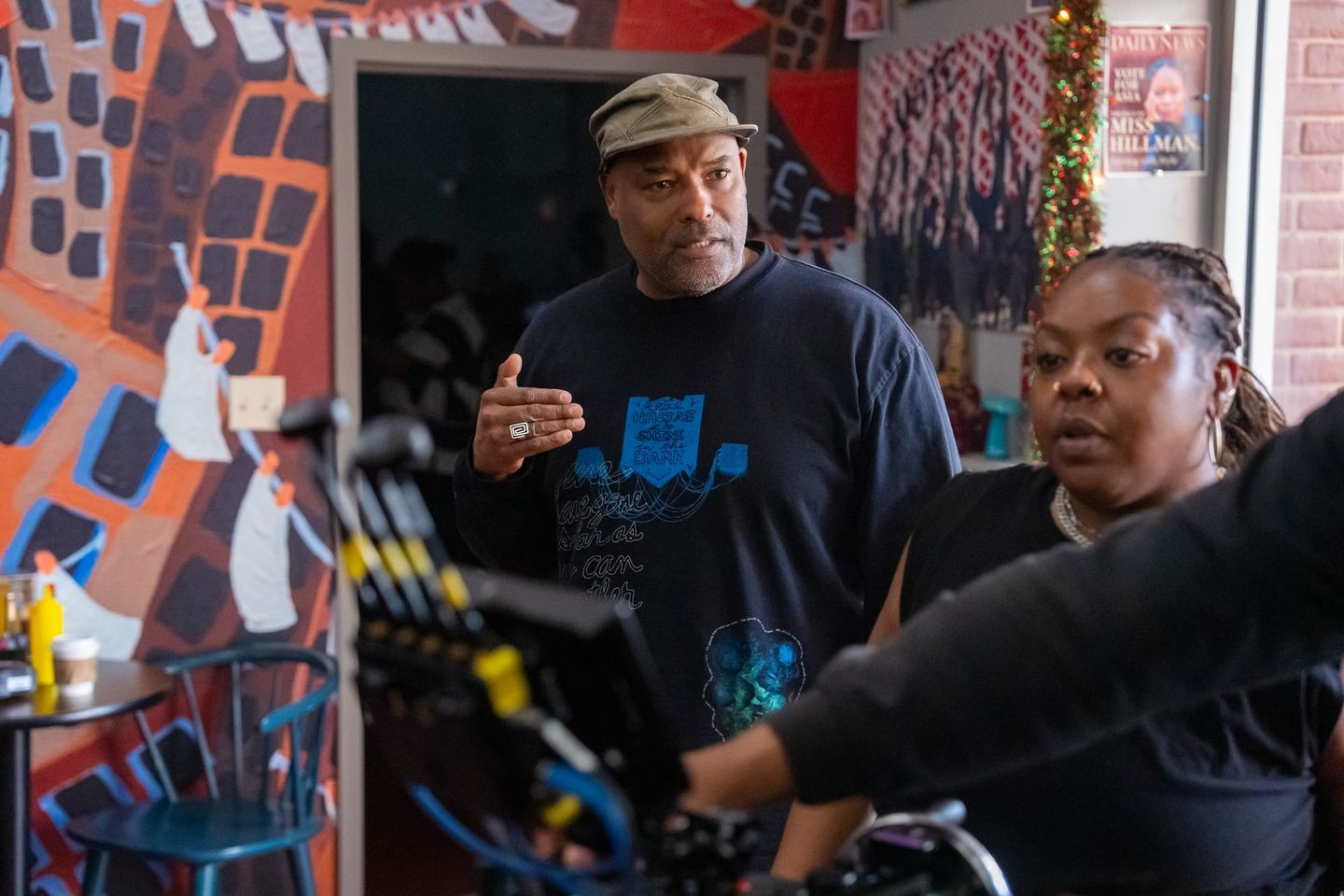
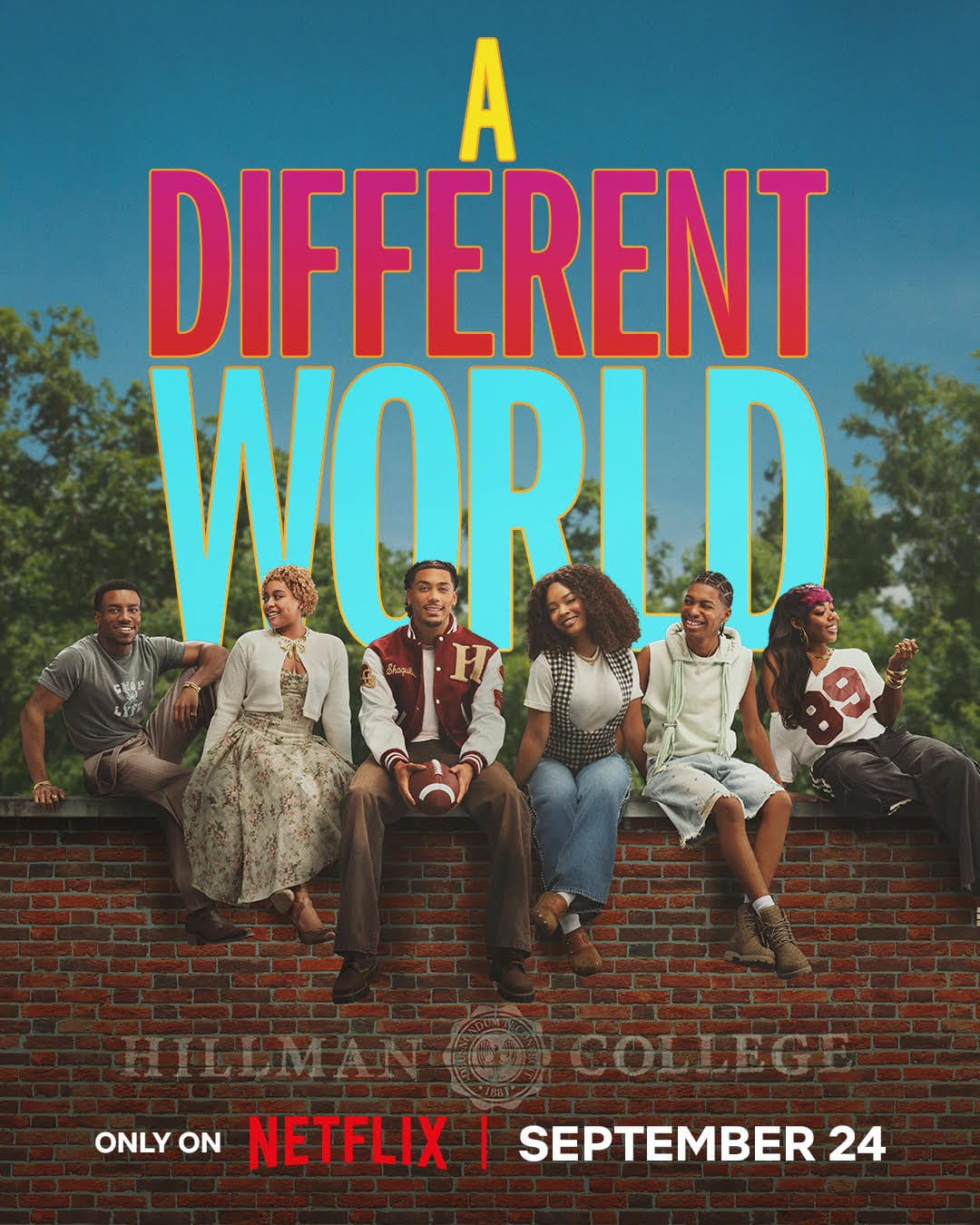
I recently had the privilege of speaking with Shawn Peters, the cinematographer for the recent revival of A Different World. The original series was a comedy sitcom following a group of Black students navigating the high and lows of college life at Hillman, a fictional, historically Black college. The revival follows Deborah (Maleah Joi Moon), the daughter of original characters Whitley (Jasmine Guy) and Dwayne (Kadeem Hardison), as she begins her own journey at Hillman.
Shawn Peters is a cinematographer and filmmaker who work has spanned music videos (he’s worked with Solange, Destiny’s Child, and Alicia Keys just to name a few), commercials (featuring stars like Tom Holland and Michael B. Jordan), and narrative (e.g. Random Acts of Flyness, The Last Days of Ptolemy Grey, Summer of Soul, Emperor of Ocean Park). It was an absolute pleasure to speak with the talented cinematographer on the inspirations behind his work and his approach to shooting the revival.
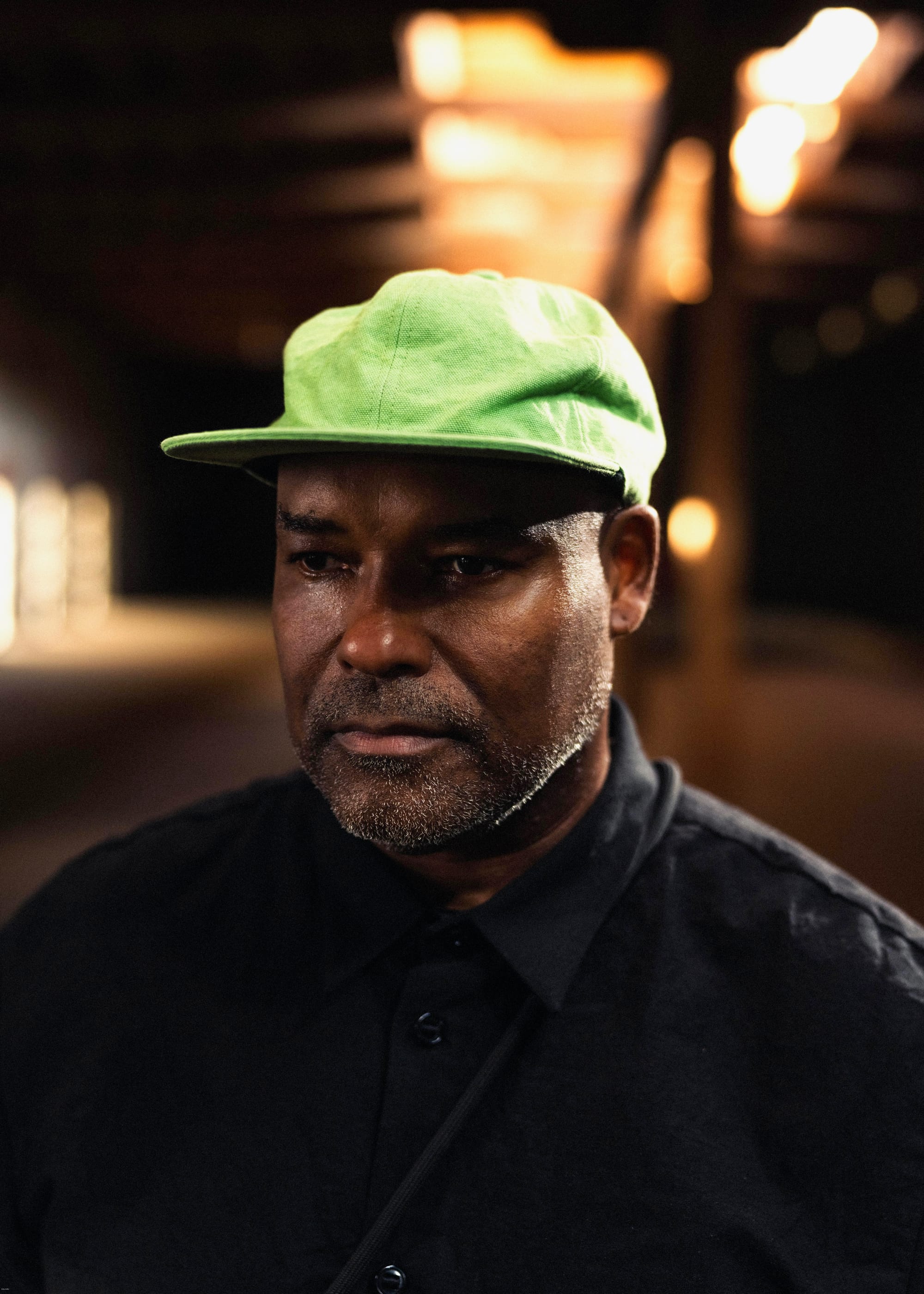
We started our conversation talking about the release where Shawn shared that with the wide audience that A Different World has, even the extended family is into it. He said, “[...] this one, it kind of caught wildfire, immediately. So it’s nice, you know, I like that my regular cousins are watching it.” This speaks to the broad appeal of a show like this - it catches multiple generations, lived experiences, and interests - there’s something in it for everybody.
Let’s get into our conversation:
I've noticed a lot of your works, so things like Random Acts of Flyness, Summer of Soul, including this most recent project centre Black folks and Black experience. And so, I was wondering what draws you to capturing these stories and how does that inform how you capture the essence of Black folks on screen within those spaces?
Shawn: Well, you know, every story, every Black story isn't the same. So definitely, it's contextual to the story. Like if you look at Emperor of Ocean Park, that's a mystery. It's a Black conservative judge who gets murdered and his family tries to uncover the mystery. You approach things [like Emperor of Ocean Park] from a cinematography perspective way different than what you would with A Different World. You know? Even Ptolemy Grey there was three different time periods about an old man who has dementia, who gets a cure [...] his nephew gets killed [...] so it's another kind of a mystery thing, but also it's three different time periods, from the modern time to the 30s to the 80s to the 70s. So that's a different approach.
Then [A Different World] is college life, which is just more joyous, more colourful, but still, it's a dramedy, so there's density. If you watch it on the iPad or if you watch it with your settings right on your TV, I would just sort of say that people should watch it [with the right settings]. They should go to the picture settings and, well, if it's like a Panasonic or Sony go to settings, go to picture, and then go to movie, put it on movie mode. Otherwise, it's set for gaming mode and won't look anything like we shot it.
Okay that’s so helpful to be able to see it in the way that it was intended to be captured.
Shawn: Yeah, and on the iPads, if you're on an iPad or iPhone, you just wanna make sure your brightness is in the middle. Then you'll be fine.
That’s good to know! With A Different World, you were tasked with bridging the original style of the show and bringing your own personal approach to it, so I was wondering how did you navigate that balance in how you decided to shoot and capture the series?
Shawn: Well it was definitely a mandate, you know, from the showrunner Felicia Pride, Debbie Allen, our pilot director and executive producer and Netflix that they wanted it to be a departure. They wanted it to feel the same in terms of the warmth and the energy, but they wanted it stylistically to be more cinematic. One of the comps was School Daze. They wanted it to feel more like cinema, like single-source lighting. It's not a multi-cam shoot, it's a single camera, so it's not like five cameras covering. So it has a different style. The camera moves in different ways than a sitcom, obviously you're outside at times. And so they really wanted to break it into a world that felt more cinematic, but still kind of the way they have to cut it down to the half hour format, it still has a punchiness of a sitcom in a way, you know? So it's kind of a combination of both.
I was able to watch the first episode today and saw that bridging of those two worlds, which is really wonderful. I was wondering, as you mentioned, that School Daze was the comp for this. Which aspects of that visual language did you take as inspiration for A Different World?
Shawn: Yeah, just leaning into sort of a much more filmic look. We used vintage lenses, Arri Ultra Primes. We really tried to make sure the sources were natural. You know, if you're on a sitcom stage, it's lights everywhere just to cover the action. So, you want to make sure that if you saw lights, it was coming from a natural place, a window or a lamp. There's a lot more darkness in this, if you have your settings right, you know, [laughs] it's a lot more shaped [...] the skin is much more sculptured, in a way that School Daze was. There's some theatrical moments. As you go through the series you'll see that Deborah is having these fantasies about one of the guys she meets and a lot of those dream sequences are very theatrical in nature. So it's that kind of thing.
I did have a question about the moments of surrealism in the series. From the way that you shot [Deborah’s dream sequences], what kinds of emotions or feelings were you hoping that would elicit within the audience and what was your approach to that?
Shawn: I really wanted her to be destabilized by her dreams because she was dating another guy and this other guy's in her head. So we used a lot of camera techniques like the dolly zoom and things that brought him towards her in a real weird, almost like horror kind of way. He would show up in her face while she was day dreaming. And we had a different sort of light cue that happened every time he did it. So just a kind of reminder that she was dreaming or fantasizing. So it was just more theatrical, like School Daze. School Daze had a lot of theatre in it. You know, there's a lot of musicality. There's even a scene and as you go on in the [A Different World] series, I think it's episode five where the whole group in the cafeteria breaks out into one song. So there's a lot of those kind of things that harken back to School Daze and also harken back to A Different World.
I'm excited to see those moments and to see the theatricality of those things in contrast to the naturalism as well. From your biography, I saw that you started your work in music videos and commercial space. And so I was wondering how your work in that medium and what you've learned in those spaces translated to the work that you now do in narrative and specifically within A Different World?
Shawn: I still do a lot of commercials, but the training that commercials gives you is to work fast. You have to be able to walk into an environment and sort of sum it up for lighting, so that training of having to get something that's beautiful in a very fast time. [With] streaming, I guess which is the new TV [...] you work very fast. You're usually shooting a lot of scenes in one day, sometimes multiple locations. So you have to really know how to get the best out of [the shoot], it's a lot of prep obviously. One of the things that we did that helped us with the directors [...] we weren't in an office somewhere shot listing, reading the script. We read the script and together shot listed in the locations, so we were able to kind of block where the actors were going to be naturally or where they would walk from [...] and then once I know the blocking, I can light the scene in my mind and do diagrams, so I know by the time I'm lighting it actually, I kind of know what I'm doing.
Okay, interesting. I think I saw you mention you're able to kind of discover that in the moment with that preparation, of course.
Shawn: Yeah, once you're there, once you have the world lit, you know, if you light the whole pit, let's say, or one of the classrooms, whatever it is, you light the world as a world first. So you look at it without any actors in it, it still feels like a world, it feels like a natural world. So once you do that, you start placing people and they're able to walk through a little bit and for close-ups you can carve it out a little more. You can put a little more light in the eyes or take light out or shape the face a little differently depending on the need for drama.
That's amazing. Well thank you so much for chatting with me and answering my questions. And yeah, it's really interesting to hear your approach to the series. And I'm really excited to watch the rest.
Shawn: Don't forget to put your settings in the right way.
Yeah, get the settings right. And then watch the rest. I want to see it in your vision, because it's clear you have such a wonderful, beautiful vision for it. So excited to watch.
Shawn: Thank you. And I appreciate that.
All 10 episodes of A Different World are now out on Netflix. To follow along with Shawn Peter’s work check out his website at https://shawnpeters.com/
Support our work
You can subscribe to the OBSCURAE newsletter for free, or become a paid Aficionado for £5/month to help fund independent coverage, contributor fees, site hosting, and admin costs.