This mid-season review contains spoilers for the first three episodes of The Vampire Lestat.
When Interview with the Vampire premiered in 2022, its visual language reflected the man telling the story. Louis de Pointe du Lac (Jacob Anderson) recounted his life with the careful precision of someone forever interrogating his own memories, his narration lending the series a measured, reflective rhythm. Even as emotions simmered beneath the surface, the editing maintained a measured, cinematic pace, lingering on performances and quiet moments rather than driving the narrative through frenetic momentum. This gave Louis the space to make sense of a century of grief, love, and regret.
Three episodes into The Vampire Lestat, where Lestat de Lioncourt (Sam Reid) takes over the narrative, that language has been torn apart. The shift is immediately apparent, but it is far more than an aesthetic overhaul. Under the direction of showrunner Rolin Jones and an editing team who understand that perspective is constructed through form as much as narrative, the season transforms editing into characterisation.
Lestat’s memories refuse chronology. His thoughts splinter into associations. His past interrupts his present without warning. Rapid-fire cuts, layered imagery, inverted frames, repeated motifs, and abrupt transitions refuse to let the audience observe him from a distance. Instead, they place us squarely inside his consciousness. Combined with the original songs performed by the titular band, crafted by composer and writer Daniel Hart, the season immerses us in the exhilarating and often terrifying process of remembering alongside Lestat instead of simply telling us how he feels.
The first episode, “Detroit,” serves as the season’s manifesto. Following the publication of Interview with the Vampire, the memoir Louis de Pointe du Lac dictated to journalist Daniel Molloy (Eric Bogosian) over the first two seasons, Lestat decides it’s finally his turn to reclaim the narrative. He hires Molloy to document his own story while embarking on the first tour of his rock band, determined to correct what he views as Louis’ version of events and share more about his past prior to even meeting him. What begins as a rockumentary quickly turns into something far more psychologically revealing.
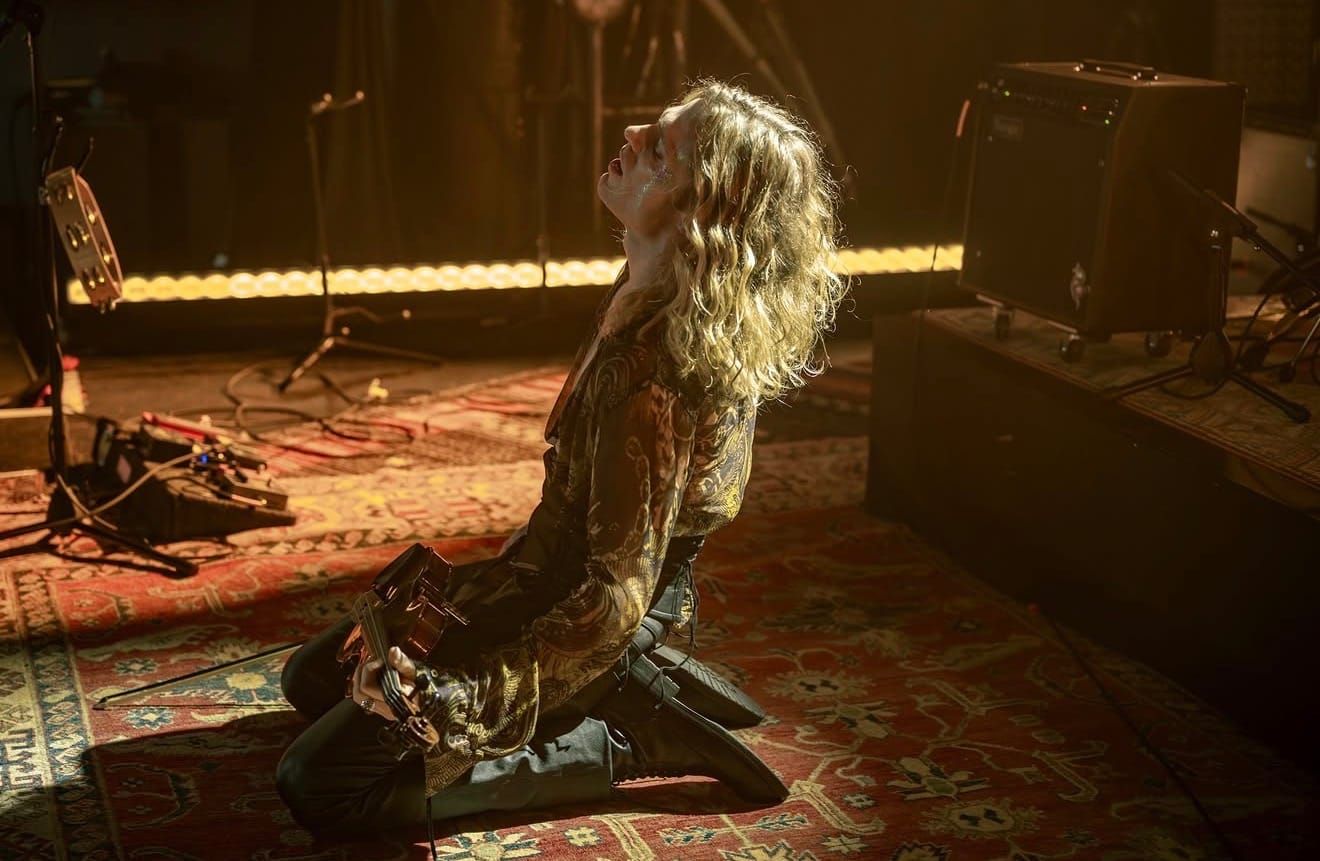
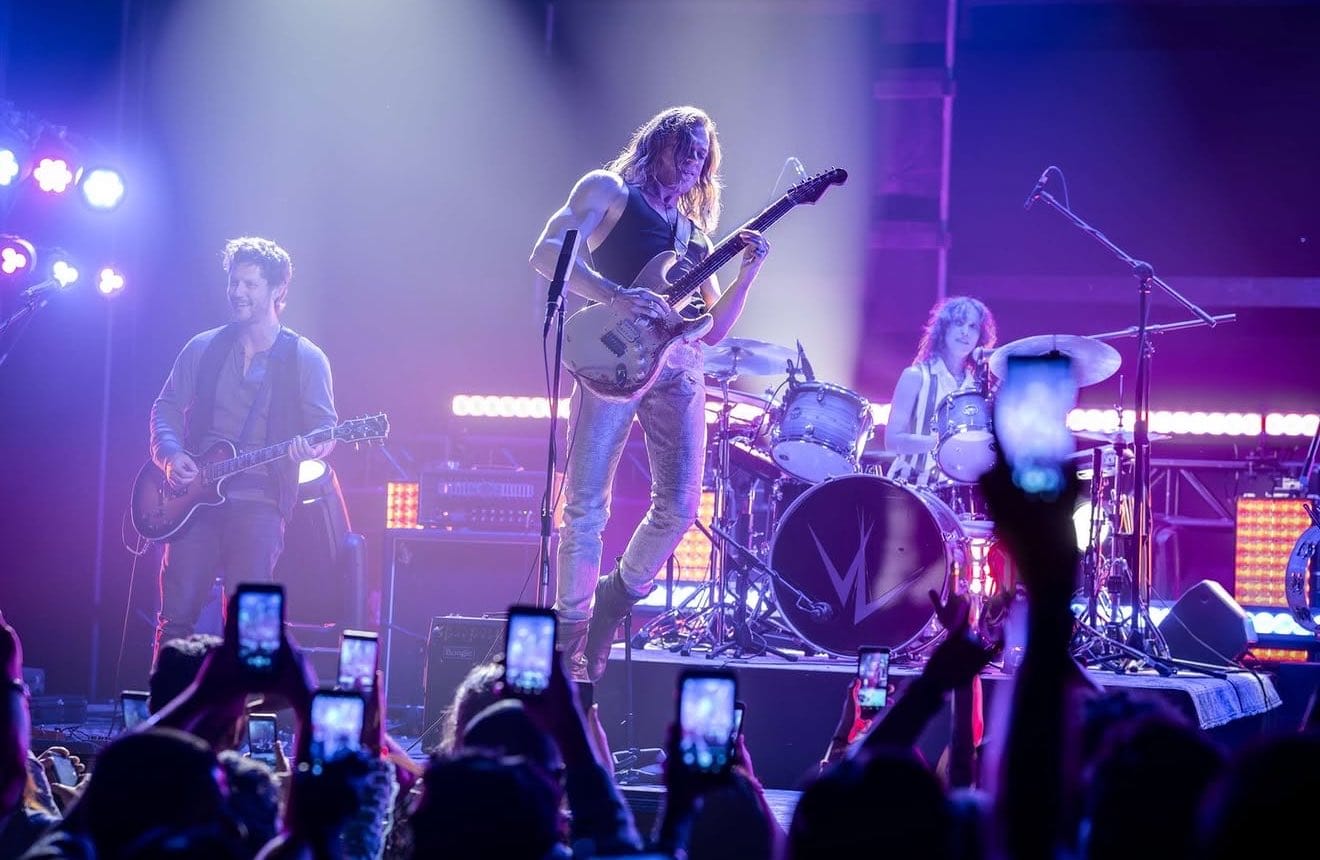
The tour itself struggles to meet Lestat’s impossible standards, leaving him frustrated by what he dismisses as an “adequate” performance. Then comes “Black Licorice.” As the band launches into the song, the music ceases to function as mere performance. Instead, it becomes a key that unlocks memories he has spent centuries forcing into the shadows. Lestat describes it as wrapping around him “like a jungle vine,” and suddenly, faces begin appearing in the crowd. Hallucinations of the people who have shaped his life, the figures he dubs his “muses,” emerge one after another until the stage becomes packed with memories, and the crowd of fans with ghosts.
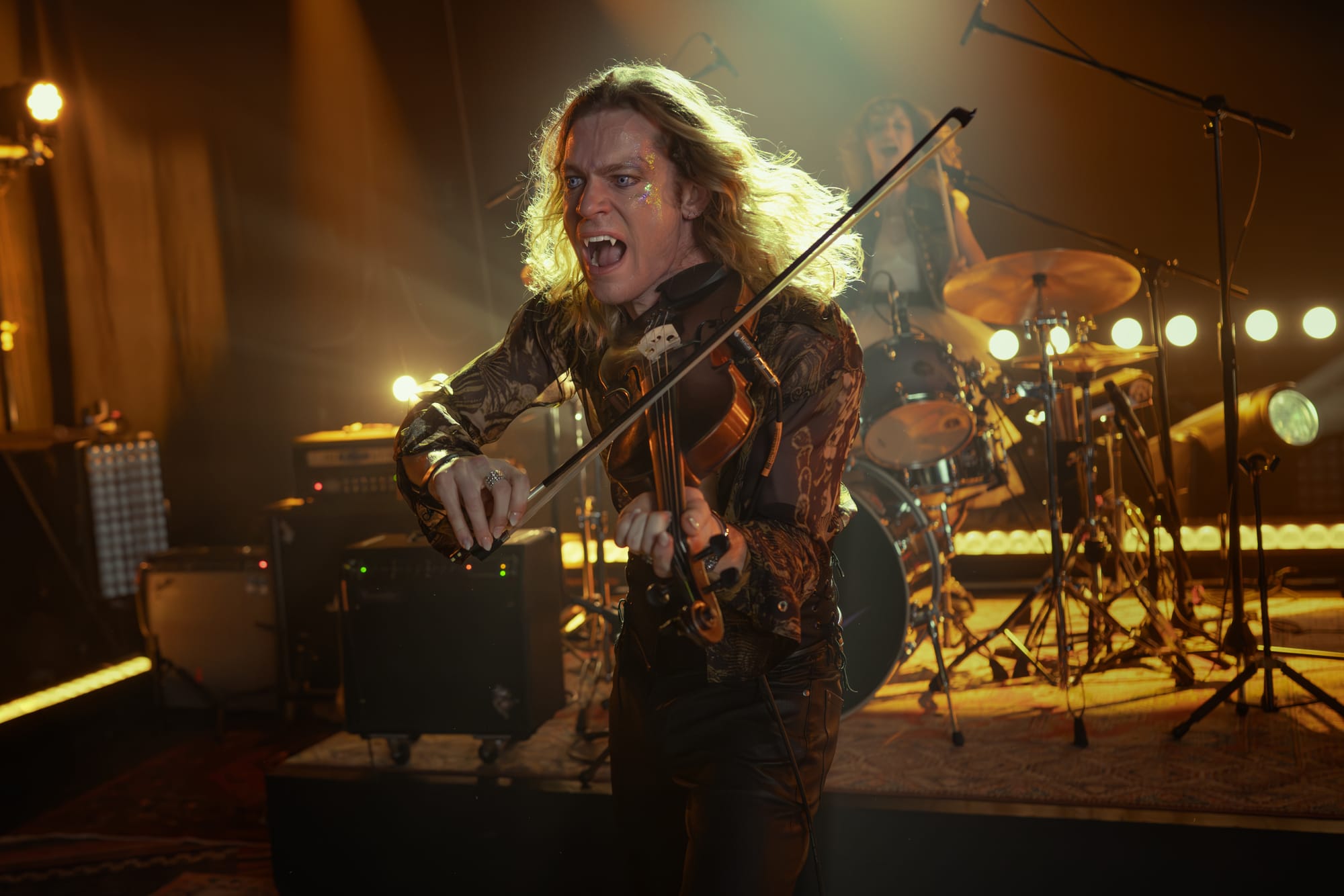
The performance becomes a turning point not only for Lestat, but for the audience’s experience of the series, pulling viewers headfirst into the whirlwind of his mind. The editing abandons any illusion of objectivity. Images begin colliding with one another in increasingly frantic succession as memories crash into the present, refusing to remain neatly compartmentalised. It feels less like watching a flashback than experiencing an involuntary one. What begins as a concert spirals into a panic attack unfolding in real time, with every sharp cut and overlapping image pushing viewers deeper into the storm of his unravelling psyche.
The season rarely slows down from there. Nowhere is that more apparent than in a sequence that takes place at a hotel opening, one of the year’s most intoxicating stretches of television. As Lestat and his band party alongside the documentary crew, the editing mirrors the sensation of following a friend attempting to reconstruct an unforgettable night out, jumping backwards and forward through half-remembered details while trying to piece together what actually happened over the course of the night. The audience drifts through the haze alongside Lestat, carried by pulsating music, flashing lights, and fragmented drug-fueled recollections.
The sequence culminates in a foursome during an elevator ride, where Lestat muses that sex is one of the great distractions afforded to vampires, a way of avoiding the crushing weight of their histories. The irony is delicious. Even as he insists upon this escape, the editing betrays him. The encounter is interrupted by flashes of other lovers, old wounds, moments of profound intimacy, and unbearable grief and relief; some memories viewers have already seen, alongside glimpses of scenes still waiting to unfold. Images appear upside down, reversed, distorted, or vanish after barely a second, putting us in Lestat’s own state of mind as he refuses to linger on these moments for too long.
Getting off on the elevator, he is confronted by regional vampires agitated by the exposure his rockstar lifestyle brings to vampires. By the time violence erupts and his vampiric nature is revealed, the audience feels every ounce of his disorientation from the events of the night as his human bandmates look on in what he assumes is fear and disgust. Bruised physically and emotionally, Lestat retreats to a distant motel room, only to find another ghost waiting for him: the woman he introduces with devastating simplicity as his “fledgling, lover, mother”: Gabriella (Jennifer Ehle).
Episode two, “Toledo,” demonstrates just how seamlessly the season uses editing to move across centuries without sacrificing emotional momentum. Returning to Lestat’s childhood in Auvergne, France, the episode goes through years of his life with remarkable urgency. Rather than feeling rushed, the fragmented pacing mirrors the chaos of his upbringing. His family life unfolds with the heightened theatricality of a stage play, arguments erupting around the dinner table as though each meal were another act in an endless performance. Gabriella remains the lone source of tenderness, though even her affection arrives unpredictably, reinforcing the unstable foundation upon which Lestat builds his understanding of love.
The rhythm only accelerates as Lestat kills the wolves terrorising the countryside, forever altering how others perceive him. What follows is one of the episode’s most emotionally unsettling moments. Gabriella tends to his wounds in an intimate encounter that blurs maternal comfort with emotional dependence before walking away as Lestat cries after her. The transition back to the present is immediate and devastating. Lestat wakes in his coffin, screaming for her, the memory manifesting as a nightmare.
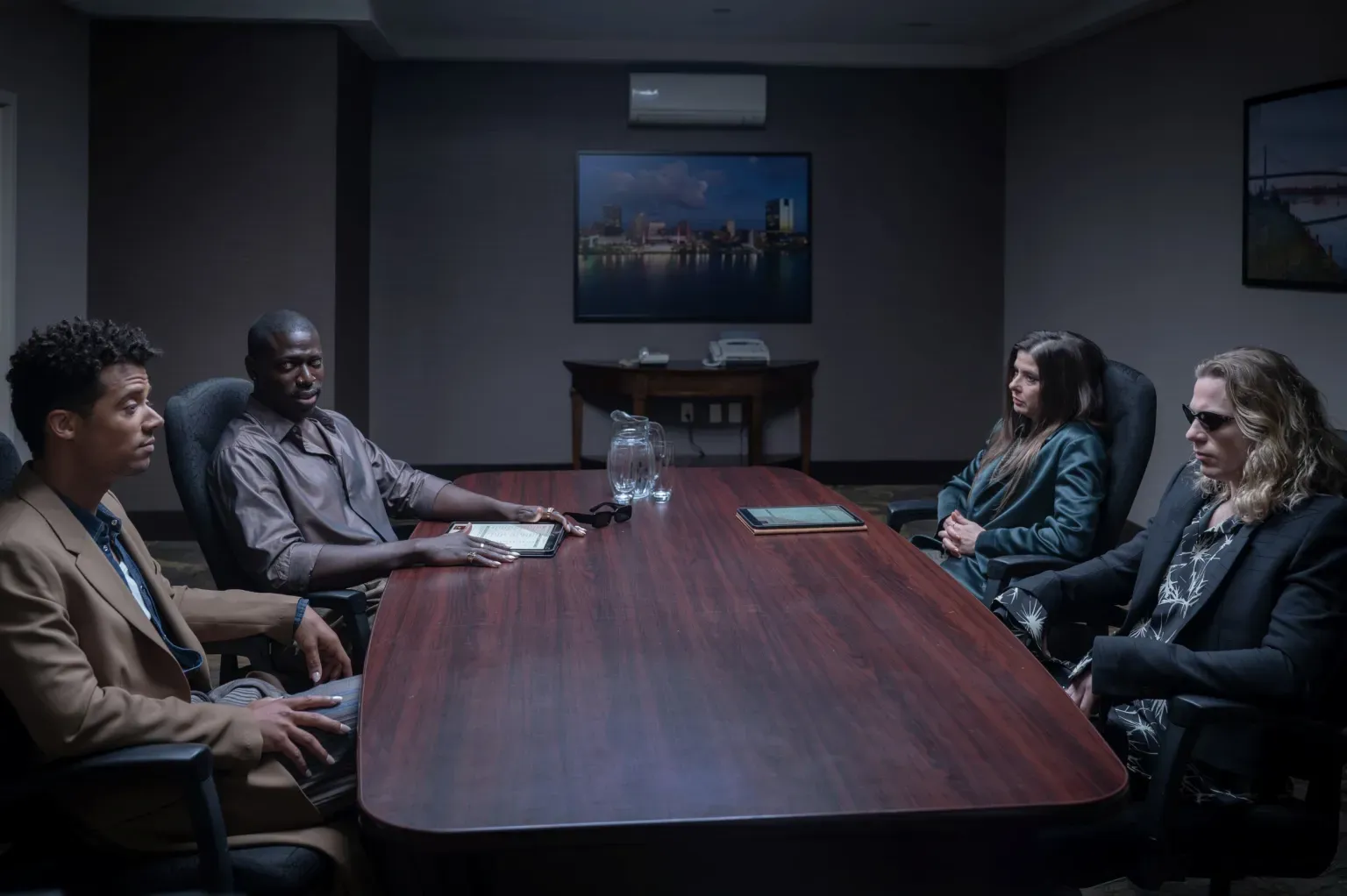
Even the more subtle editing choices make viewers feel as if they are experiencing Lestat’s emotions alongside him. Later in the episode, during Lestat’s tense meeting with Louis under the pretence of discussing damage caused to what is revealed to be Louis’ hotel in the previous episode, the conversation fractures using editing. As resentment surrounding Louis’ memoir surfaces once again, Lestat physically rises from the conference table and appears to step almost directly onto the concert stage. Reality gives way to performance as “Why Do I Have to Feel” becomes an extension of the conversation. Music functions as dialogue, as he holds his annotated copy of the memoir up to Louis, conveying as he sings how it is the cause of the wedge between them.
The same principle reaches haunting heights when Lestat performs his adaptation of Baudelaire’s “La Fontaine de Sang” near the end of the episode. As the composition swells, so too does the accompanying memory of turning Gabriella into a vampire. The performance gradually reveals the massacre of the remaining family members, an act Gabriella herself desires, further cementing the complicated hold she maintains over her son. The music dictates the pace and conveys the emotions of this moment in his history, each crescendo drawing the audience deeper into memories that refuse to remain buried.
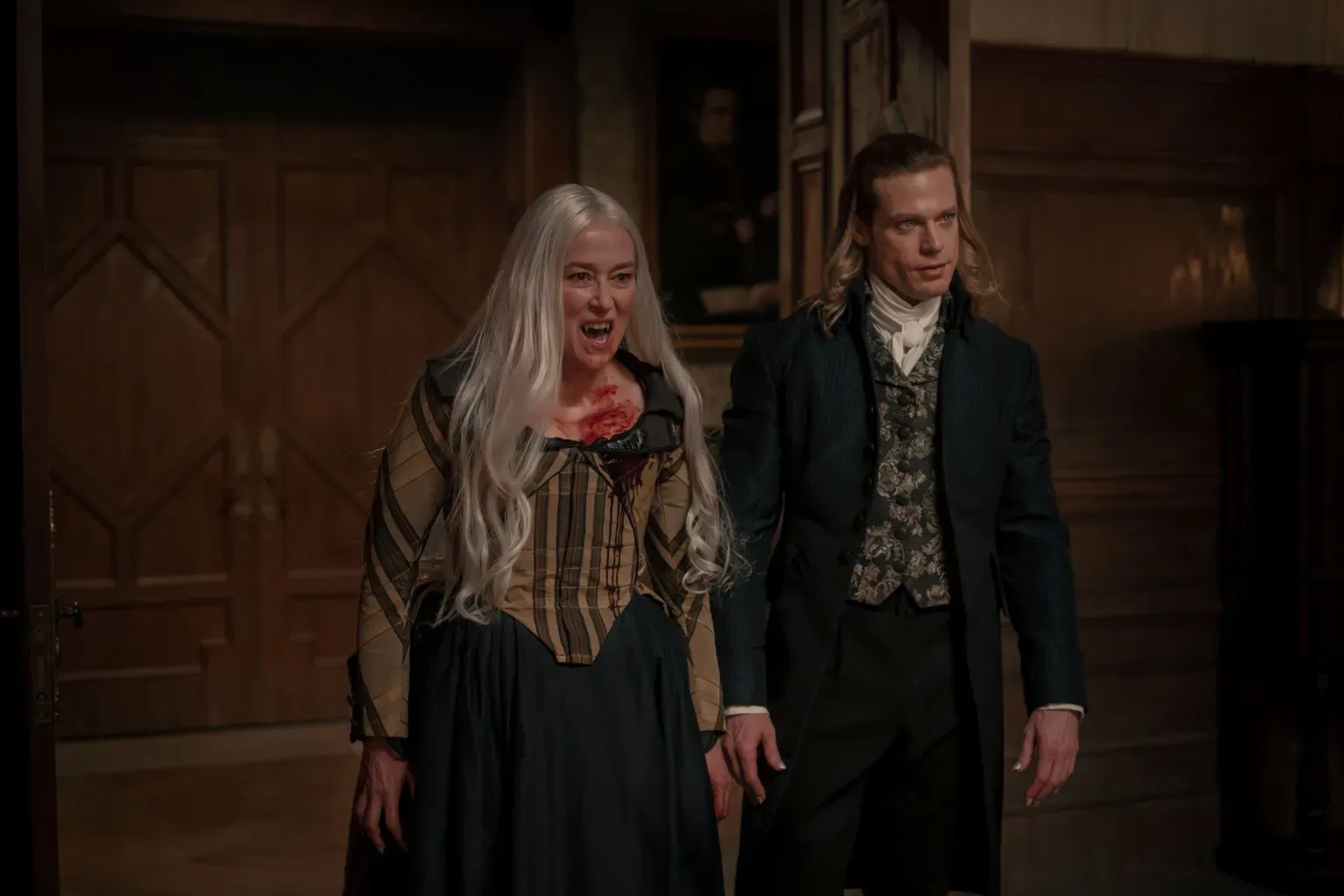
By “Toronto,” the third episode of the season, the series reveals the full extent of its ambitions. Framed around Daniel Molloy’s relentless interview with Lestat, the episode initially adopts the language of documentary filmmaking. The Interrotron setup encourages directness and honesty, yet even here, truth remains elusive. As Daniel questions Lestat about his time in Paris, his first love Nicolas (Joseph Potter), and his turning, the answers are continually interrupted by intrusive flashes of memories beyond his narrated recollections. For some of the moments of his past, he recalls, tiny fragments appear and disappear before viewers can fully process them. Lestat may be speaking openly about some things, but his subconscious is still resisting his revisiting of others.
The season’s boldest gamble arrives through “Your Biggest Fan,” a gleefully stylised music video that romanticises Lestat’s relationship with Magnus, his maker. Visuals suggesting Magnus was nothing but an overzealous fan overcome with love disguise the horrifying reality beneath the performance: stalking, kidnapping, sexual assault, and forced transformation. The disconnect is deeply unsettling and comes across as both hilarious and horrifying. Rather than asking audiences to accept Lestat’s version of events, the over-the-top, campy editing exposes it as another coping mechanism, another story he has built to survive what truly happened.
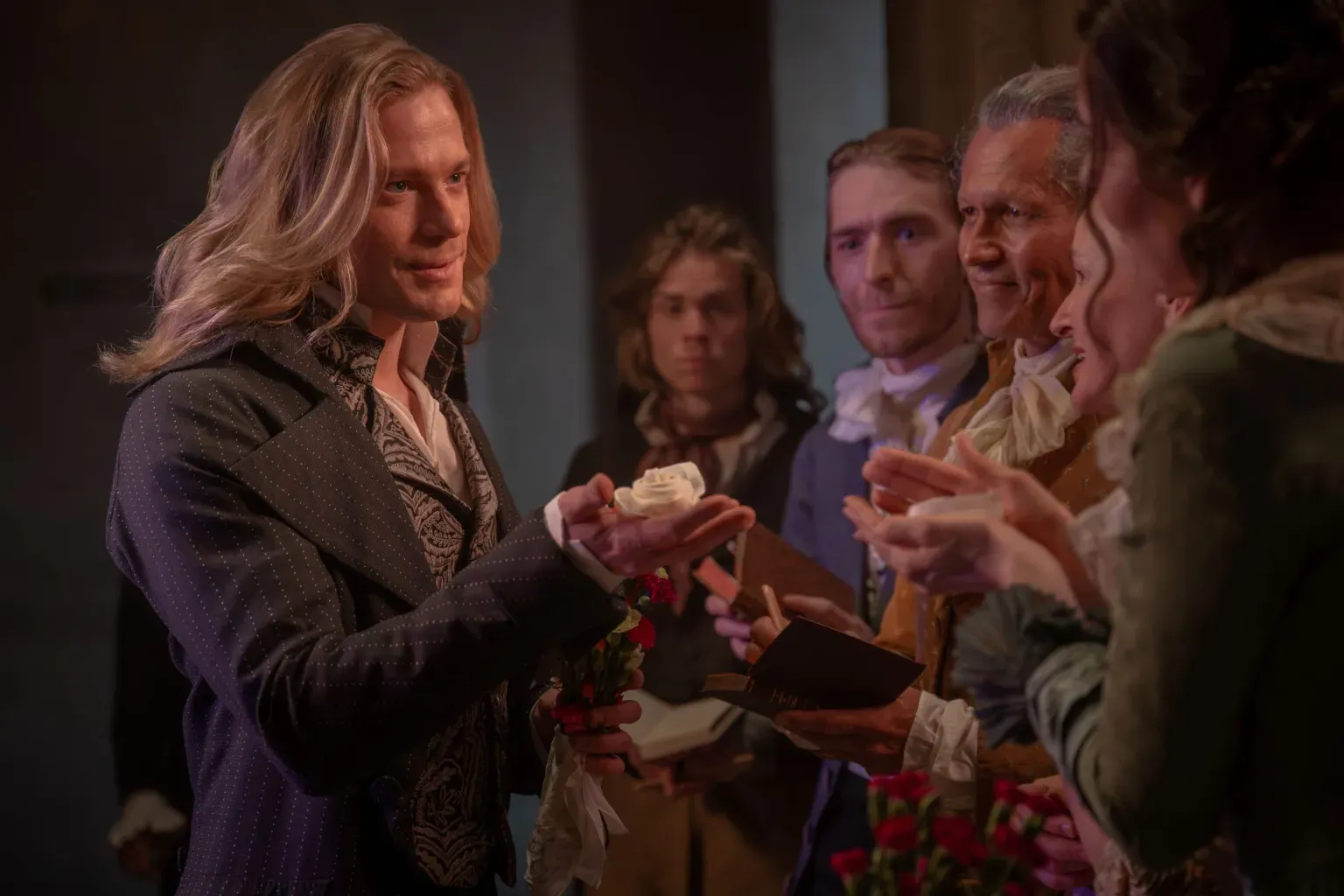
That truth finally arrives in one of the series’ most devastating sequences. After leaving the interview overwhelmed, Lestat is confronted by the apparition of Magnus while driving. As his maker demands that he stop hiding behind performance and spectacle, the episode intercuts Lestat’s memories with Louis, on a journey of vengeance of his own, reading Claudia’s account of her own assault by the vampire Bruce (Damon Daunno) all the way back in the first season, as he enacts what he believes to be justice for the transgression. Two histories separated by more than a century collapse into one another through the editing.
The rapid shifts between timelines create the sensation that both assaults are occurring simultaneously, each illuminating the other without diminishing either. Lestat’s reactions to the muse Magnus, the intrusive memories he cannot push away, the physical sensation of phantom hands grabbing him as he drives, all become nearly unbearable to witness, but it feels impossible to look away. The sequence refuses to allow trauma to remain contained within a single flashback. Instead, memory becomes active, invasive, and alive, feeling as if the audience is as captive as Lestat as he’s forced to confront the harrowing past.
Yet The Vampire Lestat never mistakes confrontation for resolution. The episode closes with “The Loneliness,” perhaps the emotional centre of the season thus far. The performance celebrates art’s capacity to heal without pretending it can erase pain. As Lestat sings, the muse of Magnus and Gabriella both quietly leave the venue, suggesting not that his wounds have disappeared but that, for one fleeting moment, they no longer dictate the performance. The muse of Nicki lingers and watches, as Lestat playfully sticks his tongue out and revels in the outlook he’s presenting with the song. Lestat has a moment where he involuntarily uses the Cloud Gift as his band looks on in joy (a sharp contrast to the fear they expressed at the original reveal of his vampiric nature), described by Sam Reid as something he does when he experiences “pure elation”.
But even in this moment of healing, the editing reminds us that isolation still lingers. Louis drives alone after his hollow act of vengeance, towards something that will only send him further down the grief spiral as his loneliness consumes him. Daniel wanders through immortality abandoned by his maker Armand (Assad Zaman), not finding fulfillment in his documentary with an uncooperative subject. While Lestat experiences communion with his band and audience, the season cuts between these parallel stories to emphasize that vampiric loneliness remains a burden shared across every immortal life, something Lestat will grapple with in future episodes as the effects of Gabriella’s abandonment (once again) are brought to light.
It is a poignant reminder that perspective can illuminate only one heart at a time. That may ultimately be The Vampire Lestat‘s greatest achievement. Its editing is never frenetic for the sake of spectacle. Every cut, every overlapping image, every abrupt transition and jarring leap through time serves a singular purpose: allowing the audience to inhabit Lestat’s consciousness as he navigates memories nested within memories, confessions within songs, trauma within performances. The soundtrack and editing work in harmony, one carrying emotional expression while the other visualizes the way remembrance itself refuses order. It brings to mind the tagline used by the show previously: memory is a monster. In this case, our storyteller is an unreliable narrator not because his memories are inaccesible due to outside interference, but because he is hesitant to face them due to his own internal struggles.
In an era increasingly fascinated by subjective storytelling, The Vampire Lestat pushes the form further than most. Editing becomes less an invisible mechanism for moving plot forward than an emotional language all its own, one capable of revealing contradictions, repression, longing, and healing with remarkable precision. Three episodes in, the result is one of television’s most immersive viewing experiences, inviting audiences not simply to watch Lestat’s story unfold but to lose themselves inside the beautiful, fragmented rhythm of his mind.
New episodes of The Vampire Lestat air Sundays at 9 p.m. EST on AMC, and are available to stream on AMC+. It is slated for release on BBC iPlayer in the UK.