After how many reboots do horror franchises start losing themselves? At what point is the killer's body count on us for tuning in once more? And what if we nevertheless take pleasure in it? These questions are some of the themes that Jane Schoenbrun's third feature Teenage Sex and Death at Camp Miasma deals with.
Kris (Hannah Einbinder), a young screenwriter, is working on rebooting a well-known horror franchise: "Camp Miasma". To better understand the film she’s so obsessed with, she visits Billy (Gillian Anderson), the original final girl from the first movie, forming a relationship that increasingly blurs the lines between what is real and what is fiction.
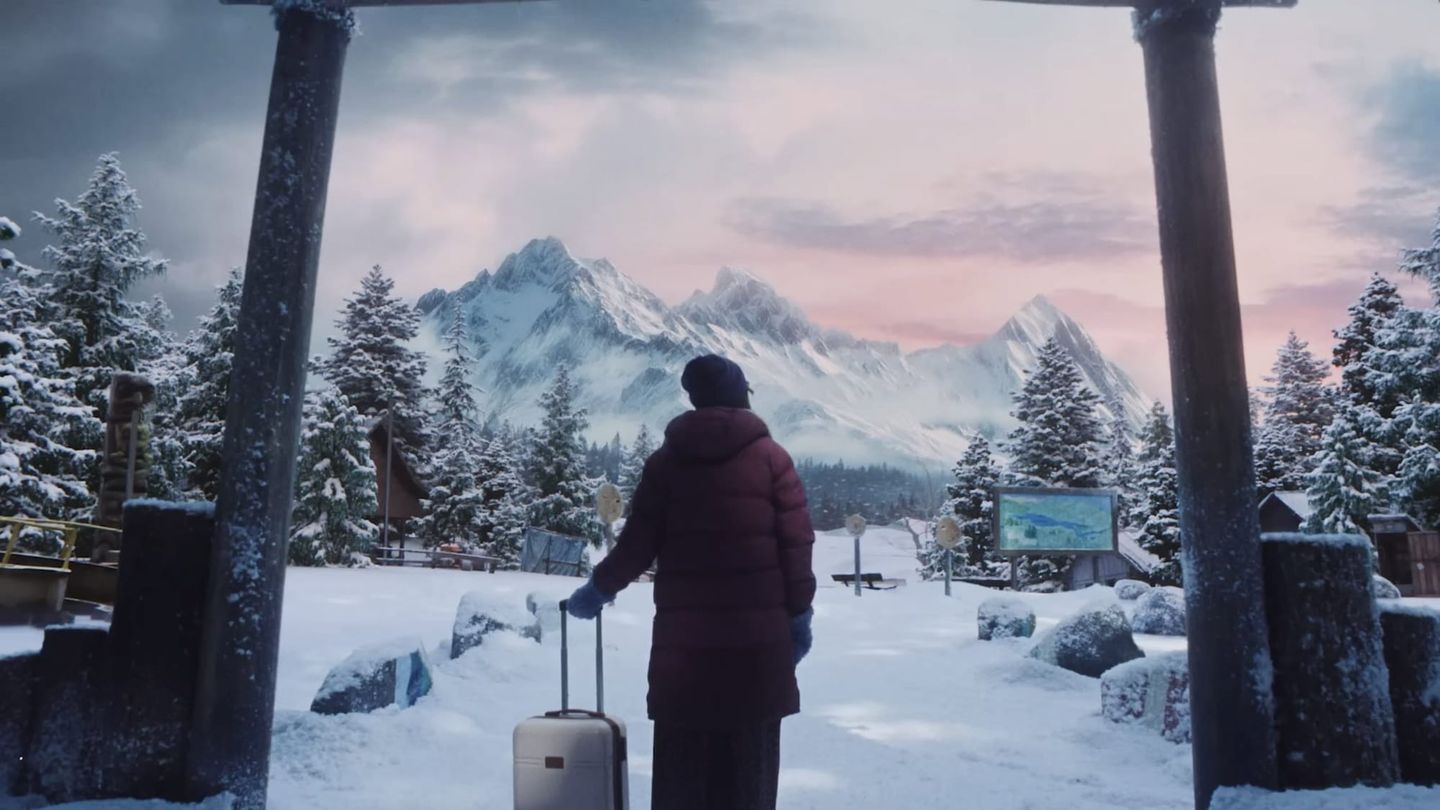
The thing that immediately stands out about Teenage Sex and Death is its clear love for the horror genre. From the snowy landscapes, evoking Stanley Kubrick’s The Shining, to references to the iconic shower scene from Alfred Hitchcock’s Psycho, the film is filled to the brim with little Easter eggs for horror fans to discover. But not just the great aspects of the genre are highlighted, as the fictional killer, Little Death, was a play on the transphobic trope of the ‘trans serial killer’ as seen in Silence of the Lambs. Teenage Sex and Death also doesn’t shy away from ripping on the endless number of sequels and reboots prevalent in horror when a stack of VHS tapes of "Camp Miasma" pile up in the intro with increasingly ridiculous names. The inclusion of "Camp Miasma 3D" is especially fitting; no horror series running in the 2000s was safe from a 3D instalment.
Jane Schoenbrun addresses the never-ending cycle of reboots that plague our current release slate, leading to the genre basically eating itself. The killer always comes back because we need them to. There will always be more victims because the audience wants something to watch. Teenage Sex and Death asks the audience how far you can push a franchise and what happens if you can't let go.
Billy is a perfect example of this. After refusing to star in the latter instalments of "Camp Miasma", she became a recluse and now lives on the original campgrounds used as locations for the first movie. Even when she has seemingly left behind the films from a professional point of view, she can’t escape it. Kris suffers from the same thing, obsessing over the movies for years and rewatching the films over and over again. Hannah Einbinder plays Kris in such an awkwardly sweet way that you can’t help but be endeared when she passionately info-dumps about horror. Small moments like her not being able to resist pointing out the split diopter shot in "Camp Miasma" do wonders for her characterisation, and many cinephiles, especially lifelong horror fans, will be able to see themselves in her. Gillian Anderson does a great job playing Billy, a character heavily inspired by Norma Desmond from Sunset Boulevard. Dressed in outdated clothes and sporting a sultry southern accent, Billy could easily become a cheap parody but is given layers by Anderson’s incredibly charming and, at times, vulnerable performance.
But Teenage Sex and Death isn’t just well-written and well-acted. Its lighting and camerawork are stellar and lend the film a dreamlike atmosphere, aided by the set design that includes hand-painted backdrops reminiscent of old Hollywood. The cinematography includes many creative camera movements like the switching POVs during a scene in which the killer murders a group of campers. Furthermore, proving that not all films look grey nowadays, the film uses colour beautifully, especially the blue-toned night scenes.
If you didn’t like Jane Schoenbrun’s last films, then Teenage Sex and Death at Camp Miasma will probably not be for you, but if We're All Going to the World's Fair or I Saw the TV Glow was your thing, then this might be for you. Underneath its purposeful over-the-top violence, it asks what happens when nostalgia goes too far and if it's alright to never let go. Don’t go into this expecting a classic genre film; it is anything but.