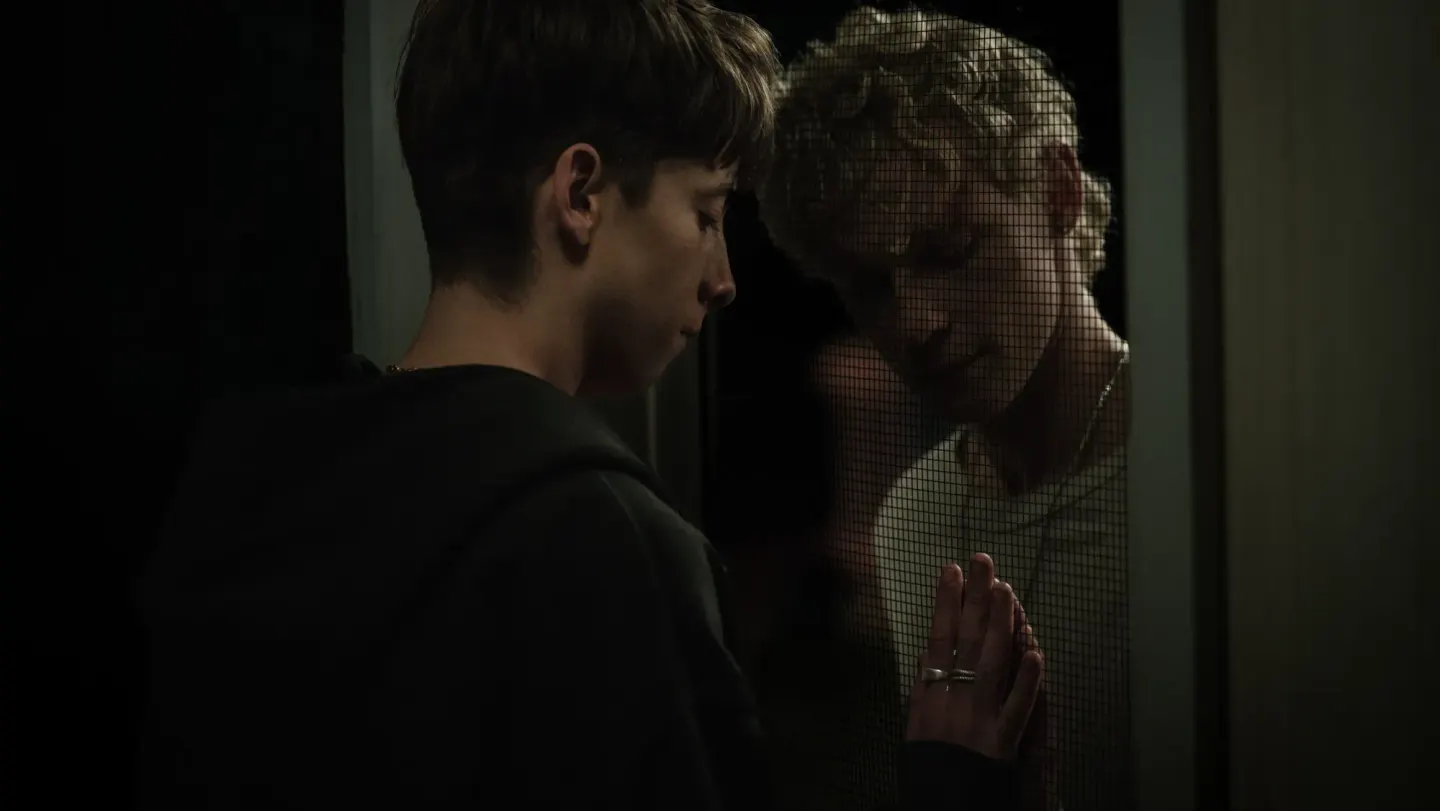
Monsters have been used as metaphors for queerness for more than 150 years. During the 19th century, they were often a cautionary tale to keep your children safe from homosexuality, but as the times have changed, so has our use of this trope. Instead of warning against queerness, Adrian Chiarella's directorial debut Leviticus uses the monster to caution people about what happens when you try to suppress that side of yourself.
Leviticus follows two boys, Naim (Joe Bird) and Ryan (Stacy Clausen), as they are subjected to a form of conversion therapy which leaves them haunted by a monster only they can see, taking the form of the person they desire most: each other.
The trope of the 'invisible monster' that only the main character(s) can see has been done many times before, and while this film doesn't reinvent the wheel, its commentary on queerness and religion adds an interesting layer that makes it stand out from similar films. While It Follows is widely accepted as a metaphor for STDs, Leviticus is a critical look at organised religion and the harm inflicted by conversion therapy. Just as the monster cannot be stopped, the characters' queerness isn't something to be prayed away or ignored.
The first scene in which Naim encounters the monster is one of the best scenes in the film. It perfectly imitates Ryan before violently attacking Naim, and this sets up the most important aspect of the film: you can never be at peace when Naim and Ryan are on screen together. Tender scenes that in any other film would be incredibly romantic are turned into a terrifying game of is-he-or-isn't-he, as both the audience and the characters are trying to figure out what is real.
Joe Bird and Stacy Clausen have great chemistry and do a fantastic job at conveying this emotional turmoil. Bird embodies Naim's insecurity and especially fear perfectly; for example, when Naim is forced by his mother (Mia Wasikowska) to undergo the exorcism, it's heartbreaking to watch as he is dragged out of the car begging her not to make him do it. Acting opposite him, Clausen not only plays Ryan but also the monster's version of him. He embodies the contrast between Ryan's comforting presence and the monster's imitation through body language, and though it is kept purposefully unclear which character is on screen, there are small moments in the performance that give it away.
As great as Ryan and Naim’s dynamic is, I wish it were explored further. They have great chemistry, yet not enough of the film’s 88-minute runtime is spent developing it. Naim’s jealousy at seeing Ryan with someone else is the catalyst for the events of Leviticus, as he rats out Ryan and Hunter (Jeremy Blewitt) to the pastor. There is huge potential for drama whenever Ryan finds out about it, but sadly this isn’t pushed far enough to create the impact it should. It happens too far into the film for a genuine rift to open up between them, because the film needs to find a way to arrive at a satisfying conclusion quickly.
Nevertheless, this film is an impressive directorial debut, especially thematically. Its interrogation of religion and young queer experiences is incredibly unique, turning romance into horror. So if you're a horror fan, then I hugely recommend adding Leviticus to your watchlist this Pride Month and supporting it in cinemas.